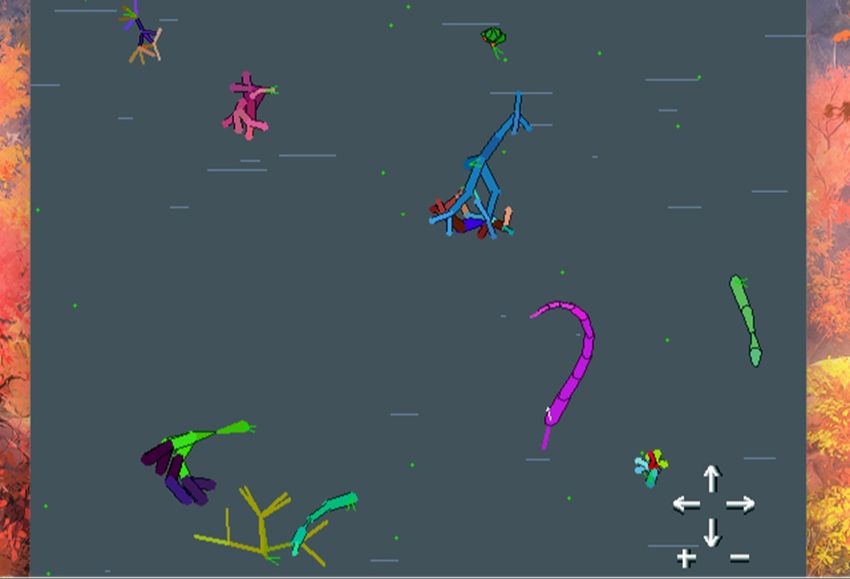
A virtual aquarium to understand Darwinian evolution
Is it possible to understand evolution through simulation? It would seem so. A very interesting resource for high school science classes.
Publish at September 17 2024 Updated September 17 2024


Over the past few years, we've been inundated with stories about artificial intelligence: how it will change things, its risks and potential, and so on. But is it really intelligence? Researcher and author James Bridle says yes, but adds that it's mostly a very corporatist approach. AI intelligence is based above all on the notion of connection, i.e. that with millions of analyzed data, something or someone becomes more intelligent. But that would be to overlook other existing intelligences.
Facebook had created two conversational bots and given them the task of negotiating without specifying how. As a result, the two algorithms ended up chatting in a language we didn't understand. Immediately, the engineers stopped the experiment and the media brandished the threat of these AIs starting to develop their language. In the author's view, it would have been better to continue with the experiment and take an interest in this different approach to communication. The problem is that we continue to analyze intelligence from the human angle.
Yet we know that animals, plants and even single-celled beings have developed remarkable skills for surviving in their environment. This is a form of intelligence. When a tree in a forest sends out a chemical signal to inform others that it is being attacked by insects, this is part of its mastery of its environment. In fact, researchers have noted that mycelia can more easily solve the "travelling salesman problem" than mathematicians or computers. We're just beginning to take an interest in unconventional computing with mushrooms or crabs. This openness to other intelligences could take us even further.
Running time: 22 minutes
You might also like:
A virtual aquarium to understand Darwinian evolution
Is it possible to understand evolution through simulation? It would seem so. A very interesting resource for high school science classes.
Newscraft: the game that puts you in the shoes of a reporter
A serious game that explains and brings to life the notion of news selection and the editorial line of different types of media.
Develop your musical ear through play with Meludia
To a layman, music is just a tune performed by a musician. Yet, if he were to play Meludia, he would learn all the rudiments and terms associated with musical practice.
A series of games that require an ear.