You've got to dance like nobody's watching, love like you've never been hurt, sing like nobody's listening and live like it's heaven on earth.
Dance, in its many forms and expressions, is much more than an art form or body technique. It embodies a profound dynamic between self, other and the world. Whether introspective like Japanese butō, collective like circle dances, or relational like tango, every dance teaches us about our inner selves, our relationships with others and our place in the cosmos.
Dance is a universal language in which bodies, breaths and even heartbeats synchronize to create a unique harmony, sometimes fleeting, but always revealing.
Exploring our inner selves through dance
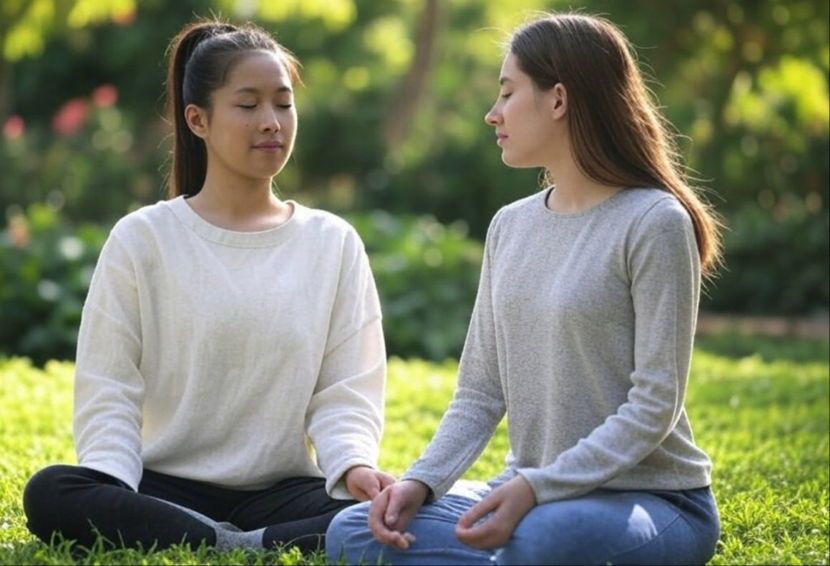
Some dances invite us to plunge deep inside ourselves. Butō, developed in post-war Japan, illustrates this inner quest. Slow, sometimes grotesque, this style evokes the unconscious and shadowy areas of the human soul. It requires the dancer to feel each micro-movement as an echo of a buried emotion. By freeing itself from conventional aesthetic frameworks, butō becomes a bodily meditation. This introspection, far from being selfish, enables the dancer to better connect with his or her feelings, opening a door to an authenticity that nourishes his or her relationship with the world.
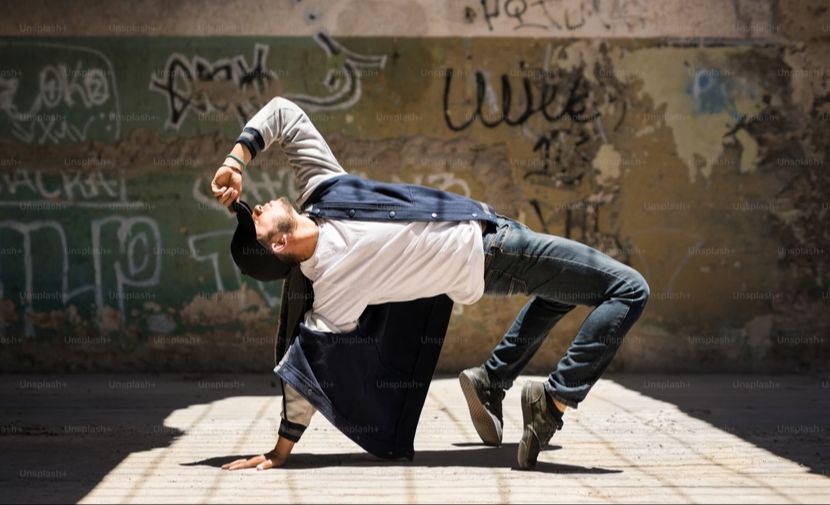
Jazz dance, in contrast, plays on energy, improvisation and expressivity. It highlights vibrant inner selves, joys and pains. In this dance, every movement becomes a self-affirmation, a cry from the body that reflects the tensions, hopes and impulses of an inner life in effervescence. This expression, sometimes liberating, illustrates how the body can become a receptacle for our most intense emotions.
Relationships with others through bodies in movement
Dance is also fertile ground for exploring our relationships with others. Tango, often called "the dance of souls", is an emblematic example of this dynamic, where duende - communion with destiny - takes on its full force. In this Argentinian dance, two partners unite in an almost telepathic connection, where every movement becomes a silent dialogue. Tango demands total bodily attentiveness: a press of the arm, a subtle shift of the torso, an imperceptible change of rhythm - all create an intimate conversation. This mutual listening transcends words, teaching the importance of trust and attention in any human relationship.
Ballroom dances, such as the waltz or cha-cha, share this relational dimension. However, they also incorporate a sense of community, as these dances are often performed in groups. Their codified choreography structures exchanges while leaving room for improvisation. These dances remind us that, to interact well with others, it is necessary to fit into a common framework while preserving one's singularity.
Circle dances, practiced in many cultures, further accentuate this collective connection. In Palestine, the dabkas, or in the folk repertoire of the Balkans, these dances create a harmony where each individual blends into the group. Feet strike the ground in unison, creating a collective beat that resonates like a single heart. These dances remind us that the individual is never built alone, but always in a relationship of interdependence with a community.
Synchronizing bodies, breaths and heartbeats
To dance is to synchronize one's being with others. Whirling dervish dancers offer a striking illustration of this synchronization. Spinning to the beat of spiritual music, these dancers enter a trance-like state where their bodies, breaths and even heartbeats align with an intention. This Sufi dance teaches us that inner harmony is often found in alignment with forces greater than oneself, be it a community or a spiritual universe.
Group dance also accentuates this synchronization. By performing movements in unison, dancers share not only a rhythm, but also a collective breath. Neuroscience studies have shown that synchronizing bodies during dance can synchronize heart rhythms and brain waves, strengthening social bonds and empathy. This shared experience then becomes a powerful tool for personal development, as it teaches us to break out of our isolations and embrace a profound interconnection with others.
Dancing with the world: an ecological perspective
Finally, dance can be a way of reconnecting with the natural world. Some styles, such as nature-inspired contemporary dance, seek to imitate the flows and cycles of living things. Fluid movements recall flowing rivers, leaps evoke the wind lifting leaves, and pauses embody the calm of the earth after a storm. As we dance, we feel part of an ecosystem. This awareness develops an ecological sensitivity that is essential in a world in crisis.
A pedagogy of the body in movement
Dance is much more than an art form; it's a pedagogy of the body, an ongoing process of learning about ourselves, others and the world. It teaches us about the richness of our inner selves, the complexity of human relationships and our interdependence with the living world.
Whether practiced in silence, as a duo or in a group, each dance invites us into an intimate and universal dialogue. By synchronizing our bodies, our breaths and our heartbeats, dance reminds us that we are both singular and collective beings, rooted in a vibrantly interconnected cosmos.
Sources
Berque, A. (2019). Poétique de la Terre: Histoire naturelle et histoire humaine, essai de mésologie. Belin.
https://pantoute.leslibraires.ca/livres/poetique-de-la-terre-augustin-berque-9782701190068.html
Varela, F. J., Thompson, E., & Rosch, E. (1991). The embodied mind: cognitive science and human experience. MIT Press. https://amzn.to/4fidG3e
Louppe, L. (1997). Poetics of contemporary dance. Contredanse. - https://amzn.to/3P837Fj
McNeill, W. H. (1995). Keeping together in time: dance and drill in human history. Harvard University Press. - https://amzn.to/4fbwhOn
See more articles by this author