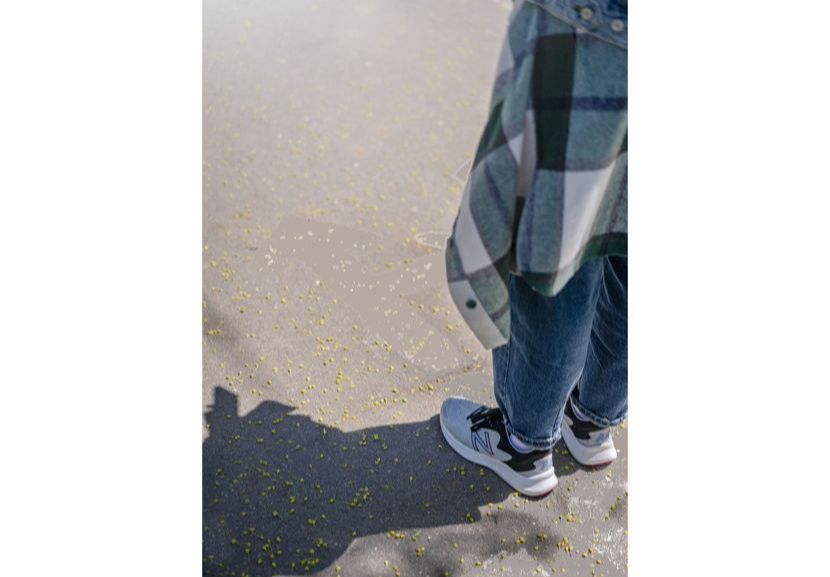
When travelling towards a goal, it's very important to pay attention to the path. It's always the path that teaches us the best way to get there, and it enriches us as we travel along it.
Attention is a key that shapes our relationship with the world. It is the beam of light that illuminates, colors and gives life to experience. Through the maxim - "It is by experiencing things concretely that they become part of us and we become part of them" - an essential truth emerges: attention is not simply distant observation. It is a living act, a commitment, an invitation to enter into the flow of what is.
By approaching attention from this angle, we understand that it is not limited to the act of "seeing". It is the starting point for our transformation and action in the world. Many thinkers, artists and philosophers have explored this link between attention, experience and action.
Attention as an anchor in experience
To truly relate to our surroundings, we need to be present. Being attentive is much more than listening or watching. It's about opening the doors of our being and receiving unfiltered, concrete experience. Walking barefoot in the forest, feeling the rough bark of a tree, listening to the vibration of leaves in the wind - can only be fully experienced through sustained attention.
When attention is deployed, it brings the experience to life. It transforms a mundane interaction into an immersion where self and world meet. This idea is in line with the reflections of Merleau-Ponty (1945), who emphasizes that perception is never passive. By connecting with our environment through our senses, we inhabit the world and become part of an organic whole. Without attention, experiences remain superficial.
As Simone Weil (1952) suggests, pure attention is a rare act, inviting us to go beyond egoism and enter into resonance with what surrounds us. It is in this engagement that we find a true sense of belonging: we are also part of things.
Attention as commitment
Paying attention is already taking action. In a world saturated with distractions, where time seems to be constantly slipping away, paying attention is a revolutionary act. Thoreau (1854), in Walden, illustrates this idea by describing his immersive experience in nature. For him, paying attention to the simplicity of the world is a way of being fully alive: "It's not what you look at that matters, it's what you see."
Attention is not neutral: it shapes the way we interact with the world. True attention requires us to set aside our judgments and expectations to welcome what is. As Arendt (1958) notes, this ability to focus on the real world is what anchors our humanity in a condition of reflective action and thought.
Take ecology, for example. How many speeches and alarming reports on the climate remain ineffective because they are not anchored in lived experience? As Pierre Rabhi (2010) explains, without attention to simple, concrete gestures, our aspirations remain abstract. When we walk through a destroyed forest or observe the effects of pollution on wildlife, these experiences, accompanied by sincere attention, awaken an awareness that can become a driving force for action.
Cultivating attention: a discipline of the mind
How can we cultivate this attention in a world that constantly fragments it? A number of thinkers have suggested some answers:
- Silent observation: Gaston Bachelard (1957) invites us to contemplate the everyday with poetic attention, emphasizing that every detail of the world can reveal unsuspected dimensions.
- Gratitude: Matthieu Ricard (2013) explains that acknowledging small things sharpens our perception and enriches our experiences.
- Breathing: Mindfulness, anchored in the breath, is a method advocated by Ricard and others for returning to the present moment.
- Sensory immersion: Arne Næss (2017 [1973]) insists on the importance of direct experiences with nature to feel our connection to the world.
These practices teach us that attention is an art, a discipline. It requires patience, but the fruits it bears - a better understanding of ourselves and the world - are priceless.
Is mindfulness an act of love?
Attention is more than a skill or faculty: it's an act of love. To pay attention to a person or an element in the world is to say: "You exist. You are important".
As François Cheng (2013) explains, this openness to the beauty and harmony of the world reveals our interdependence with all that is. And this love is transformative. When we make ourselves available to the world through attention, we receive unsuspected depth in return.
This constant exchange nourishes inner peace and, ultimately, ecological harmony. So the maxim takes on its full meaning: without this living attention, there can be no peace, either within us or around us. Attention is not only the key to our relationship with the world; it is the very condition of our transformation and alignment with what we aspire to.
Illustration: OleksandrPidvalnyi - Pixabay
Sources
Arendt, H. (1958). The Human Condition. University of Chicago Press. - https://amzn.to/40NqRoF
Bachelard, G. (1957). The Poetics of Space. Presses Universitaires de France. - https://amzn.to/3E7oUdK
Cheng, F. (2013). Five meditations on beauty. Albin Michel. - https://amzn.to/4hdFS92
Merleau-Ponty, M. (1945). Phenomenology of Perception. Gallimard. - https://amzn.to/3E7p0SE
Naess, A. (2017 [1973]). The long-range, shallow and deep ecological movement. A summary. In The ethics of the environment (pp. 115-120). Routledge.
Rabhi, P. (2010). Towards happy sobriety. Actes Sud. - https://amzn.to/40Tx6Gv
Ricard, M. (2013). Plaidoyer pour l'altruisme: La force de la bienveillance. Nil Éditions. - https://amzn.to/4giZ18h
Thoreau, H. D. (1854). Walden; or, Life in the Woods. Ticknor and Fields. - https://amzn.to/40x6g6E
Walden or, Life in the Woods - https://amzn.to/40BEBRY
Weil, S. (1952). Waiting for God. La Colombe. - https://amzn.to/3WBw80d
See more articles by this author