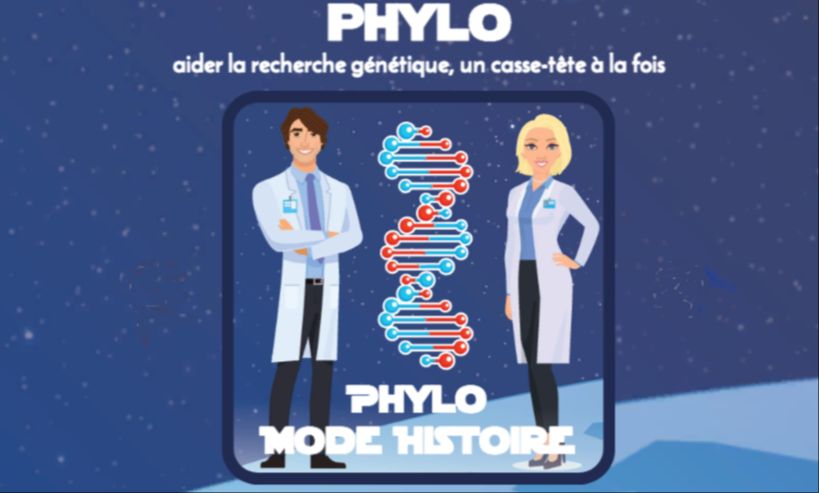
Phylo - Learn how to sequence a genome!
A game to enter the fascinating world of genetics.
Publish at March 19 2025 Updated March 19 2025


We live in a world of polarized values. Consequently, the natural movement in friendship is to go towards people who are similar to us, to avoid friction. This was Aristotle's or Cicero's vision of friendship, as recalled by philosophy professor Emma Carenini, who saw this relationship as two reflections in a mirror.
But others, such as Montaigne and Spinoza, assert that, on the contrary, there is nothing to prevent a friendship despite differences in values. The teacher gives the example of two judges, now deceased, of the American Supreme Court who had completely opposite worldviews, yet were very close in life. In general, these friendships remain strong when we leave out the things that make us angry, when we're more interested in the person than in their ideas. In short, when we are rational in our relationships, this is indeed possible.
After that, it's hard to live in the logical philosophical wisdom envisaged by Baruch Spinoza, and emotions are part of relationships. Nevertheless, Emma Carenini believes it's important to take an interest - on networks, for example - in people with different ideologies.
Running time: 5min49
Image: Rosy / Bad Homburg / Germany from Pixabay
Learn more about this resource
You might also like:
A multiplayer game designed for people with disabilities
Video games designed for people with disabilities are already a rare resource. An experience that allows multiple players is even rarer. Yet this latest creation from "Ludociels for All" challenges players to light up an entire maze by walking balls of light.
"Space Shelter: Google's cybersecurity game
All our lives have an online component. As a result, a large proportion of Internet users are at risk of being tricked by hackers. A short game invites Internet users to remember certain elements of cybersecurity using a space theme.
A serious game on social engagement
Many serious games address the topic of sustainable development. Yet before such solutions were proposed, innovative people had to go against the social grain and fight to improve their environment. A humorous adventure game, hosted by the National Film Board, teaches children the attitudes they need to adopt to make a difference.
The Englishes MOOC course was developed by an artist and is designed for anyone interested in the (English) language. It explores the history of English, its pronunciation, and its relationship to the art world.