Learn the mechanisms of misinformation with Bad News
Understand the strategies of online disinformation through an interactive experience that puts you in the shoes of a fake news propagator.
Publish at May 07 2025 Updated May 07 2025



Ecology seems to be a political topic that's not very much in vogue. Yet every day brings a new story about how not taking care of the environment is going to cost us more and more. The problem is that the media space is heavily taken over by the extreme right, who try to play on people's feelings of powerlessness by using scapegoats to relieve their frustration. Everything's going wrong because of immigrants, "wokes", "eco-terrorists" and so on.
In this context, how can we create a lasting ecological movement? One thing is certain for the two specialists interviewed by France Culture: it seems unlikely to envisage an ecology without democracy. This means showing individuals the importance of the issues at stake, and above all, not presenting it with a vertical approach of "virtuous" people dictating everything to others. It has to show that it will pay off, and much more quickly than they think. That if there are methods that will disappear, it will be done smoothly and for much more interesting solutions than what was achieved before.
It will be necessary to show a horizontality of ecology so that everyone feels included. Of course, the subject is frightening because it exposes the world's limits, its fragilities and reminds us that we don't have total control, but in the end, moving beyond these fears will possibly lead to a far more attractive future than what is taking shape today.
Running time: 37:50
Image: Kevin Snyman from Pixabay
You might also like:
Learn the mechanisms of misinformation with Bad News
Understand the strategies of online disinformation through an interactive experience that puts you in the shoes of a fake news propagator.
Elude: a serious game for understanding depression
An original approach to depression. The game's metaphor is well conceived, a little dark and informative about a problem that affects millions of people.
Tests of vigilance and attention
Measuring attention remains a concern in many settings. Some work tasks are not very error tolerant. Here are a series of sample tests to measure attention in children and adults.
The Englishes MOOC course was developed by an artist and is designed for anyone interested in the (English) language. It explores the history of English, its pronunciation, and its relationship to the art world.
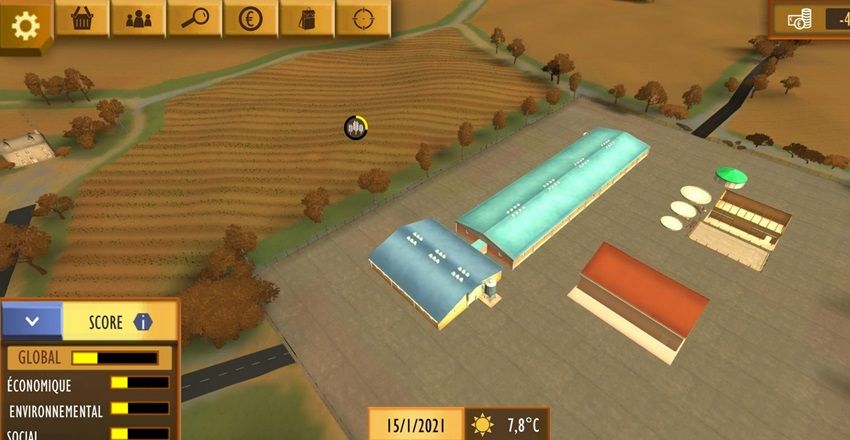
Reflecting on agroecology through play
There's nothing simple about being a farmer. You have to plan your activities throughout the year, make sure you have the right machinery, maintain it and so on. All with a view to ecology. A serious French game seeks to teach agroecology.