The 4 initiative profiles: from risk to strategy
If you're inclined to undertake something willingly, to make a decision, without waiting for orders to do so, know which contexts lend themselves best to this...
Publish at July 29 2025 Updated July 29 2025


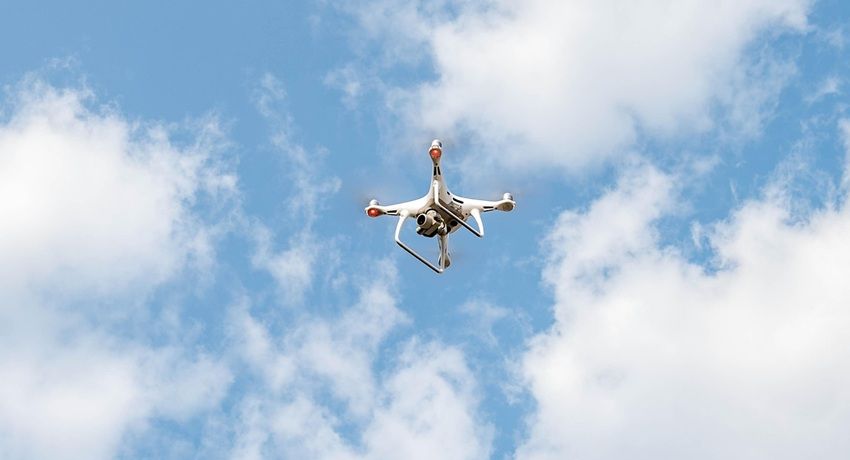
Aerial photography used to be a complicated business. You had to have access to a plane or helicopter, far from the reality of the average tourist; consequently, only professional photographers could produce those impressive images from the air. Technology has improved, and today amateurs and recognized experts alike can take exceptional shots without even lifting a foot from the ground.
Drones have started to become more democratic, smaller and lighter, and now it's pretty easy to carry one in your luggage and bring back spectacular images from the most remote locations. An interesting hobby, but one that requires some preparation beforehand.
Drone photography doesn't start overnight with the purchase of a camera. First of all, you need to know which one to buy. There are now several manufacturers in various price ranges. Many focus on DJI drones, which offer models suitable for beginners. Nevertheless, other companies are also cited by photographers, such as Parrot, Skydio and Autel Robotics, to name but a few.
While there are inexpensive drones around $20 or $30, a good photo drone for travel is more likely to be in the $200 range. Sounds expensive, but this article from 2017 reminds us that early drone enthusiasts had to pay a minimum of 700 up to 2000 dollars. Which just goes to show the democratization of these devices for the general public. If the drone travels, it's best to put it in a case to prevent its blades from being broken in luggage. It's always a good idea to bring a spare, as well as a battery. Most machines have an autonomy of around 20 to 30 minutes at the best of times. So it's a good idea to pack batteries so you can use the camera for longer and take longer shots.
Once you've got your gear together, it's best to try the machine out first, especially if you've never done it before. You don't want to be in the middle of a journey, hitting things in the environment that will damage the machine, or even losing it in the middle of nowhere because you don't know how to consider distances and autonomy. You start out in an open area to test things out, learn to deal with obstacles, be on the lookout, and so on. The idea is to practice enough so that use during the trip is easy and a relaxing experience.
Drone users also need to check one very important element: the regulations. Because drones are flying machines, most countries and localities now have regulations on what you can and cannot do with a drone. Failure to comply with these rules can lead to rather hefty fines, or even prison sentences. This tourist, for example, said that, to make sure he didn't get into trouble on a trip to the USA, he registered his drone on the Federal Aviation Administration (FAA) website for $5, a certificate that is valid for 3 years.
Once you've mastered the craft, you can have fun photographing your adventures around the world, whether local or international. However, one rule applies everywhere: avoid using the camera in high winds or precipitation. True, the machines are equipped with stabilizing elements, but gusts of wind can still make driving more difficult and, above all, drain the battery more quickly.
Once you've arrived at the desired location, it's a good idea to analyze the environment before takeoff, to make sure you don't get stuck in any obstacles right from the start. Unless you have sophisticated (and very expensive) drones, most will struggle with daylight shots or high-contrast scenes. Experts therefore suggest shooting on cloudy days or during the "golden hour", when the sun rises or sets. The light is soft, warm and golden, hence the name. It is also possible to activate overexposure alerts or evenexposure bracketing: in other words, the drone will automatically take the same underexposed photo, a "normal" one and an overexposed one. The images can then be edited to obtain satisfactory high-definition renderings.
Hobbyists should already be using photo grids to play with thirds, and perhaps the histogram to see if exposure is good. Initially, it is advisable to use the camera's automatic modes to concentrate more on driving. Over time, you'll be able to manipulate the camera like a professional photographer (lens aperture, shutter speed, etc.).
It's advisable to use the RAW format for shots everywhere; as drone sensors are smaller, this format optimizes the image for better quality. Then it' s up to the pilot to decide what type of photo he wants to take. Do you want a vertical or oblique image? Focusing on landscape lines and natural patterns will tend to create impressive, attention-grabbing photographs.
Image: Mike Gattorna from Pixabay
References:
Daly, David. "A guide to choosing the best travel drone to explore the world." Flying Mag. Last updated December 23, 2024. https://www.flyingmag.com/best-travel-drones/.
"Dji Neo: the cheap little drone for beginners." Partons En Voyage. Last updated: September 23, 2024. https://www.partonsenvoyage.com/dji-neo/.
"Drone photography for beginners: 15 Simple tips to elevate your aerial photography." Roam Free Rebecca. Last updated November 12, 2024. https://roamfreerebecca.com/drone-photo-tips-beginners/.
"I filmed the American West with a drone." Sunset Bld. Last updated April 26, 2025. https://www.sunsetbld.com/blog/jai-filme-louest-americain-avec-un-drone/.
Kenna, Caleb. "How to take better pictures with a drone." The New York Times. Last updated February 6, 2024. https://www.nytimes.com/2024/02/06/travel/drone-photography-tips.html.
"The guide to drone photography." Find My Photographer. Last updated August 5, 2024. https://www.trouver-mon-photographe.fr/fr/actualites/le-guide-de-la-photo-par-drone.
Martin, Gary. "An introduction to drone photography." PRO EDU. Last updated May 29, 2020. https://proedu.com/blogs/news/introduction-drone-photography.
Monk, Emma. "How to capture your travels with a drone." National Geographic. Last updated February 3, 2024. https://www.nationalgeographic.com/travel/article/paid-content-capture-your-travels-with-a-drone.
"Some tips to improve your drone photography!" FEELFOREST. Last updated June 3, 2025. https://www.feelforest.net/post/astuces-ameliorer-les-photos-au-drone.
Varma, Ankita. "Why you should travel with camera drones during your holiday." PEAK Singapore. Last updated September 20, 2017. https://www.thepeakmagazine.com.sg/lifestyle/travel-camera-drones-holiday.
"Traveling with a drone: Our tips and tricks." 27ruecosy. Last updated December 22, 2024. https://27ruecosy.fr/voyager-avec-un-drone/.
You might also like:
The 4 initiative profiles: from risk to strategy
If you're inclined to undertake something willingly, to make a decision, without waiting for orders to do so, know which contexts lend themselves best to this...
What education can learn from the automotive industry
If we compare it to the automobile industry, education has almost become its opposite... And yet, the purpose of both is to transport or teach, in order to help society AND its citizens achieve their goals.
The formula for a winning school marketing video
If you want to stand out from the crowd, there's no point in extolling the virtues of your institution or the advantages of distance learning - all institutions will say the same thing. Discover six extraordinary educational promotional videos and, also, how to stand out on the networks.
Sudoku is an excellent game for teachers to use in the classroom. As the game is closely linked to mathematics, it seems obvious that sudoku can be used as a starting point to introduce mathematical principles, or simply to test students' logic.
Increase the value of your badges
How do you award meaningful badges? This professional site demonstrates it brilliantly.
Many institutions restrict the use of badges to a simple assessment. They can represent much more than compliance with a standard or proof of passing an exam: they speak to an individual's worth.