Writing, reading and the alphabet: a trio through time, the complexity of the brain and human mutations.
Publish at October 01 2025 Updated October 01 2025


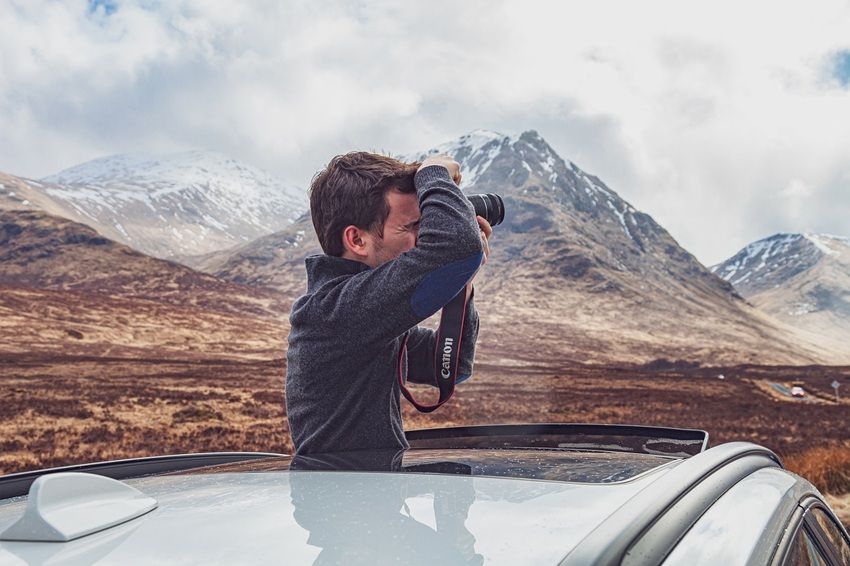
These days, it's not difficult to take landscape photos with our cameras or telephones. But there's more to photographing a panorama than simply capturing it. As photographer Nicolas Doretti explains in this video, a good shot featuring a place must tell a story, be associated with an emotion of some kind. It's easy to take a series of autumn-colored trees; it makes even more sense if the image evokes wonder, melancholy or calm.
To achieve this, the equipment is important, but not necessarily the camera. It's all a question of setting up the camera to capture the scene. This means choosing the right focal length. All focal lengths can add interest to a landscape, as long as you know what effect it creates, what you're looking for and so on.
Composing your image is also very important: which elements are really desired? Sometimes, it's better to focus on one important element than to try to put everything in the same frame. On the other hand, ideally, a wider frame is more practical for cutting out the superfluous.
Extra light is essential, and will radically change the feeling conveyed by the photo. Do you want the sun or moon in the frame, or a little outside? To help you out, there are even applications that tell you from a geographical point where the stars will be at a given time. It's a great way to get ready for a landscape shot.
Running time: 15min10
Learn more about this resource
You might also like:
Writing, reading and the alphabet: a trio through time, the complexity of the brain and human mutations.
Counterfactual history and critical thinking: the educational virtues of uchronies
By inviting students to explore the possibilities of the past and question the status of historical discourse, uchronies encourage a reflective, distanced approach to historical knowledge.
The generative AI revolution and the renewed role of the trainer
Generative AI is profoundly transforming our relationship with knowledge, and creating new roles for trainers, who are called upon to become learning facilitators.
Practice first, then theory: a path linked to constraints in the field
Theory and practice go hand in hand. In teaching, the former generally precedes the latter. However, there are situations in which you enter a sector through practice, gradually absorbing theoretical knowledge.
What normality tomorrow in our world and in the metavers? What will be the place of the school in the construction of the WEB 3.0? A bit of prospective to start the vacations and make people think.