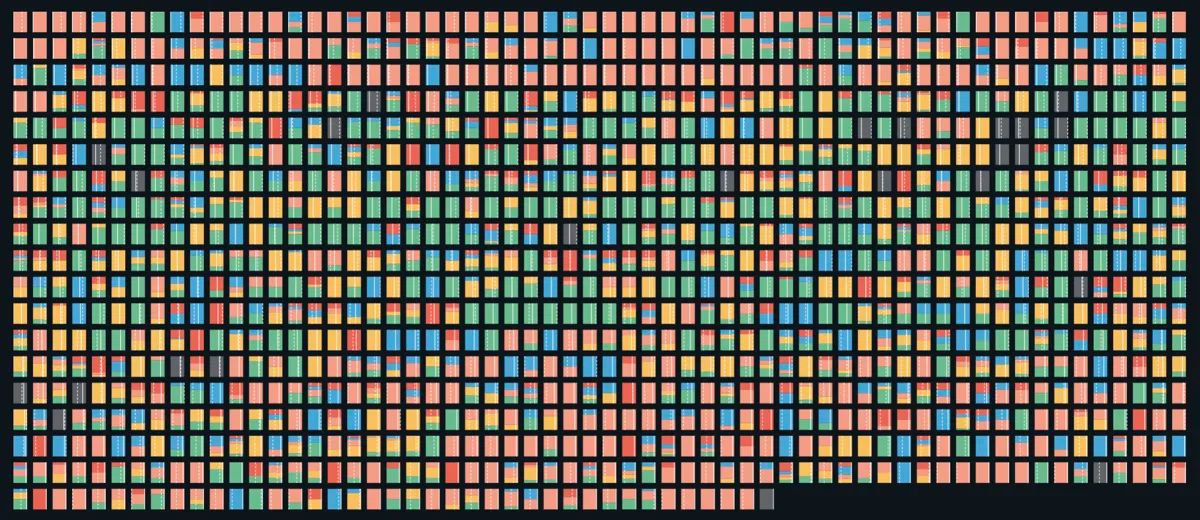
The Ambrosiana Library in Milan is home to a priceless treasure trove: Leonardo da Vinci's largest collection of drawings and writings, the Codex Atlanticus.
On his death in 1519, Leonardo bequeathed the bulk of his manuscripts to Francesco Melzi, one of his close pupils. On Melzi's death in 1570, his son dispersed the manuscripts. Pompeo Leoni received some from Melzi and bought others.
Leoni dismembered the original manuscripts and created two separate collections: the first, "Disegni di Machine e delle Arti Secreti et Altre Cose di Leonardo da Vinci Racolti da Pompeo Leoni," grouped together scientific and technical drawings: this is the Codex Atlanticus. The second, which dealt more with botany and anatomy, was dispersed among several other European collections.
Fully digitized
The Codex Atlanticus contains works by Da Vinci written between 1478 and 1518. 1119 pages have been carefully indexed and digitized, and are available to the public free of charge.
Grouped into 5 sections, the works can be consulted in a variety of ways.
- Geometry and algebra
- Physics and natural sciences
- Tools and machines
- Architecture and applications
- Human sciences
Documents are high-resolution and can be zoomed right down to the ink stains.
As for decoding the writing, please note that it has to be read in a mirror and that it is in ancient Italian or Latin. Da Vinci lived at a time when any truth that contradicted certain dogmas could land you in prison or on the scaffold, not to mention the envy that his machines could attract. So he was wary.
The Milan library is to be congratulated on making this world heritage collection accessible to all. The site has won several international prizes and awards.
Codex Atlanticus
Learn more about this
resource