Municipalities are gradually growing up. While some dream of the countryside, it seems clear that metropolises and other large cities are here to stay. High-rise apartments are going up, buildings are being renovated and roads are being extended. In fact, this last point has led to the fact that in many cities, more space is devoted to motorized vehicles than to people.
Our children, the new apartment cats
Anyone who has been to or lives in a big city sometimes wonders: when was the last time I saw children playing together? Of course, children can be seen going to and from school, or following their parents on various errands. But where are they when they're not out and about? It's a tougher game than finding Charlie on the page.
As this little France Inter report points out, it seems more and more like children have become apartment cats. Their whole world is inside the house or apartment they live in with their parents. Outings are becoming rare, which doesn't help the little ones' overall health, from their vision to their physical abilities.
Instead of trees, screens have become the most common sight for urban children. And while it's easy to point the finger at parents' "irresponsibility" or "over-protection", the latter doesn't come from nowhere. For the past 40 years, urban planning has been geared primarily to automobile traffic. Pedestrians, green spaces and the like have lost space to paved roads. The use of cars in urban agglomerations has imposed itself without sharing.
Seeing the city through children's eyes
In such a context, it's hardly surprising that parents are reluctant to let their children take a walk in a park, especially if the route to get there is frequented by cars. Ideally, a city would make more room for parks with greenery, play and walking areas, and so on. Fortunately, more and more cities are looking at this phenomenon and reviewing their urban planning. The concept is to reconsider it from a child's perspective. What do these little humans, who are just over a metre tall, see?
In concrete terms, this means rethinking signage so that it's visible to adults and children alike. The big plan for these cities is above all to rethink urban planning so that children are in a safe and healthy environment. The idea is to offer them public, educational spaces in touch with nature. The three pillars of the principle are
- Mobility
- Play
- Children's participation in design
If adults were once children, it was usually several decades ago. The world has changed since then, and so have the needs of younger generations. So, if a city really wants to adapt its plans, it must inevitably consult the people who will be using these places. And that means offering spaces for listening and democracy for the very young.
At schoolchildren's level
Many French towns have set up school streets, i.e. the routes leading to the schools are structured so that pupils can walk to them without the risk of being hit by a car. But beyond these initial initiatives, a number of municipalities have decided to go even further and adopt the "child-friendly city" label.
Lille has developed an entire laboratory to implement proposals, some twenty of which have been prioritized. Montpellier has also drawn up a charter along the same lines. Lyon obtained its UNICEF certification, the most rigorous evaluation to date, in 2021, as a children's city, having developed 3 major projects:
- improving safety around schools,
- greening play and learning areas and
- setting up borough councils with children aged 8-10 and teenagers aged 11-14.
Marseille, for its part, has put its approach online with the Fabrique des Communs Pédagogiques to create a guide to inspire others to do the same.
This strategy calls for a major overhaul of urban planning. It combines children's well-being and health, and is probably one of the most interesting approaches to reducing pollution and climate change.
UNICEF and ADEME even carried out a study in 2024 to show that child-friendly cities are essential to the ecological transition. The whole issue of seeing the city from a child's point of view does, however, require those who embark on it to take into account the sensitive dimension of children, and to question the conceptions and practices of adults in the city.
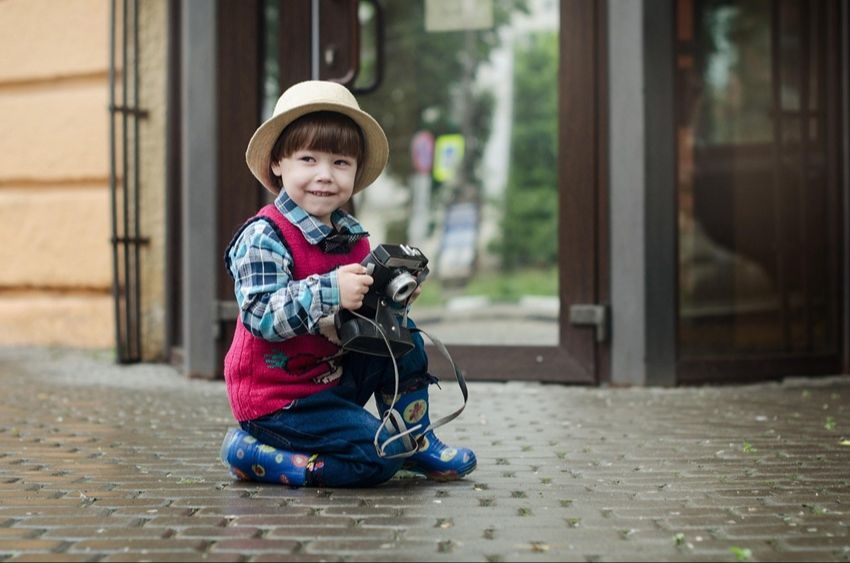
Image: Victoria de Pixabay
References:
"50 propositions pour créer des villes à hauteur d'enfants." IREV - Centre De Ressources Politique De La Ville. Accessed November 14, 2025. https://www.irev.fr/actualites-0/50-propositions-pour-creer-des-villes-hauteur-denfants.
"[FabPeda] Guide : La Ville à Hauteur D'enfants." HedgeDoc. Last updated July 2025. https://pad.faire-ecole.org/s/guidevilleahauteurdenfants
Bortolini, Christelle. "Why cities that are better suited to children are also more sustainable." The Conversation. Last updated March 11, 2025. https://theconversation.com/pourquoi-les-villes-mieux-adaptees-aux-enfants-sont-aussi-plus-durables-251160.
"Children, inspiration for sustainable cities." ADEME Infos. Last updated: September 18, 2025. https://infos.ademe.fr/societe-politiques-publiques/2025/les-enfants-inspiration-de-la-ville-durable/
Quilleret, Célia. "Have urban children become apartment cats?" France Inter. Last updated: May 16, 2025. https://www.radiofrance.fr/franceinter/podcasts/planete-verte/planete-verte-du-vendredi-16-mai-2025-8816240.
"Rethinking cities for families with Adriane van der Wilk #215." Les Adultes De Demain. Last updated: December 4, 2024. https://www.lesadultesdedemain.com/interviews/repenser-les-villes-pour-les-familles.
UNICEF. "Study by ADEME: "Faire la taille - Pour des territoires à hauteur d'enfants"." Child Friendly City. Last updated: May 21, 2025. https://www.villeamiedesenfants.fr/article/pour-des-territoires-a-hauteur-denfant/.
"Ville à hauteur d'enfants: comment Lyon change d'échelle avec Tristan Debray #242." Les Adultes De Demain. Last updated: August 27, 2025. https://www.lesadultesdedemain.com/interviews/ville-a-hauteur-denfants.
Vuaillat, Fanny. "A sideways step about the 'city at children's height'." Métropolitiques. Last updated: October 16, 2025. https://metropolitiques.eu/Un-pas-de-cote-a-propos-de-la-ville-a-hauteur-d-enfants.html?utm_campaign=Revue%2Bde%2Bpresse%2BIREV&utm_medium=web&utm_source=Revue_de_presse_IREV_114.
See more articles by this author