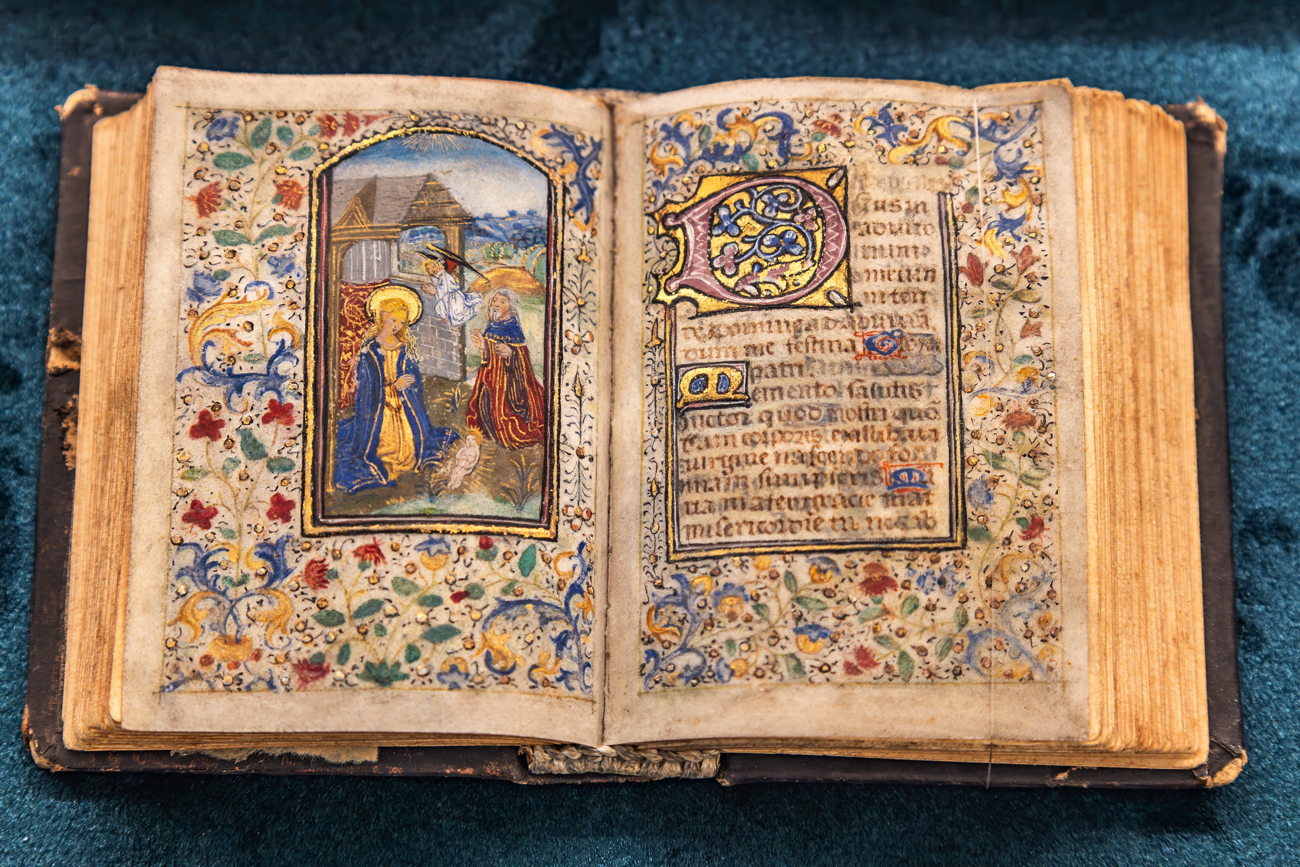
32,000 medieval manuscripts transcribed with A.I.
Transcribing a medieval manuscript has always been a time-consuming task. It involves transcribing handwriting onto aged supports and in languages that have all but disappeared. A challenge for A.I.
Publish at December 10 2025 Updated December 10 2025


With the increasing sophistication of A.I. image and video generation capabilities, it's becoming more and more difficult to identify whether a photo or video is real, or a creation of artificial intelligence.
When it comes to exceptional, extraordinary events, it becomes vital for professional photographers or researchers to be able to certify that it's an event or phenomenon that really happened.
Teddy Furon, Research Director at Inria, has been working on digital tattooing issues since 1998. Unlike body tattoos, which we like to show off...
"A good digital tattoo is invisible, robust - it resists cropping or image compression, for example - and contains a lot of information. Fulfilling these three requirements is already a challenge."
To trace copies, of course, to offer different authentication for each recipient of sensitive documents, thus authenticating the source of any leaks, and also to distinguish the true from the false.
As a concrete example, the signed metadata technology embedded in the Nikon cameras of AFP's photo reporters authenticates their shots, enabling the agency to certify that they are not fake images, which was useful, for example, on the photo of Elon Musk's Nazi salute.
For the full article: Teddy Furon: fighting misinformation with digital tattoos

Domaine de Voluceau
Rocquencourt - B.P. 105
78153 Le Chesnay
France
Tél.: 33 (0)1 39 63 55 11
You might also like:
32,000 medieval manuscripts transcribed with A.I.
Transcribing a medieval manuscript has always been a time-consuming task. It involves transcribing handwriting onto aged supports and in languages that have all but disappeared. A challenge for A.I.
Ensuring the transparency of automated administrative decisions
How can we ensure that administrative algorithms apply the law as interpreted by administrative legal departments, without distortion or approximation?
Identifying biodiversity on a large scale
How can you identify a 10 km2 profusion of leaves and tangled plants?
LaborIA and the effects of Artificial Intelligence on the workplace
Those who invest in A.I. in the workplace do so from a managerial perspective (greater efficiency, profits, competitive capacity...), while workers are likely to lose their autonomy, the recognition of their expertise, their attention, their value, and ultimately the meaning of their work. How do we strike a balance?
Four pillars of artificial intelligence research for education
Jill-Jênn Vie, a research fellow in the Soda project-team at Inria's Saclay center, wonders how artificial intelligence will transform the learning experience. Far from having a definitive answer, he has identified four areas for analysis and research...