Bio-inspired training: approaches to educational eco-design
Three paths to understanding the world and finding other ways to approach our teaching practices based on the living world.
Publish at December 16 2025 Updated December 17 2025


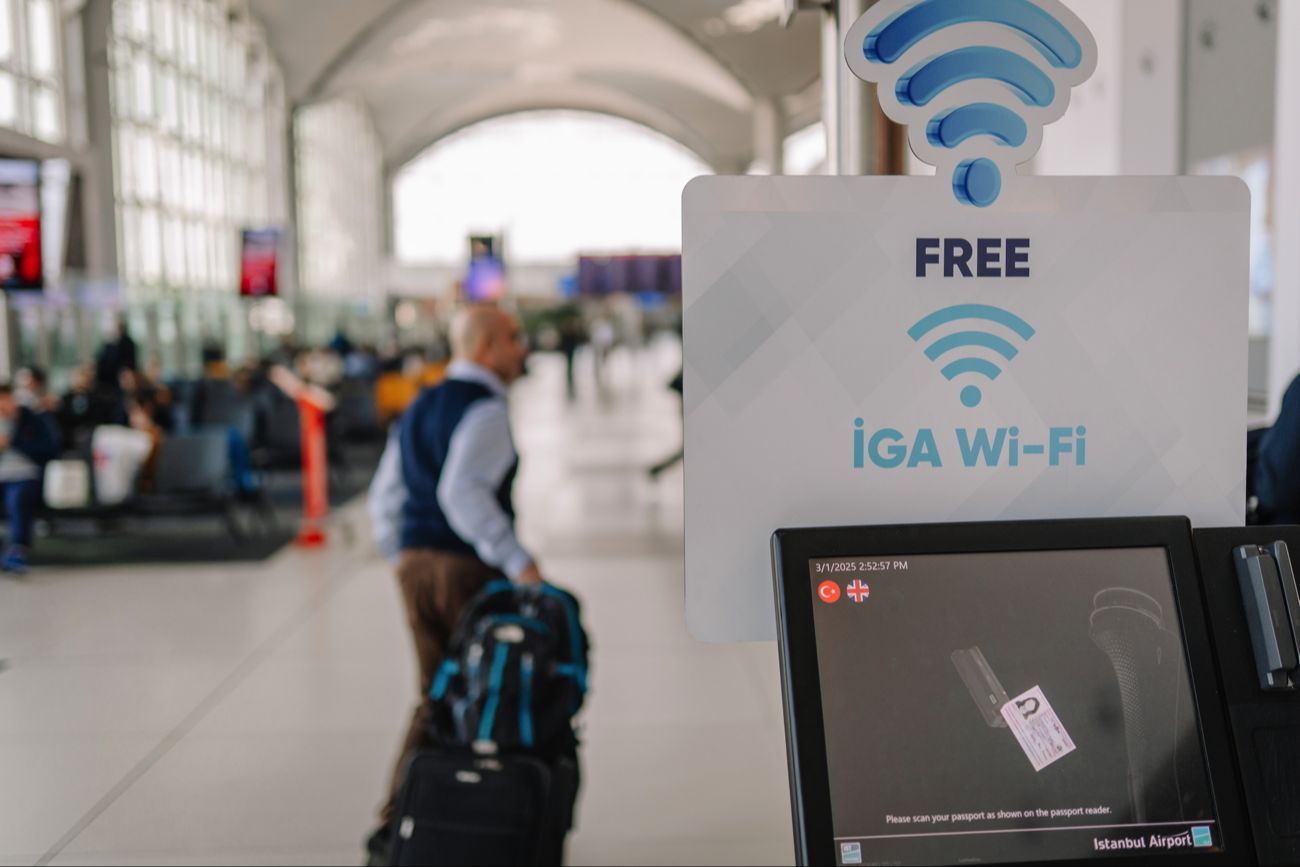
Our phones are now ultra-connected little devices. Not only can they use our home wireless connections, they're able to pick up antenna connection with 5G, among other things. Not to mention millions of public Wi-Fi connections. A practical initiative, but not without risk.
Indeed, the majority of public Wi-Fis are poorly protected compared with those found in our homes. As a result, for hackers, every device connected to this type of network is almost like an all-you-can-eat buffet.
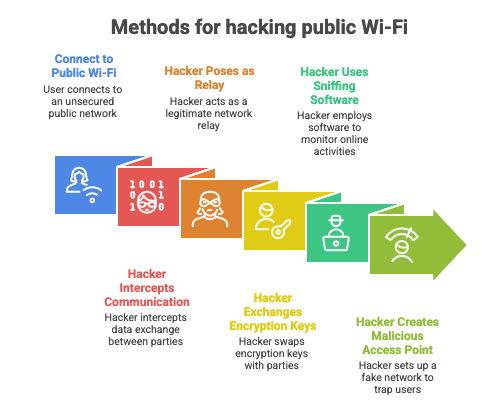
They can take advantage of the need for wireless connectivity to pirate data. One of the most common techniques is "man-in-the-middle". This is a cyberattack in which the hacker intercepts a communication between two parties without either of them being aware of it. They can then listen in, watch, modify and even manipulate the information exchanged. For example, if one of the parties and the attacker are on the same local network, the attacker forces communications to pass through him, posing as an essential relay, router or gateway. From there, he can transmit his own encryption keys to either party, and both parties transmit theirs to him, unaware that the one they receive back is not that of their interlocutor, but that of the attacker.
Many employ "sniffing", i.e. spying with specialized software to monitor online activities, view the entirety of the pages concerned, collect documents as well as images. There are dozens of such programs available to computer network administrators, but hackers don't hesitate to use them. Before connecting to an unknown network, a certain amount of mistrust is appropriate.
There are also hackers who use malicious access points to create "public" networks that resemble those of a known location. In this way, they count on the fact that many users won't catch their mistake and thus gain access to the person's Internet traffic.
Cybersecurity experts therefore recommend disabling automatic connection to networks as soon as you leave the house, to avoid ending up on malicious networks.
If you don't want to turn this function off, you can use a VPN to create an encrypted connection to a public network. Updating applications also helps protect your phone, and avoiding sensitive sites requiring passwords are ways of avoiding unpleasant surprises.
Illustration: Shutterstock- 2596547785
References :
Why you should disable WiFi on your smartphone when you leave the house - https://www.journaldugeek.com/2025/12/02/pourquoi-il-faut-absolument-desactiver-le-wifi-de-votre-smartphone-en-sortant-de-chez-vous/
Man-in-the-middle attack - https://fr.wikipedia.org/wiki/Attaque_de_l%27homme_du_milieu
Understanding the intricacies of a computer network - https://cursus.edu/fr/32016/saisir-les-subtilites-dun-reseau-informatique
Man-in-the-Middle Attack: Types And Examples - https://www.fortinet.com/resources/cyberglossary/man-in-the-middle-attack
Is public Wi-Fi dangerous? The ultimate risk guide - https://fr.norton.com/blog/privacy/public-wifi
The benefits of cybersecurity training - https://cursus.edu/fr/28599/les-avantages-dune-formation-en-cybersecurite
What are the most common sniffing tools? - https://www.ilaria-academy.com/definition/quels-sont-les-outils-de-sniffing-les-plus-utilises-en-securite-informatique
Learn more about this news
You might also like:
Bio-inspired training: approaches to educational eco-design
Three paths to understanding the world and finding other ways to approach our teaching practices based on the living world.
Art and virtual reality: the ultimate immersion?
We've always created with whatever we could get our hands on. From drawing stones in caves to 3D creation software on our computers, we've always been able to express our artistic side with these tools. As virtual reality gradually takes hold, the art world has already begun to embrace it. Whether it's visual artists or the film industry, total immersion in a work of art no longer seems a science-fiction idea.
The genealogy of the first procedures and the birth of an operating know-how
An illuminating look back at the oldest human instructions for keeping know-how alive.
Benevolence in the service of dependency: building the state of autonomy
Caring isn't a given, even though it's a real pillar of support for a dependent person. Caring sometimes requires considerable emotional effort and a certain stability. It is a reinforcement of the dependent person's autonomy.
Data versus discourse: where's the sense?
Discursive authority is threatened both by the vogue for narrative, which manipulates those for whom it is intended, and by access to raw data, which invites everyone to make up their own minds about the facts.