Zoom fatigue and virtual meetings: management mode
The suggested behaviors to prevent Zoom fatigue are simple and apparently effective.
Publish at December 17 2025 Updated December 17 2025


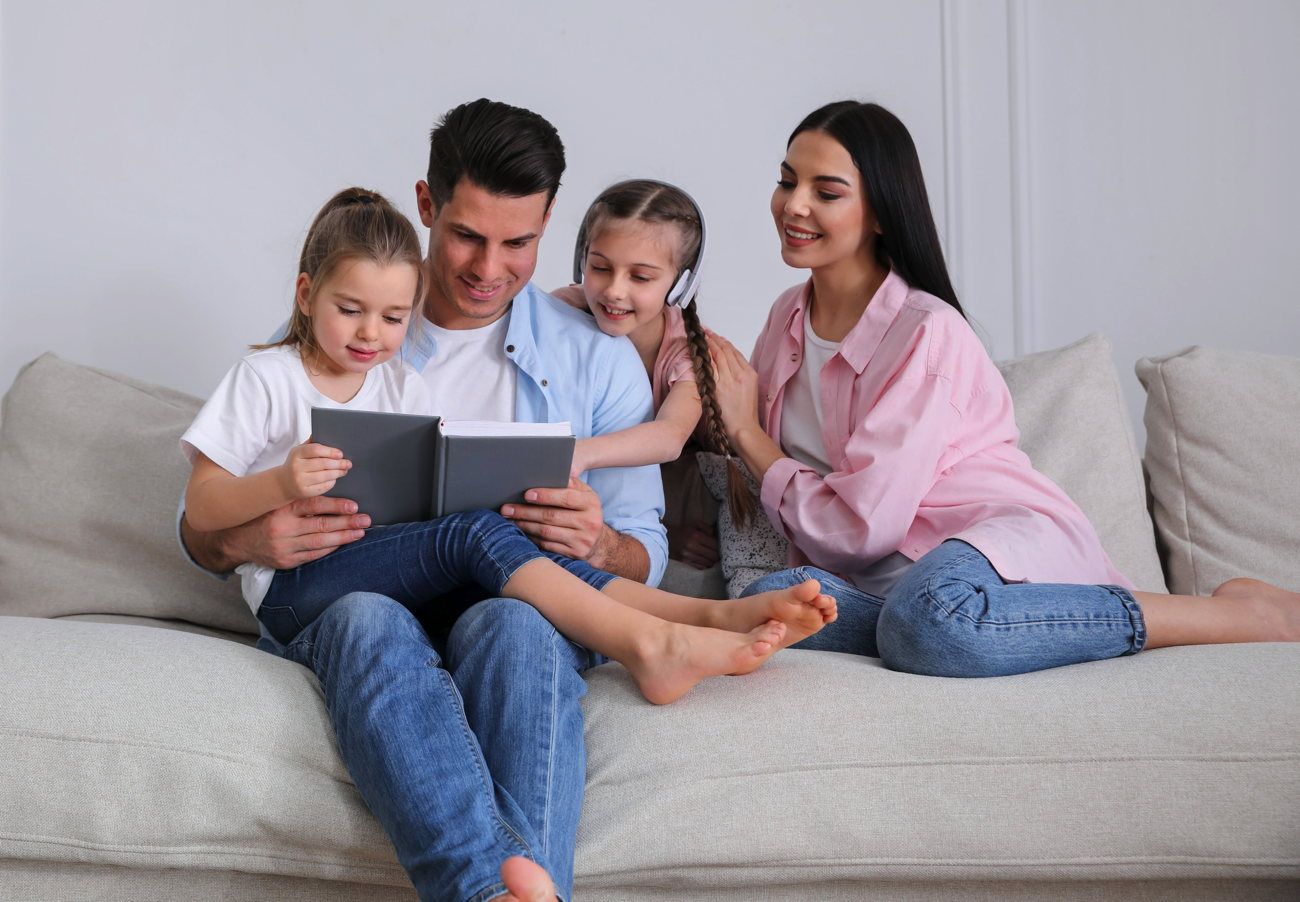
A learning family is not a model, but an environment: a space where ways of inhabiting the world, feeling, understanding, regulating relationships and acting together are constructed. The family thus becomes a collective that learns, not only for the child, but for each of its members. This idea is echoed in French-language research on family education, which is still scarce but enlightening, as well as in work on parental involvement, the educational environment and the dynamics of interactions.
Learning families develop three recurring processes: role circulation, shared narrative and tension management.
Role circulation occurs when the child can explain a method, demonstrate digital usage, suggest a rule; while the parent accepts dependence or asks for help. In a blended family, for example, a teenager introduces a new ritual - a "Sunday evening meeting" - to discuss the week's schedule, thus ritualizing a form of cooperation. This type of initiative corresponds to the logics of "accompaniment" put forward by research on family education, which values reflective rather than directive parenting skills (Saint-Jacques et al., 2012).
Shared storytelling appears in the micro-stories of everyday life: recounting one's day, a conflict at school, a misunderstanding between adults, good news, a fear. In an extended family living in a rural area, for example, mealtime stories become moments of co-construction of meaning. These stories play a structuring role in the creation of a collective memory, as shown by French studies on parental representations and child development (Cyrulnik, 2001).
Managing tensions is a central issue: a learning family does not eliminate conflict, but rather works with it. In some blended families, conflict over living rules (screen time, tidying up) can become a forum for clarifying the values of the different adults present. This type of regulation is in line with approaches in family education, where parental competence consists in the ability to adjust interaction to encourage the child's autonomy.
The learning family pays particular attention to the material environment. In a single-parent family living in a cramped apartment, for example, the creation of a "quiet corner" for reading or school work helps to support learning, despite strong constraints. Research shows that the domestic environment strongly structures engagement (Feyfant, 2011).
The environment is not limited to space: it also includes bodies and practices. A Mediterranean family may integrate moments of family walking as a space for dialogue; an overseas family may ritualize practices around nature, gardening, fishing, which transmit intergenerational tacit knowledge.
Technology, for its part, is a powerful and ambivalent medium. It can fragment attention - for example, when an evening meal is dominated by notifications - but it can also become a lever for family learning: educational research on the Internet as a family, shared viewing of a documentary, making a joint video. Research in the French-speaking world emphasizes that digital tools require frameworks for use and mediation to support educational involvement.
Learning families show effects on mutual trust, children's autonomy, intergenerational cooperation and resilience in the face of transitions.
In France, work by the ENS de Lyon (Feyfant, 2011) shows that family involvement is a significant factor in academic success, particularly for young children. Other studies emphasize that the quality of family communication fosters self-esteem and emotional security (Cyrulnik, 2001).
New international research suggests additional effects on innovation, prosocial behavior and creativity (Kong, 2024), although these results still need to be confirmed in French-speaking contexts.
Certain conditions limit the learning posture.
In single-parent families, the combination of professional, educational and domestic constraints can reduce the time available for mutual attention. French statistics show the fragility of these families: 41% of single-parent children lived below the poverty line in 2018 (INSEE, 2020). In this context, creating simple routines - evening reading, a short walk, preparing a shared meal - often becomes the key to maintaining a learning environment despite daily pressure.
In blended families, the plurality of histories and values can make regulation more complex. But this diversity can become an asset when the family welcomes it as a narrative and cultural richness. An example: a blended family who organizes a "family culture evening" where each member recounts a tradition or memory from their former home, creating a new common ground.
In extended families, the cohabitation of several generations can facilitate transmission (cooking, crafts, rituals), while at the same time requiring fine-tuned regulation of space and time. Children may receive several models of authority or relationship at the same time.
Finally, technology can accentuate educational inequalities: in disadvantaged contexts, access to equipment or connection remains an obstacle; in advantaged contexts, over-connection can reduce relational presence time.
Learning families offer valuable lessons for organizations, teams, research or facilitation collectives.
They show that collectives become robust when :
A work team can draw inspiration from the Sunday family meeting to establish a ritual of alignment; a research group can draw inspiration from family stories to structure its own moments of reflexivity; a learning community can think of its space (physical or digital) in the same way as the learning family thinks of its environment.
Ultimately, learning families show how a collective becomes more alive when it supports forms of mutual attention, narrativity and regulation that make the relationship a place of continuous learning.
Illustration: Shutterstock - 2608810923
Bibliography
Cyrulnik, B. (2001). Ugly Little Ducks. Odile Jacob.
Feyfant, A. (2011). The effects of family education on academic success. ENS de Lyon. https://veille-et-analyses.ens-lyon.fr/DA-Veille/63-juin-2011.pdf
INSEE. (2020). Les familles en France: données 2020. https://www.insee.fr/fr/statistiques/5422681
Kong, M. (2024). Family learning environment and individual innovative behaviors: Framework development and validation. Creativity Research Journal. https://pubmed.ncbi.nlm.nih.gov/39594361/
Saint-Jacques, M.-C., Turcotte, D., & Oubrayrie-Roussel, N. (2012). Family education: foundations, practices and impacts. Enfances Familles Générations, 16. https://journals.openedition.org/efg/3933
Developing the educational alliance between parents and teachers - Alexandre Roberge - Thot Cursus
https://cursus.edu/fr/29933/developper-lalliance-educative-entre-les-parents-et-les-enseignants
You might also like:
Zoom fatigue and virtual meetings: management mode
The suggested behaviors to prevent Zoom fatigue are simple and apparently effective.
Teachers and schools have long learned to adapt their activities when it's too hot on their premises, but now it seems that traditional responses are insufficient. Are they?
Traveling to Learn: The Educational Expedition
How can we move from the codes and rituals of tourism to a genuine learning expedition, organized to turn travel from a parenthesis into a lever for sustainable transformation?
Worn out perhaps, but not obsolete at 65
Even when we're worn out, we can still be appreciated and, above all, not at all obsolete. Retirement brings changes in status, relationships and activities, with all the uncertainties and doubts about our ability to cope. While we can't do much about wear and tear, we can fortunately intervene successfully against obsolescence, which has nothing to do with age.
Creating links at a distance - Beyond sub-groups and post-its
Creating links and interaction. But what kind of link? In training, whether remote or face-to-face, there's a lot of sharing going on. The more we exchange, the more we interact, the more we learn. We exchange visio glances and words, surveys, word clouds and post-its. We'd like to suggest a few ways forward.