Among the most important countries with an impact on climate change, China stands out alongside the USA and India. It has to be said that the Middle Kingdom has enjoyed gargantuan productivity in recent decades, becoming the world's largest exporter of goods. However, this has come with a major ecological price: Chinese factories are generally coal-fired, which means intense pollution. The huge country has come to understand this, and is turning its eco-responsible corner in its own way.
A big surprise in the wind farms
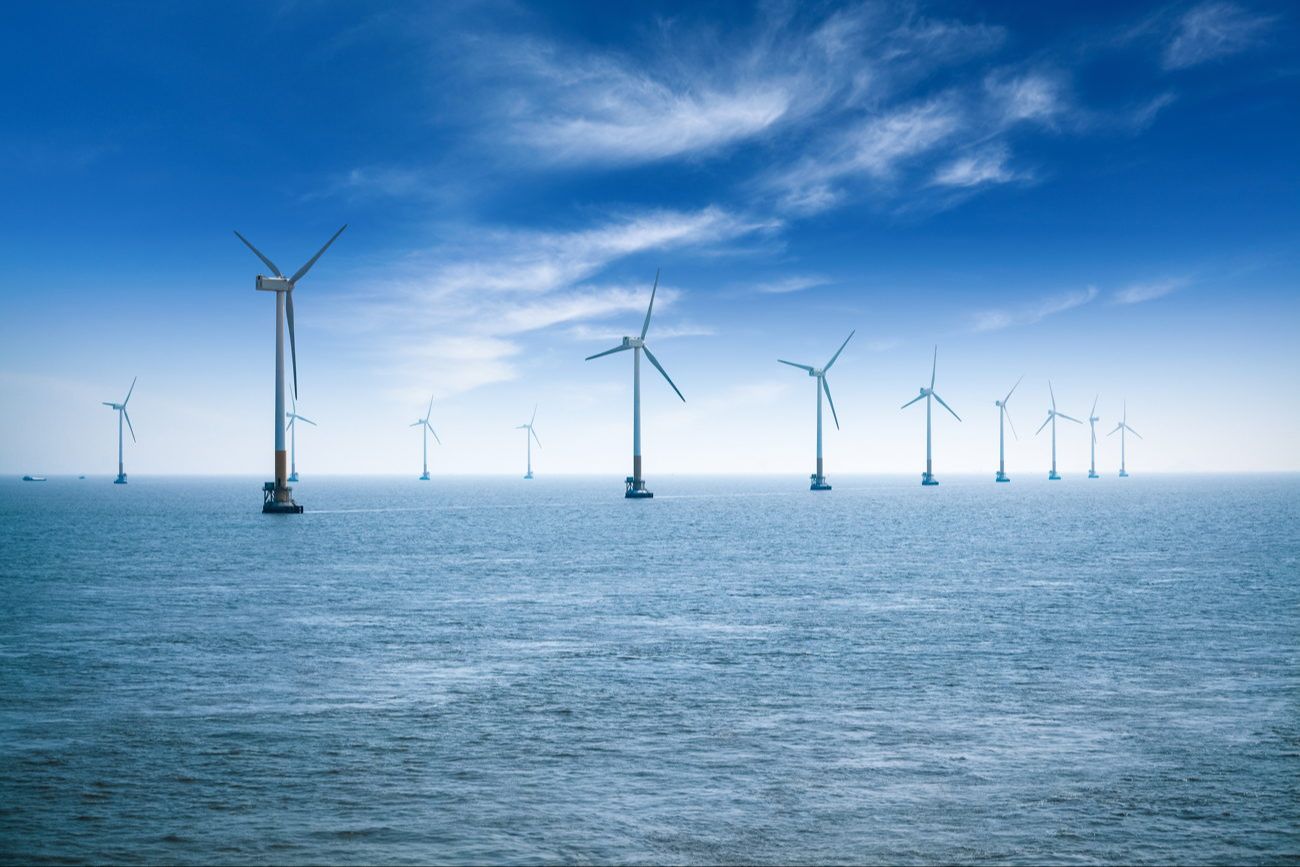
The Yellow Sea and China's Pacific coast have seen the emergence of wind farms. Taking advantage of the near-continuous offshore winds, the Chinese people are beginning to benefit from this manna of renewable energy. Good news for a country once addicted to fossil fuels. What's most surprising is that what is often considered a rather disruptive structure for ecosystems turns out not to be so hostile for biodiversity.
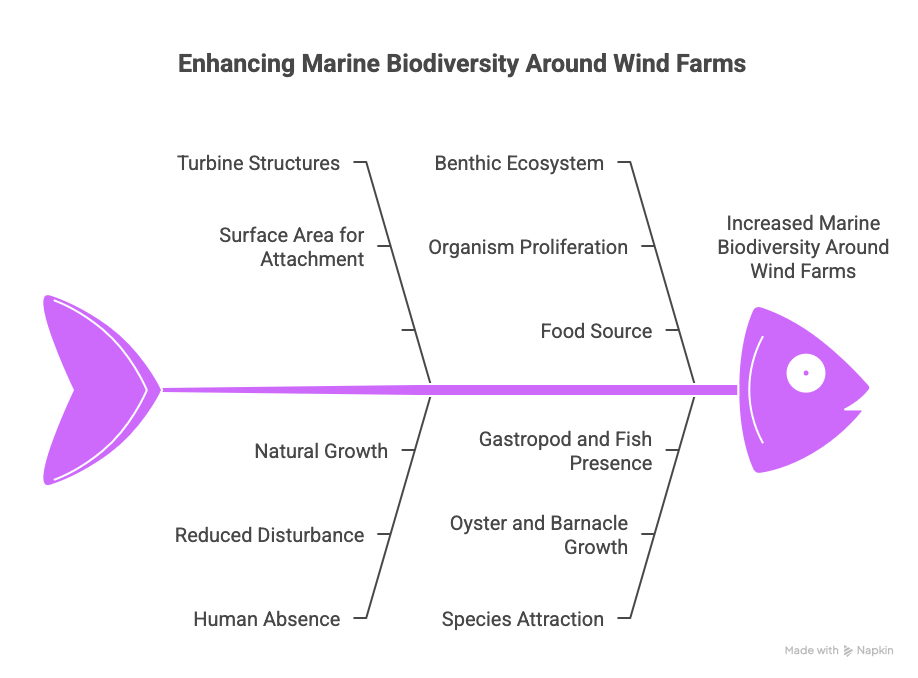
In fact, Chinese researchers analyzed a wind farm in the Yellow Sea and found that the area around the turbines was home to more marine species than other parts of the body of water. Why is this?
Once they had been installed and left "alone" by humans, the presence of seabed organisms multiplied over time, creating a benthic ecosystem.
These organisms began to take advantage of the external structures to attach themselves to them. First oysters, barnacles and others began to proliferate on the submerged part of the structures. This abundant life then attracted other species, such as gastropods and fish, among others.
Isn't wind power just as dangerous for nature?
A lot has been said about wind turbines and their effects on nature. While it's true that the installation itself can be disruptive and create stress for the environment, observations show that this tends to diminish over time.
Even birds, often the victims of large blades, could be much less affected with strategic placement that does not, among other things, force migratory groups to avoid wind farms for too long. Some even believe they could protect them.
It all depends on how the infrastructure is set up, and on really thorough research to ensure that flora and fauna are not overly inconvenienced by wind turbines.
Illustration: Shutterstock - 138446837
References
China's wind farms are doing a lot more than generating electricity - https://www.slashgear.com/2071415/china-wind-farm-ecosystem-study/
Offshore windfarms enhance function of coastal waters and diversity of aquatic life, say researchers - https://phys.org/news/2025-12-offshore-windfarms-function-coastal-diversity.html
Offshore wind farms can enhance the structural composition and functional dynamics of coastal waters - https://www.sciencedirect.com/science/article/pii/S2351989425005840?via%3Dihub
In ecology as in economics, are some remedies worse than the disease? - https://cursus.edu/fr/31727/certains-remedes-sont-ils-pires-que-le-mal-en-ecologie-comme-en-economie
Offshore Wind Farm in China Becomes a Haven for Oysters, Barnacles, and More, Study Finds - https://www.scientificamerican.com/article/offshore-wind-farm-in-china-becomes-a-haven-for-oysters-barnacles-and-more/
China's wind farms can protect migratory birds, if well placed - https://dialogue.earth/en/nature/chinas-wind-farms-can-protect-migratory-birds-if-well-placed/
Wind power tries to make its way offshore - https://cursus.edu/fr/22650/leolien-essaie-de-se-faire-une-place-en-mer
Learn more about this
news