Moving from theory to practice, a challenge for the school
As Benjamin Franklin said: "Involve me and I will learn". It is essential that in school we have the right to make mistakes, that we allow experiments and that we trust the teachers.
Publish at February 05 2026 Updated February 05 2026


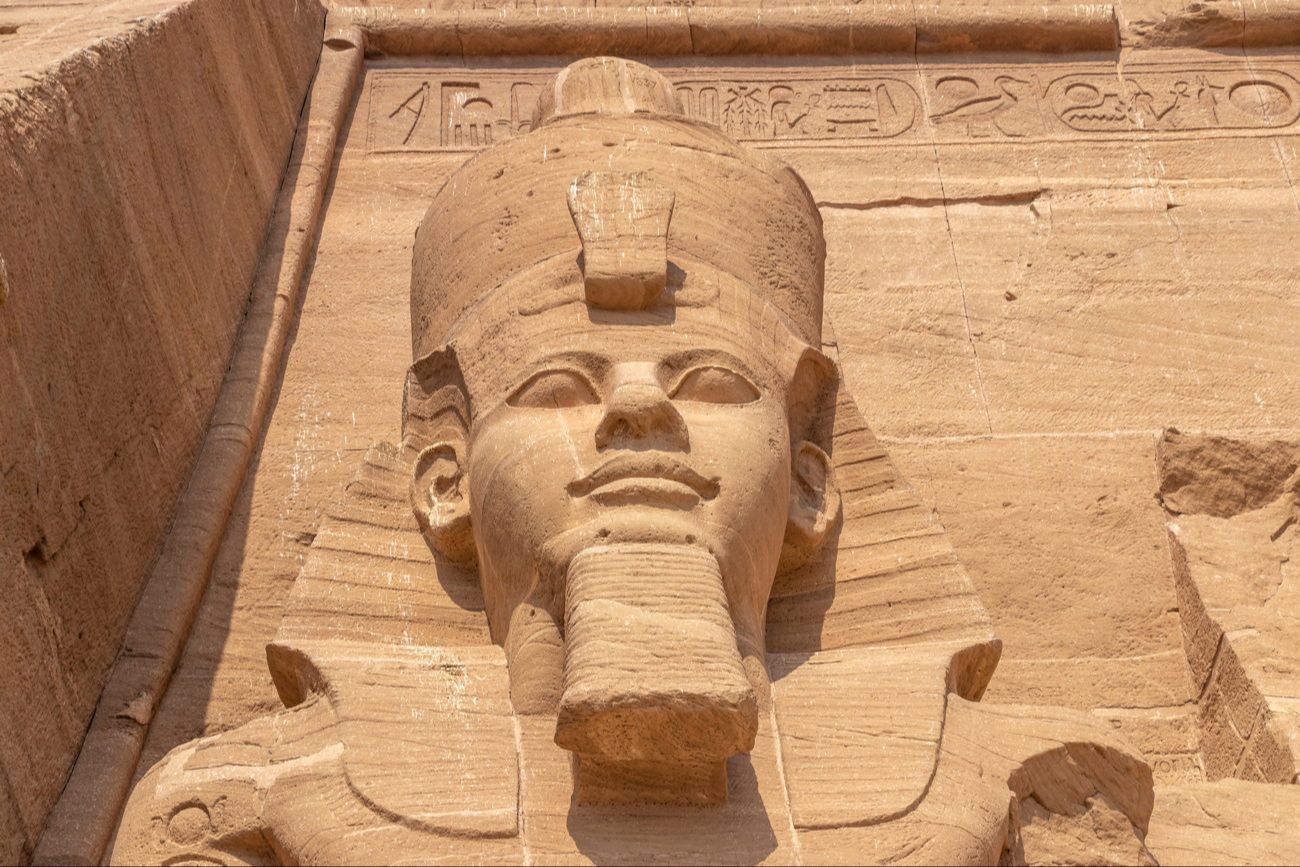
We have no idea of the treasures that lie dormant beneath the surface of the earth, sand and so on. Many remains of ancient civilizations are still there, waiting to be discovered by persevering archaeologists. Teams of archaeologists continue to dig in Egypt, among other places, in search of vestiges of the ancient civilization that left its mark on the world with its pyramids and sphinx, to name but a few.
Among the many items sought by archaeologists, part of a statue of the ancient Egyptian pharaoh Ramses II, representing him seated, was highly coveted. The first piece was discovered by a German team around 1930. 96 years later, the second part of this statue was unearthed by a group of Egyptian and American archaeologists.
It was found at El Ashmunein, the modern site of Hermopolis Magna, 150 kilometers south of Cairo. Hermopolis Magna was part of Upper Egypt, which corresponds to present-day southern Egypt. This was the name given to the city by the Greeks. Its original Egyptian name was Khumunu ("City of Eight"). Here, the revered deity was Thoth, the god of wisdom and infinite knowledge. Khumunu was also the capital of the Hare nome, one of the forty-two nomes (administrative regions) of ancient Egypt.
The part found is an almost four-metre-high piece carved from limestone, probably representing Ramses II. Experts confirmed this by looking at the famous ruler's characteristic headdress and the partly preserved markings of the royal cobra embodying the 19th dynasty. In addition, the teams noted traces of blue and yellow pigments on the surface of the stone. They are currently carrying out additional tests to find out more about the nature of the coloration at that time.
The good news is that, despite the rather wet and changing environment in recent years, particularly with the construction of a hydroelectric dam in the area, the ancient piece has been very well preserved.
Admittedly, this is not the only representation of the great pharaoh, but each one recalls the symbolic grandeur of this third pharaoh of the 19th dynasty. The Egyptians of the time called him "Userma'atre'setepenre", i.e. the guardian of harmony and equity, strong in law and chosen by Ra (the all-powerful Sun God in Egyptian mythology).
He ruled Egypt from 1292 to 1186 BC, dying at the age of 96, a remarkable age for the period. Many have credited him with a major victory over the Hittites, but modern historians temper this victory more with a draw than anything else. Even so, it was this war that led to mankind's first known peace treaty around 1258 BC. He is often associated with the pharaoh mentioned in the biblical book Exodus, but there is no historical or archaeological evidence to link the two.
This king had 200 concubines, 96 sons and 60 daughters, most of whom he surpassed in longevity. Indeed, many Egyptians feared that his death was a sign of the end of the Egyptian empire. Many representations show Ramses II and it's common to see him in bas-reliefs depicting the battle of Qadesh on a chariot using a longbow. He appeared in many parts of Egypt, including Luxor and Karnak, among others.
Of course, the greatest representation of his greatness is Abu Simbel: rock-cut temples north of Lake Nasser. This edifice was created to mark his victory and to enable the people to worship him and his first wife, Nefertari, the monarch's principal wife, to the gods. It was this temple dedicated to his consort that was first discovered by archaeologists in the early 19th century.
This latest find in 2024 clearly demonstrates the major presence of this mythical pharaoh. All the more so as it completes what was found in 1930. Indeed, the Egyptian Supreme Council of Antiquities has submitted an official request to reunite the two pieces to form one of the few large seated representations of the ruler outside Thebes and Abu Simbel.
Illustration : Shutterstock - 1184857975
References
After 96 Years, the Missing Part of a Legendary Egyptian Statue Has Finally Been Found - https://indiandefencereview.com/missing-ramesses-statue-found-egypt-96-years-later/
Hermopolis Magna - https://www.britannica.com/place/Hermopolis-Magna
After 96 Years, Archaeologists Finally Found the Missing Part of a Legendary Statue - https://www.popularmechanics.com/science/archaeology/a69897517/archaeologists-found-ramesses-ii-statue-part/
Luxor and Egyptian orpiment [Thesis] - https://cursus.edu/fr/23221/luxor-et-orpiment-egyptien-these
Ramesses II - https://www.worldhistory.org/Ramesses_II/
Temples of Abu Simbel - https://fr.wikipedia.org/wiki/Temples_d%27Abou_Simbel
Eternal Egypt: an odyssey for the senses and the soul - https://cursus.edu/fr/33549/legypte-eternelle-une-odyssee-des-sens-et-de-lame
Learn more about this news
You might also like:
Moving from theory to practice, a challenge for the school
As Benjamin Franklin said: "Involve me and I will learn". It is essential that in school we have the right to make mistakes, that we allow experiments and that we trust the teachers.
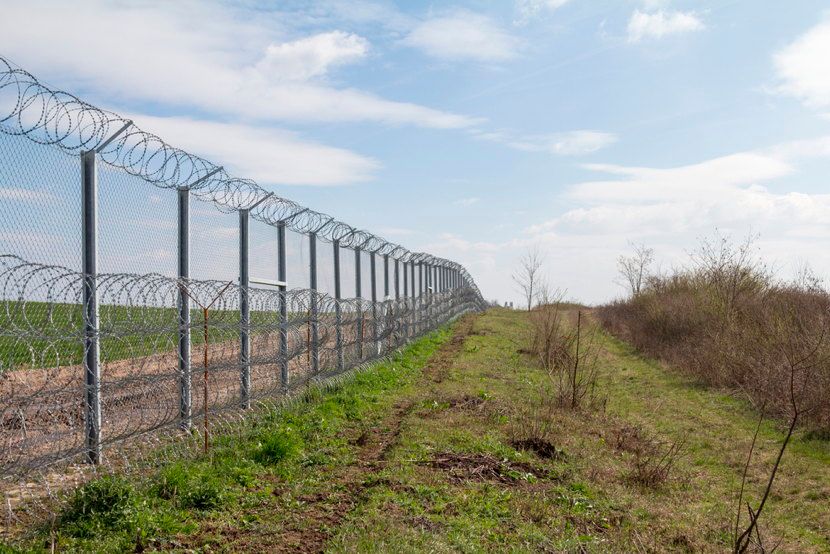
The border wall, or the refusal of the Other.
While some areas are erasing their internal borders (as is the case in the European Union), others are fragmenting, creating physical frontiers that bode ill for the mutual understanding of the peoples living on either side. Dossier and examples.
Third places, tomorrow's localities?
We are in the process of reinventing "lieux-dit" based on "tiers lieux" and, in so doing, we are creating new narratives of the territory so that we can finally learn to live together.
Eating with your fingers is a way of life in Africa, and a habit that could well be adopted elsewhere.
Peer review and assistance user guide
Peer Assistance and Review (PAR) is a mentoring program for teachers launched in Toledo, Ohio, which became known as the "Toledo Plan". Created by the presidents of local teachers' unions in collaboration with school administrations to enable expert teachers to serve as mentors for other teachers and thus improve the quality of teaching in schools.