Hot and cold water, prescription for athletes
To complement previous studies on cold baths, an international research team has investigated the effects of hot baths in the training of top-level athletes. Hot and cold have their advantages.
Publish at February 18 2026 Updated February 18 2026



This guide to quantifying Scope 3 GHG emissions in universities was developed after several months of consultation by the Réseau universitaire québécois en développement durable (RUQDD).
It is a structuring tool for both universities and organizations wishing to increase the accuracy of their greenhouse gas (GHG) inventories. It aims to make available the knowledge and collective expertise needed to improve and harmonize quantification practices. Offering a common, clear and operational framework for the assessment of Scope 3 emissions, i.e. those not yet standardized, unlike the quantification of Scope 1 and 2 GHG emissions.
Scope 3 emissions include those linked to travel, purchases of goods and services, and events. Due to the nature of the activities leading to Scope 3 GHG emissions, their quantification is complex. For this reason, this guide provides clear indications as to the preferred quantification approaches, the categories of activities to consider and the relevant emission factors to use.
The guide proposes precise methods for quantifying GHG emissions produced or avoided for :
According to ISO 14064-1: 2018, "an organization has operational control of an operation if that organization, or one of its subsidiaries, has full authority to initiate and implement its operating policies at the operational level".
Thus, under this standard, universities account for 100% of GHG emissions and removals from facilities over which they have operational control. However, organizations do not have full operational control over Scope 3 GHG emissions, even though these indirect emissions often represent the largest part of an organization's carbon footprint. However, exclusions from the Scope 3 inventory cannot be justified by the absence of full operational control, as organizations may have the power to influence and act on the choices and activities that lead to these emissions.
Both the physical quantification approach and the financial approach are based on the Emission Factor (EF) method, where activity data is multiplied by the EF.
GHG emissions = activity data * emission factors
GHG activity data is a quantitative measure of the activity, in tonnes of CO2 equivalent, resulting in GHG emissions or removals. For example, the amount of energy, fuel or electricity consumed, materials produced, service provided, or land area affected (ISO, 2018, article 3.2.1).
Download the guide :
Guide méthodologique : Quantification des émissions de GES de portée 3 (.pdf) (FR)
Methodological Guide: Scope 3 GHG Emissions Accounting for Universities (.pdf) (EN)
Reference
Réseau universitaire québécois en développement durable - https://www.ruqdd.ca/
Learn more about this resource

2325, rue de l’Université
Québec, Qc - G1V 0A6
Canada
1 877 606-5566
View profileYou might also like:
Hot and cold water, prescription for athletes
To complement previous studies on cold baths, an international research team has investigated the effects of hot baths in the training of top-level athletes. Hot and cold have their advantages.
Drunken forest and other phenomena of the changing Arctic world
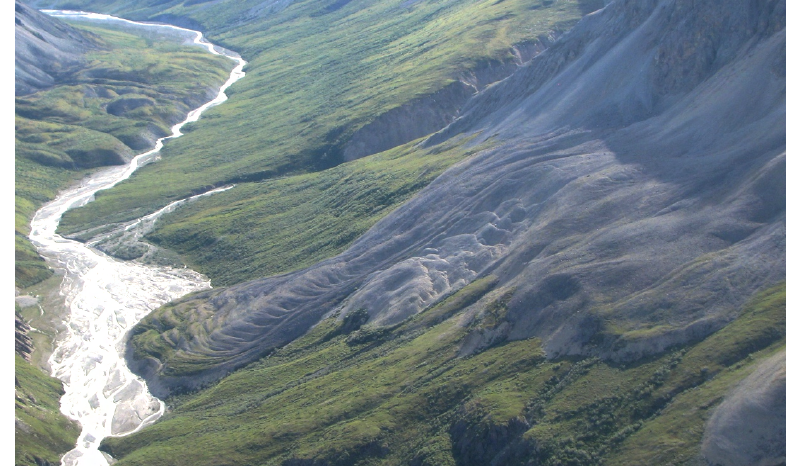
Those who study the Far North observe a variety of phenomena and need to agree on terms to name the same things with the same words. "Aufels", "Freezeback", "Frost blister", hundreds of terms testify to a wide variety of phenomena and observations by scientists and natives alike.
Better food preservation without preservatives, but with yeast
Yeast has long been used in traditional experiments to improve the shelf life of foods such as bread and cheese, but it's not clear why it worked.
Why hide your doctoral thesis?
The thesis "Les Cuivas" that Bernard Arcand defended in 1971 at Cambridge University, England, is unusual in that it was not published during the author's lifetime, contrary to common practice...
A night at the museum... of philosophy
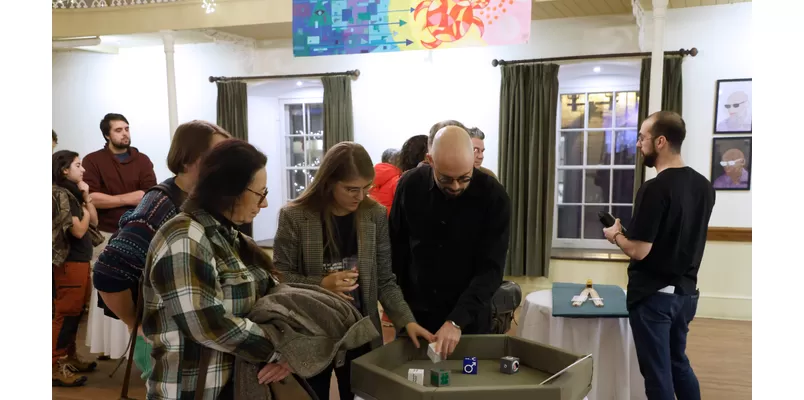
"A Night at the Museum of Philosophy", is an ephemeral museum with workshops, games and lectures, all in a friendly, lively atmosphere.