Ndop: an endangered international heritage element
Against a backdrop of globalization and urban exodus, the traditional art of Ndop in Cameroon seems destined to disappear. Fortunately, some are trying to preserve this symbolic fabric.
Publish at April 22 2026 Updated April 22 2026


What is tourism really for? The question may be asked, as travelers seem to be stupidly following a pre-established list of places to visit. They wander around Paris, Venice, Abidjan, Tokyo, Mexico City or Montreal, hurrying from museum to park to check everything off. Do they really enjoy it? Are they interested in the places they visit?
The tourist industry doesn't care. Pushing the population to visit as many so-called "must-see" places as possible is good for business. But in an already stressful, productivity-driven world, do we have to constantly set ourselves targets when it comes to seeing the country? All the more so as the issue of "overtourism" has forced public authorities in several localities to place restrictions on the flow of tourists, much to the delight of local populations who couldn't take it anymore. What if travellers took the opportunity to meet these people and get off the beaten track?
This is the idea behind "slow tourism", which seems to be attracting more and more tourists. As the name suggests, the principle of this type of travel is not to bet on speed - quite the contrary. This state of mind is directly linked to the movement to slow down, in one's life, in one's diet, and so on. So, rather than trying to see everything in a given region, we settle down and travel at our own pace, even if it means not seeing everything. This is literally the opposite of the fear of missing out (FOMO) so common on social networks.
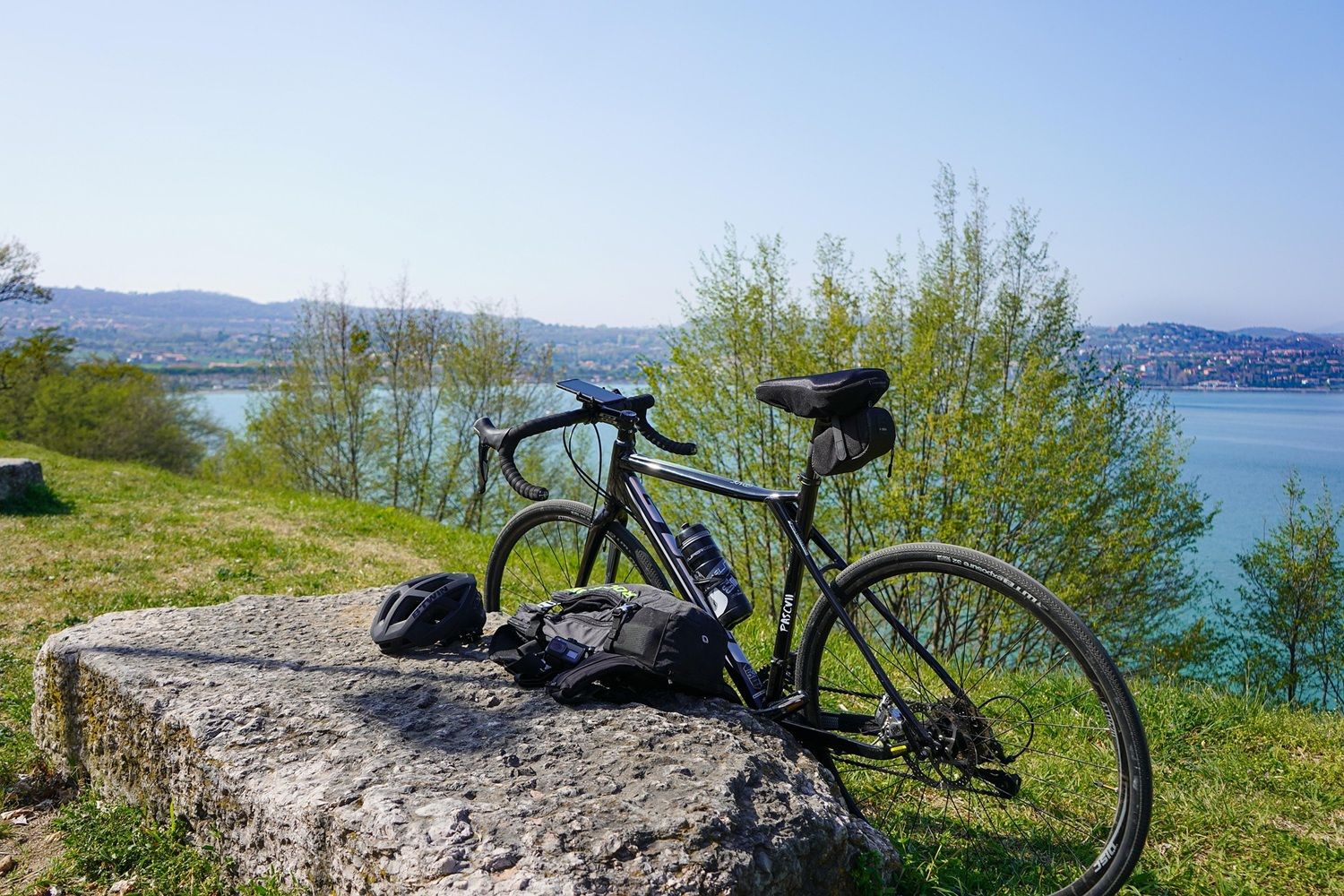
Unlike pre-established lists, slow tourism doesn't bother with much, if any, agenda. It relies on more sustainable, low-carbon forms of transport such as rail, walking and , above all, cycle tourism, which is almost always associated with it. So, visitors target a region without knowing what they're going to visit. They let themselves be guided by cycle paths, discover picturesque places to eat, meet people in villages, talk to them and ask them about points of interest, etc. Unlike a hyper-organized trip, a train delay or unplanned closure of a place doesn't cause problems or disappointment. You just let yourself go, without thinking about what you've come across along the way.
What's more, this type of tourism showcases suburban and rural areas that are often less popular with travelers. It relies on back roads, local establishments, contemplative activities and places associated with the pleasures of the table and fresh produce.
Slow tourism falls directly into the category of responsible tourism, which relies on trips that are more eco-responsible, fair and supportive of local communities and their inhabitants. Many tourists talk about it as part of their desire to travel better, even if it means driving fewer miles and seeing fewer things.
As they explain, this type of travel didn't come about through an injunction to be eco-responsible. It comes from a deep-seated desire to do things differently, to focus on slowness at a time when the world insists on speed and performance. Through their work, they have helped to support projects in the Aube region and elsewhere in France, so that these places, often ignored by tourists, become places of interest for those seeking to immerse themselves in these more rural territories. Surveys of travelers show a growing interest in this type of journey.
All the more so as the localities see the economic benefits of tourism much more clearly than when everything happens only in the big centers and classic places. On the other hand, this means that public authorities need to rethink this type of tourism, by making it easier to get to these places by train, bike and other environmentally-friendly means. For entrepreneurs looking to make their mark locally, this kind of tourism is an interesting windfall, provided it's financially accessible.
Such tourism need not be exclusively rural. It's also possible to think in terms of slow tourism in towns and cities, with a focus on more natural environments, bike paths, less crowded local locations and human-scale accommodation.
Beware, however, of falling into the recent shortcomings brought about by Airbnb and the like, which have undermined the accessibility of accommodation for locals. If "slow tourism" leads to "overtourism", it will have been counterproductive. France, Italy and Quebec aren't the only places thinking about this. More and more territories in Africa and Asia are implementing approaches to get tourists to visit communities rather than archibund places.
References:
Duthion, Brice. "Slow tourisme: dix ans pour changer de rythme, et peut-être de modèle." Etourisme.info. Last updated January 8, 2026. https://www.etourisme.info/slow-tourisme-dix-ans-pour-changer-de-rythme-et-peut-etre-de-modele/.
Ginoux, Sophie. "Quand tourisme lent rime avec plaisir de la table." Le Devoir. Last updated: February 21, 2026. https://www.ledevoir.com/plaisirs/alimentation/957492/quand-tourisme-lent-rime-plaisir-table?.
Kiéma, Annabelle. "Le 'slow travel' pour voyager mieux." ConsoGlobe. Last updated: July 13, 2025. https://www.consoglobe.com/le-slow-travel-pour-voyager-autrement-cg.
"Le ralentourisme, une tendance de voyage en pleine croissance." Radio-Canada.ca. Last updated: June 15, 2025. https://ici.radio-canada.ca/ohdio/premiere/emissions/feu-vert/segments/rattrapage/2095188/un-ete-a-heure-ralentourisme.
"Slow tourism, or the art of traveling while taking your time." Cottage Parks. Last updated: April 10, 2026. https://www.cottageparks.fr/slow-tourisme/.
"Why slow tourism transforms travel." Detour Odyssey. Last updated May 1, 2025. https://detourodyssey.com/pourquoi-le-tourisme-slow-transforme-un-voyage/.
Roye, Karine. "Slow tourism: do you practice it?" RadioFrance. Last updated: March 30, 2026. https://www.radiofrance.fr/francebleu/podcasts/bienvenue-chez-vous-ici-pays-de-savoie/le-slow-tourisme-le-pratiquez-vous-8412594.
"Slow tourism: a strategic opportunity for entrepreneurs?" Bpi France. Last updated: July 31, 2025. https://bigmedia.bpifrance.fr/nos-dossiers/slow-tourisme-une-opportunite-strategique-pour-les-entrepreneurs.
"Slow tourisme et rencontres humaines: 8 destinations pour voyager autrement avec le tourisme équitable." Fair Tourism Label. Last updated: February 10, 2026. https://www.tourisme-equitable.org/slow-tourisme-et-rencontres-humaines-8-destinations-pour-voyager-autrement-avec-le-tourisme-equitable/.
"Travelling slowly: the slow travel trend explained." Leparisien.fr. Last updated: December 15, 2025. https://www.leparisien.fr/guide-shopping/loisirs-voyages/voyages/voyager-lentement-la-tendance-du-slow-travel-expliquee-15-12-2025-H7CGWDCD5FEXNHXHY2B6ILOW54.php.
Welté, Jean-Baptiste, Isabelle Frochot, and Fo-Yovo Gérome Koutremon. "Slow tourism: slowing down to travel better?" The Conversation. Last updated: August 19, 2025. https://theconversation.com/le-slow-tourisme-ralentir-pour-mieux-voyager-261276.
You might also like:
Ndop: an endangered international heritage element
Against a backdrop of globalization and urban exodus, the traditional art of Ndop in Cameroon seems destined to disappear. Fortunately, some are trying to preserve this symbolic fabric.
For some, the image of museums is that of a place where collections gradually gather dust and are looked at and photographed by visitors. This is far from the truth. Museums are constantly changing their exhibits and infrastructures, and this has enabled them to survive the new demands of recent years.
There are some excellent online resources to help you better understand the particularity, strength and techniques of press illustration. When the tradition goes back this far, we understand its value and richness.
The alternative school: a community school model in vogue in Africa
Africa is looking for development solutions, and this development requires a paradigm shift in education. As a result, alternative schools are emerging as prospects to be followed with interest.
The importance of health literacy...
The medical system is there first and foremost to care for people. This priority should perhaps be accompanied by another: that of ensuring that patients fully understand the ailments that afflict them or the treatments they need to undergo. Indeed, studies tend to show that the level of medical literacy is often low, and can prove just as deadly as certain bad habits.