
32,000 medieval manuscripts transcribed with A.I.
Transcribing a medieval manuscript has always been a time-consuming task. It involves transcribing handwriting onto aged supports and in languages that have all but disappeared. A challenge for A.I.
Publish at June 17 2026 Updated June 22 2026


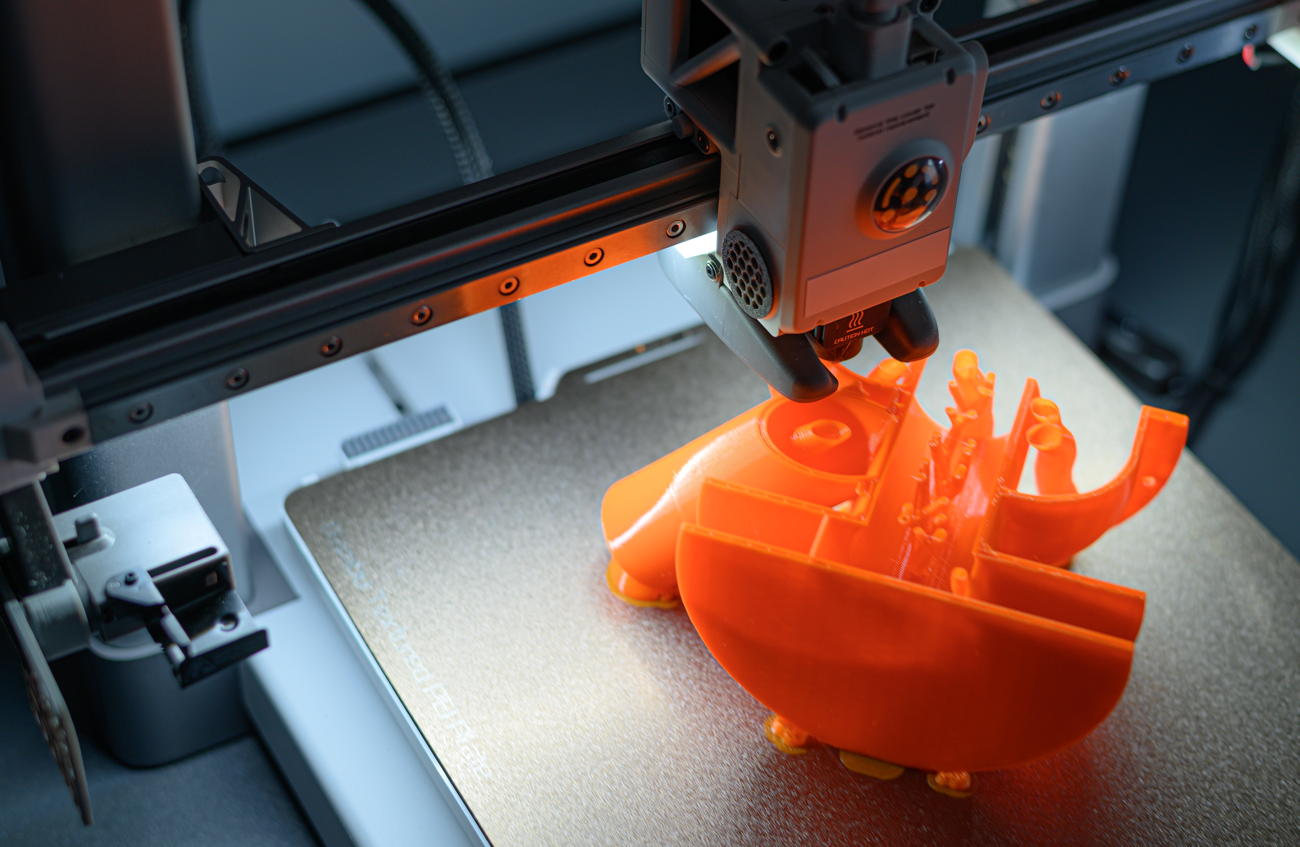
"There must be no interruption in the extrusion flow, because every time the print head stops or changes direction, defects may occur."
“Extrusion” refers to the filament that emerges from the nozzle of a 3D printer. Just like when pouring concrete, any interruption in the flow causes a surface effect between where the flow ends and where it resumes—in other words, an imperfection.
Every change in direction involves some deformation of the material, which is stretched or sags on the outside of the curve and compressed or bulges on the inside. As a result, the material is no longer homogeneous in its characteristics, and its properties are affected.
The goal of Jonàs Martinez Bayona’s Continua project team is to conduct an in-depth study of feasible deposition paths to enable the optimized additive manufacturing of large, complex structures.
“Traditional structural optimization methods for additive manufacturing rely on geometric shapes that do not precisely account for the deposition path.”
Each layer deposited by a printer does not solidify instantly and does not perfectly follow the theoretical design, especially if the design is based on a 2D model. Every material, every nozzle size, every deposition temperature, and every nozzle speed and movement path influences the distribution, volume, thickness, and weight of the deposited material.
To optimize the printing process, the task is to develop algorithms capable of determining the best deposition paths based on these various parameters.
The Continua project’s multidisciplinary approach lies at the intersection of computer science, mechanics, and materials science. The initial results were published in the article “Structural Optimization of a Stack of Elastic Rings Under Gravity.”
For the full article: How to Optimize 3D Printing of Complex Structures?
Illustration: Shutterstock - 2610887835
Learn more about this news

Domaine de Voluceau
Rocquencourt - B.P. 105
78153 Le Chesnay
France
Tél.: 33 (0)1 39 63 55 11
You might also like:
32,000 medieval manuscripts transcribed with A.I.
Transcribing a medieval manuscript has always been a time-consuming task. It involves transcribing handwriting onto aged supports and in languages that have all but disappeared. A challenge for A.I.
Sports performance and connected watches: extracting relevant information
The aim of the INRIA team is to use the easily accessible signals from connected objects to develop algorithms capable of interpreting them to extract useful information for athletes.
Four pillars of artificial intelligence research for education
Jill-Jênn Vie, a research fellow in the Soda project-team at Inria's Saclay center, wonders how artificial intelligence will transform the learning experience. Far from having a definitive answer, he has identified four areas for analysis and research...
No matter how the Parcoursup criteria are weighted, we need to be able to justify the result and ensure that the rules are known and fair.
Present security compromised by the future: at the dawn of quantum computers
A race is on between the developers of quantum computers and cryptographers who seek to ensure data confidentiality because the most advanced current protocols in cryptography are challenged by the capabilities of quantum computers.