
What if the uniforms that have been worn by the military for centuries were to bring added cohesion to our fragmented societies?
Publish at November 21 2016 Updated October 05 2023


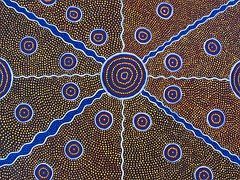
There has been a resurgence of interest in indigenous peoples, with popular programs such as France's " Rendez-vous en terres inconnues ". Everyone was made aware of the cause of the Amazonian tribes after the tour of the Indian chief Raoni and his labial plateau, publicized on the Internet.
Some, like the American Indians or the Australian Aborigines, see their habitats, covered with bitumen or mining stations, plundered of their resources and their way of life systematically destroyed for ever more sustained mining exploitation (Cf Alerts by anthropologist Martin Préaud).
The temptation to preserve the white rhino in a zoo is growing. First, territorial reserves were granted, then museums were built(musée du quai Branly, Palais de la porte dorée). This vision of the dead conservation of social organisms that are nonetheless very much alive is reminiscent of the animal immersed in formaldehyde on a shelf (see the film Les statues meurent aussi by Chris Marker and Alain Resnais).
Digital technology is used to showcase rare works of art, record tribal chants and film secret rituals. Digital technology can also be used to create architectural reconstructions of habitats or ways of life (e.g., Easter Island statues), and to preserve objects by penetrating their material. History is preserved using scanners.
In the name of insatiable curiosity, tinged with a scientific veneer, the "stripping naked" of the astonishing primitives with their penis cases, tribal paintings and historical tattoos continues. Like the Hottentot woman once exhibited in a circus act, indigenous peoples have been handed over to today's media circus, with the collection of beautiful photos and edifying rudimentary habitats finding their place on Pinterest or other databases. Tourists and sustainable activists indulge in photos of indigenous people, giraffe women, Fulani warriors or Kogi Indians.
It's like colonial times, with the white father posing in front of his class of hirsute pupils. Today, the classroom is inverted or virtual, and the white father is an educational activist or a techno-connected NGO who shares his classroom experience with the Inuit and the whole world, unless it's a question of preserving ancestral traditions... This effect of digitization can be read as a continuation of the colonial project that today makes the other a digital knowledge handicapped person.
Illectronism has replaced illiteracy, but the mechanism of imposing good ways of thinking on others persists in the online space. Yet indigenous peoples are far from passive in the adoption of digital technology, which brings with it a productivist way of thinking and a mode of consumption that ultimately impoverishes cultural diversity.
But digitization is also about safeguarding a linguistic heritage. If indigenous peoples project their claims into the public arena through digital means, are they really listened to? Hundreds ofAustralian andAmazonian languages are disappearing. The last traces of indigenous peoples may be their last recorded words. Digitization is still the work of methodically referencing knowledge about nature and the properties and virtues of plants (with the temptation of agri-food giants such as Monsanto to patent living organisms and seize the wealth of age-old tradition in a political-technological conflict).
Digitization allows us to keep track of what's going on, just as much as it speeds up the penetration into the intimate lives of these peoples. The mobilization of city-dwellers in defense of their causes is also made possible by the Internet's means of dissemination, which showcase other ways of life and help to build up indignation about the fate of peoples whose destiny seems to be to be exploited by the rules of the game imposed on them.
Technology is neither virtuous nor destructive in itself. It is, to use Stiegler 's expression, a pharmakon: an antidote and a poison. The indirect effects produced, however, call for a more in-depth ethical reflection of the digital world, in order to discern which of these impacts benefit the original peoples and which harm them.
If acceleration affects our stressed urban societies, it also ends up affecting the tranquillity of primeval forests. It's about time we invented a calming, soothing digital world that isn't just another means of exploiting unexplored resources.
It would be good to think that indigenous peoples are not only at the root of what we are, but that we can also think together about the world to come, because we face the same global challenges.
Note: article reread with the kind eye of Martin Préaud Antrhopologue
You might also like:
What if the uniforms that have been worn by the military for centuries were to bring added cohesion to our fragmented societies?
Very human sciences - The work of sociologist Bruno Latour
Bruno Latour has left behind a considerable body of work that guides the human sciences and irrigates the pedagogical approach
The metaverse, a way to make a lot of money for the giants of the net...
Fixing one's attention on phenomena such as the light of the moon, the crash of the waves or the beat of the heart is a universal practice, revealing a profound interaction between body, mind and environment. This experience engages both biological and philosophical dimensions, giving the human being a place in a world saturated with stimuli.
Soka's contribution to education
The Soka movement has been active and influential in the field of education since the 1930s, serving personal and social development and drawing inspiration from Buddhism to create value.