« Since wars begin in the minds of men, it is in the minds of men that the defenses of peace must be raised » (UNESCO Constitution, 1945)
A recent theme deals with the evolution of the idea of peace, a responsibility that originated in the United Nations and is now being addressed by the United Nations;tatic that becomes, during the twentieth century, a spirit instilled by education, to build peacemakers in each individual.
Researcher J. Vivien cites in her thesis a position of Maria Montessori on irénology (i.e. science of peace) : "peace has never been the object of a coherent research march that can bear the name of science, quite the contrary. In the whole of the innumerable ideas of human consciousness, one would be hard pressed to find a clear concept corresponding to the word peace... For the Institute for Economics and Peace, peace is not the absence of violence; a positive peace unites the attitudes, institutions and structures that create and sustain peaceful societies.
Conflict resolution and mediation are emerging as the most common peace education strategies.Noting the absence of educational practices based on models, the author decided to explore the possible links between peace and peacemaking;le of peace and model-based pedagogy and offers us an approach to peace education by example.
Pedagogical tools
Five peacemakers were selected, representing different faiths, nationalities, genders, cultures and cults. Some of the Nobel Prize winners, all of whom were selected to analyze the impact of their work on the world;a lifetime; each &oeligently working for different causes, with actions symbolizing facets of education à peace.
- Mahatma Gandhi : médiation, for India's indépendence
- Mrs. Teresa social work, for the help of the most needy
- Martin Luther King : conflict resolution, for civil rights and an end to racial discrimination
- Wangari Maathai : environmental education, through the Green Belt movement"tree replanting
- Cheikh Ahmadou Bamba : holistic education, through building a city of peace in Sénégal.
Based on their life stories, the researcher developed teaching materials, validated by a team of experts and ready to be used as is. It fulfills its purpose thus: "the purpose of this material is to empower the human being to identify his or her potential as a peacemaker and to lead him or her to develop peace within themselves in order to sow peace around them.
Each peace model is associated with a detailed instructional script, accompanying materials - including biographies - and resources for further study; a particular emphasis is placed on the waking shock, a triggering event or events for a change in the way these emblematic people look at their lives and their society.
It is impossible to convey in a few lines the interest of this work and the richness in terms of the ideas proposed. Among the pedagogical examples:
.
- a r&circle game to relive Gandhi's awakening shock, when a policeman forces him to go downstairs in the night in the Maritzburg train station in South Africa, because he is a colored man;
- drawing activities around symbols, such as the hand for ahimsa (nonviolence)or the tree of peace;
- the writing of a letter to two people in conflict, similar to the letter written by Ms. Theresa in 1991 to Presidents G. Bush and Saddam Hussein during the Gulf War;
- analysis of symbolic speeches to mark a stand, such as A Time to Break the Silence by Dr. Luther King, strongly opposed to the war in Vietnam...
... With essential questions for learners: "Do you think peace is possible à the scale of a planète, of a nation, of a province, of a neighborhood, of a family or of youêmes?"
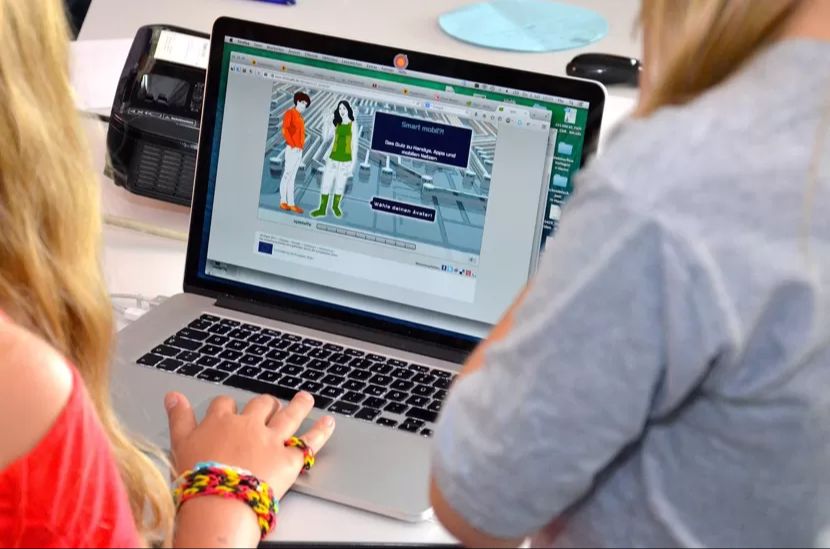
Illustration: prawnpie via Foter.com
Records
Vivien J. Development of educational materials for peace education based on peace models. Université de Sherbrooke/Institut Catholique de Paris (2016)
http://savoirs.usherbrooke.ca/handle/11143/9600
Institute for Economics & Peace. Global Peace Index 2016. http://economicsandpeace.org/wp-content/uploads/2016/06/GPI-2016-Report_2.pdf
University of Peace (Naumur) http://www.universitedepaix.org/
(Last accessed November 2016)
See more articles by this author