
The use of cognitive maps is well established in the educational landscape. But how can we evaluate this type of graphic representation? Take a look at some pedagogical approaches to evaluation criteria applied to concept maps.
Publish at June 12 2017 Updated July 21 2026


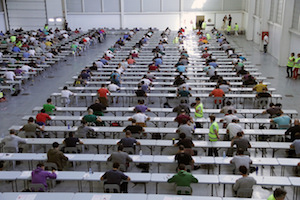
In the traditional educational setting, assessment is already a topic of debate, but in the field of healthcare education, it can prove to be completely counterproductive.
Assessment is like any other tool: you have to know what it’s for in order to use it correctly. In mainstream education, I was already in the habit of defining the purpose of my assessment (grades and feedback) before deciding on the methods to use. Once I began working in special education, I had the opportunity to discuss this with colleagues who are experienced in this incredibly rich yet very different field of teaching, and I’d like to share our conclusions with you in this article.
First of all, it’s important to distinguish between two elements: purely academic assessment linked to a grade level, and a less formal assessment that helps students gauge their own progress.
In the first case, assessment must place the learner within a grading scale where 10/20 is often the score at which the institution considers the learner to have the minimum required to continue their studies or obtain a degree or pass an entrance exam.
In the second case, the focus is more on providing support that tracks expected or hoped-for progress, though not always in terms of knowledge. Assessment is not always synonymous with grades, since many levels are evaluated based on the degree to which a learner has mastered a knowledge framework, using color codes or letters. In any case, real-world experience shows that assessment has little educational value unless it is accompanied by precise and personalized feedback.
Even more so than elsewhere, educational support requires compassion and perspective. It is not always a matter of grading to move up to the next grade level. Thus, in some cases, the focus may be on assessing a young person’s ability to resume an academic program—after a stroke, for example—or determining to what extent they can return to attend school in a mainstream institution.
In such cases, the focus is not so much on academics as on pedagogy—to determine to what extent the student can adapt to the criteria set by the Ministry. For example, for a student who has been out of school for a long time, a curriculum might be planned over several years (a four-year path to the baccalaureate: two years in the 11th grade and two years in the 12th grade) with an assessment that is not heavily focused on academic performance (except for exam subjects) but rather on engagement, effort, and progress made. Thus, for someone with a phobia who has not left their home for several years—and has therefore been out of school for a long time— it makes more sense to assess what they are capable of achieving—whether they are motivated to attend and whether they can be given the tools to move forward—rather than grading them on classes they have never attended.
For some students, we’ll need to wait until they reach a psychologically acceptable baseline (8 or 9 out of 20), while for others, we can grade their work without ever revealing the grade, which would stress them out more than anything else.
Still others will never show up for exams, panicked at the very thought of it. This will then require assessment methods other than written exams: class participation, in-class work, presentations, homework assignments... In remedial education, some students will be assessed academically only very occasionally, though this will not prevent these young people from earning their diploma with relative ease.
It is clear, therefore, that assessment is valuable only for guiding and supporting the student in their learning, for gauging their progress against official academic expectations, but also in relation to their own personal development. One student might score 15/20 without having studied, while another might have spent hours on a lesson yet still only manage a 7/20. In both cases, purely academic assessment serves no real purpose: the student who doesn’t work doesn’t deserve credit and risks quickly losing what they’ve learned, while the student who throws themselves into their work isn’t rewarded and may lose their motivation if they aren’t encouraged.
This applies equally to mainstream education and special education settings: kindness and assessment can be extremely powerful tools for motivating students—whether they are “good” or not—provided they are chosen wisely.
The most important thing in both settings, therefore, seems to be clearly defining the purpose of assessment before implementing it: it must be part of an overall learning process and is not an end in itself.
Photo credit:Gipuzkoako Foru Aldundia 2015–2019viaFoter.com/CC BY-SA
You might also like:
The use of cognitive maps is well established in the educational landscape. But how can we evaluate this type of graphic representation? Take a look at some pedagogical approaches to evaluation criteria applied to concept maps.
Which ways of teaching should be favoured in languages?
The journey from learning the first words of a foreign language to mastering it is different for each person, which leads us to ask ourselves what were the ways of teaching and learning it in the training courses we followed and beyond.
Generative AI won't replace teachers... but it's already changing students
Beyond the fantasy of the "replaced teacher", generative AI is silently transforming students' postures, learning strategies and relationships to knowledge. The mutations are numerous: cognitive delegation, temporal contraction, new prompt engineering, crisis of epistemic authority.
Building bridges (and training): the limits of simulators
Playing with bits of wood, plasticine, or Lego blocks is also formative and essential, but sometimes messier and less easy to implement. Some young people are fairly bereft of this kind of experience.