Generative A.I. and students: aware but affected
The KPMG survey as a whole doesn't offer much in the way of positives; even if some points appear to be positive, students are aware that evaluation and reality are two different things.
Publish at August 20 2018 Updated February 21 2024


Collaborative skills and their development in adult training
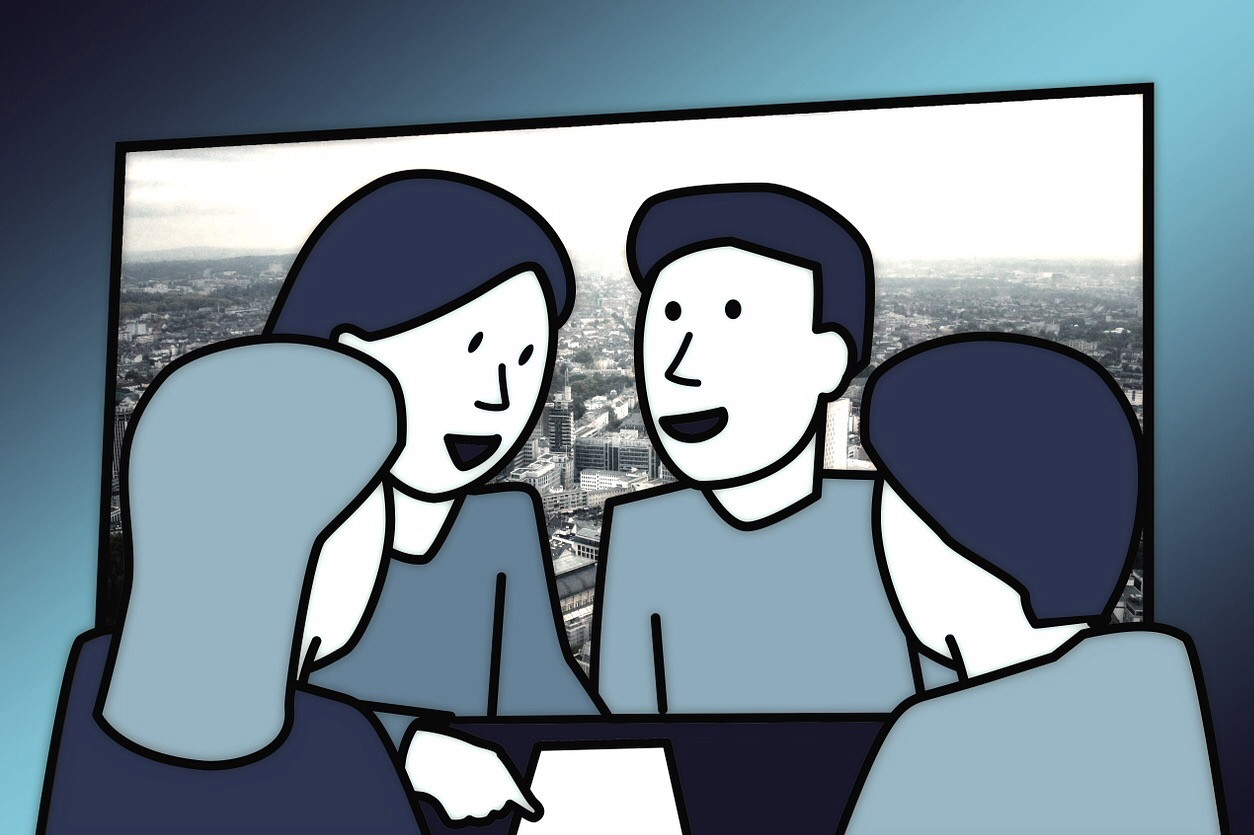
This substantial 425-page thesis was produced at CREAD by Elzbieta Sanojca under the supervision of Jérôme Eneau. It addresses two key issues: the collective and hybrid training. It comprises eight chapters, which we will summarize below.
Chapter 1 examines the contextualization of collaborative skills. While collaborative skills are valued everywhere (e.g., by the OECD and the European Union), they are rarely, if ever, explicitly included in training curricula. Collaboration is understood as a process of building links with a view to creating a collective work. Competence refers to the ability to act, and the question is how to do this in a group, particularly in order to learn.
Chapter 2 reviews the literature on cooperation and collaborative skills in adults. It attempts to distinguish between the notions of collaboration and cooperation, which are often confused or misused by different authors. He shows how the "collaborative vertigo" articulates a conflict between value and efficiency. Although current discourse seems to favor the idea of collaboration, there are few training programs that prepare people for collaborative skills. The hypothesis is that these skills develop naturally or informally. The thesis seeks to answer two questions:
Chapter 3 sets out to establish a theoretical framework for understanding the collaborative process. The latter is defined as:
"...a process in which autonomous actors interact through formal and informal negotiation, jointly creating rules and structures that govern their relationships and ways of acting or deciding on the issues that have brought them together; it is a process involving shared norms and mutually beneficial interactions..." (Thomson and Perry 2006, p33 translation by Elzbieta[1]).
The thesis formulates the hypothesis that "the configuration capacities and hybridization potential of a training device depend on its degree of internal coherence. In other words, without coherence between the dimensions of the ideal, the functional reference and the lived experience, the system will have difficulty evolving in its environment, adapting to the needs of its multiple stakeholders and innovating in its operating methods". The hybridization potential of a device is then understood as a creative potential inspired by interactions between actors and device tools.
Chapter 4 explains the corpus and the survey method. This is a qualitative approach with a comprehensive aim, drawing on sources such as questionnaires, interviews, document studies and observations. These sources enable the research to be organized in stages, with prior validation of a test scale, characterization of collaborative skills, identification of the operational modes of their development, and recording of modes of reinvestment. The data and their interpretation are captured using Iramuteq and RQDA text analysis software[2].
Chapter 5 presents the results. These validate the test scale. The 34 items relating to collaborative skills are grouped into "pre-requisite attitudes" and "process" categories. The majority of skills related to collaborative processes are the most numerous, particularly those linked to facilitation, i.e. the ability to listen and to facilitate. The typical profile that emerges is that of a person inclined to cooperate, endowed with a collaborative mindset, aware of his or her limits and benevolent towards those of others. They would be concerned with managing internal tensions and the need for recognition.
Chapter 6 identifies the nature of collaborative skills. In terms of prerequisite attitudes, these include "having a collaborative mindset", "being benevolent", and having "humility or a measured ego". In terms of process, 6 competencies stand out: "knowing how to engage partners", "co-designing the project structure", "leading the group to facilitate work", "listening to people and opinions", "developing and maintaining a network of players" and "managing information"; in terms of collaborative outcomes, two competencies stand out: "acting to achieve common goals" and "having a concern for the common good".
Chapter 7 analyzes a training program and looks at how collaborative skills are developed in a particular field. The research carried out confirms that the development of collaborative skills takes place according to Albero's ternary model[3], Engeström's activity theory[4 ] and Simonian's cultural affordance approach[5], i.e. through coherence between the three dimensions of the device - "ideal", "functional reference" and "lived" - which reinforce each other over time.
Chapter 8 offers operational perspectives for training practitioners. It shows that coherence in the axiological, instrumental and lived dimensions guarantees working spaces conducive to learning together. In particular, training designers need to propose sufficiently rich situations and environments centered on collaborative activity, with enough complexity to mobilize combinations of skills rather than a single isolated skill.
A wonderful thesis to discover on an essential subject at a time when distance learning has become a key issue for many organizations, which are banking on hybrid training to penetrate more deeply into the various layers of the organization, but also to feed learners with continuous fire as and when they encounter difficulties.
References
Collaborative skills and their development in adult training, the case of hybrid training. - Elzbieta Sanojca - Education. University of Rennes 2
https://theses.hal.science/tel-01709910
Of the 350 references cited in the bibliography, several works are particularly used and recommended:
Axelrod, R., & Hamilton, W. D. (1981). The evolution of cooperation. science, 211(4489), 1390-1396.
Lu, L., & Argyle, M. (1991). Happiness and cooperation. Personality and Individual Differences, 12(10), 1019-1030.
Dejours, C. (1993). Cooperation and identity construction in the workplace. Futur antérieur, 16(2), 41-52.Sennet (2013)
Sennett, R. (2014). Together for an ethic of cooperation. Albin Michel.
[1 ] Thomson, A. M., & Perry, J. L. (2006). Collaboration processes: Inside the black box. Public administration review, 66, 20-32.
[3] Albero, B. (2010). Chapter 3. Training as a device: from term to concept. In Apprendre avec les technologies (pp. 47-59). Presses Universitaires de France.
[4] Engeström, Y. (2014). Learning by expanding. Cambridge University Press.
[5] Simonian, S (2013), L'affordance socioculturelle : une approche éco-anthropocentrée des objets techniques HDR Rennes.
You might also like:
Generative A.I. and students: aware but affected
The KPMG survey as a whole doesn't offer much in the way of positives; even if some points appear to be positive, students are aware that evaluation and reality are two different things.
Renewable energy in the countryside [Thesis].
Contribution of endogenous initiatives for the development of renewable energy projects (RE) to the resilience of rural territories. Cross levers of social capital, territorial capital and rural multifunctionality.
Caring for plants and soil [Thesis]
"Against the backdrop of transformations in human lifestyles as well as modes of production and their effects on the erosion of biodiversity, this thesis looks at the relationships that exist between farmers and nature, in landscapes marked by intensive agriculture in Europe."
Think-Draw, or the art of taking sculptural notes [Thesis].
The ability to take notes is essential for both students and professionals. However, how does it work for sculptors? We can conceive of a sculptor sketching subjects for a study, but is it just that? Can these artist's notes be reduced to simple tracings in advance of the sculptural work or is it much more than that? Let's find out with sculptor Renán Calvo's thesis.
Holographic place and visualization of urban dynamism [Thesis].
The city is a space co-constructed by people to exchange, communicate and trade. The City and Man form a complex ecosystem in which Man shapes the City and the City shapes Man. The understanding of this system is essential to envisage the future of our urbanized societies. Let's discover how to visualize this complex to better understand it with Thibault Pierre Louis Romany.