How distracted are you by robot-generated text? By all those automatic signals? Whatever the answer, it's all about our ability to concentrate, discern and analyze. What enhances it, what hinders it...
Publish at September 16 2018 Updated February 29 2024


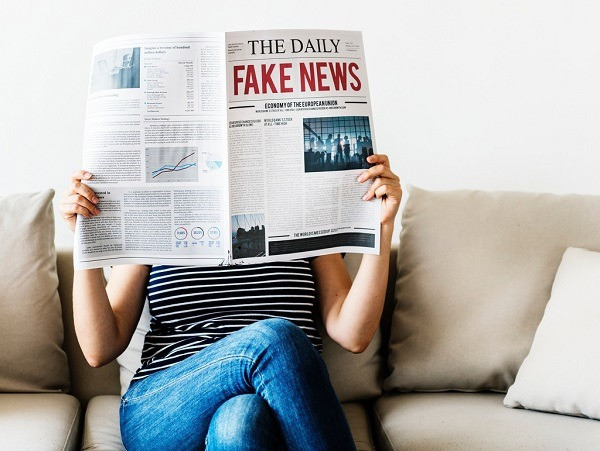
There was a time when the only way to get information was to wait for a copy of the daily paper in the morning. We've all seen those images, repeated in films, of young criers luring passers-by by declaiming the newspaper's headlines. Today, there's no need for kids on street corners. All you need to do is subscribe to a social network or have a favorite media application on your mobile device to be bombarded with the latest news. The news has never been so live. What's more, the field is no longer occupied solely by the so-called "traditional" media. Others have made their mark, offering their own version of the news.
In such an incessant flow fed by 24-hour news channels, what is there to think about? How to withdraw a little from the live feed and be able to put oneself in analysis mode; these are the kinds of skills that media and information education (MIE) tries to impart. But it's not an easy task: the media-school relationship has had a hard time developing.
Indeed, it didn't take the fashion for fake news to give rise to EMI. As early as the 1950s, when television sets were first appearing on the market, schools were already tackling the issue of the media. However, this was largely done from a moral standpoint. In other words, educational systems warned against mind-numbing media (such as television) and praised those linked to culture (e.g. cinema), although not all types of cinematography. Two decades later, this education was more analytical and critical of content than of the medium itself. In short, the question of semiotics and the ideologies transmitted were addressed in certain courses.
So, although the school was very suspicious of the media and those who worked in it, it gradually came to approach it, albeit with a certain diatance. Even today, many teachers still feel that it's not the role of journalists to propose didactic approaches to media education, and the lack of collaboration between media structures and teachers, who don't always know how to tackle this issue in the classroom, is proving problematic. This is all the more true in France, where media education is a cross-cutting subject, whereas some believe it should be a separate subject.
As Daniel Schneidermann reminded us in this France Culture program, political circles are not really interested in investing in this program. In other words, it's desirable that young people don't fall into conspiracy theories that make them question the system. But it's all very well for a politician to raise doubts about journalism in general, especially when he or she is embroiled in a scandal.
Especially since, as the editor of Arrêt sur images points out, criticism of the traditional media also has its raison d'être. It's a balancing act, then, between pointing out the media bias and errors of the press, but also those of the "new media". The EMI teacher's job is to train young people to think critically about everything they encounter online. A major challenge if ever there was one.
All countries are looking for the best solution when it comes to IME. From France to Morocco, there is an urgent need to set up a teaching program that will turn schoolchildren and even university students into informed citizens who won't fall for any of the tricks of the trade. CLEMI (Centre pour l'éducation aux médias et à l'information) and CSA (Conseil supérieur de l'audiovisuel) are working on this, but could other groups help?
What if one potent solution was the one proposed since 2015 by the France Inter radio network? Called Interclass, it puts classes and high schools in touch with journalists from the medium. They can then teach them the tricks of the trade. This can demystify the role of information workers and how a report or program is prepared. What's more, the youngsters will have to produce their own. For example, this class went to the Sens police academy to interview officers, trainers and so on. Their work is featured in a program broadcast regularly on France Inter.
But even this approach isn't perfect. Already, it requires a considerable commitment on the part of the radio station and the schools, and for the time being, the project only involves a few high schools in Paris. Yet, as the speakers on this program pointed out, there are many teachers outside the capital who would like to have access to such a program. For the time being, this is not the case, as the structure is difficult to set up. This is unfortunate, since, according to CLEMI's Executive Director, Interclass has a positive impact on students.
So, would better media literacy help them take a step back from live news and succumb less to online falsehoods? While there's no scientific proof yet, there's clearly a possible impact on young people when it's well done and gives them the space to express themselves too. However, the perfect approach has yet to be found.
Illustration: davidstewartgets Alone casual couch -
https://homegets.com/ via photopin (license)
References:
"Eduquer Aux Médias à L'heure Du Doute" France Culture. Last updated: March 18, 2018. https://www.franceculture.fr/emissions/rue-des-ecoles/classe-media-decrypter-et-comprendre-linformation-au-college.
Eutrope, Xavier. "What does 'educate to the media' really mean?" Ina Global. Last updated June 26, 2018. https://www.inaglobal.fr/education-formation/article/que-veut-vraiment-dire-eduquer-aux-medias-10219.
"InterClass': L'éducation Aux Médias." Fondation De France. Last updated May 4, 2018. https://www.fondationdefrance.org/fr/interclass-leducation-aux-medias.
"Interclass' Par Emmanuelle Daviet." France Inter. Accessed September 11, 2018. https://www.franceinter.fr/emissions/interclass.
Laâbi, Chafik. "Éducation Aux Médias Et à L'information: Un Esprit Critique Pour Des Temps Troublés." Al HuffPost Maghreb. Last updated January 29, 2018. https://www.huffpostmaghreb.com/chafik-laabi/education-aux-medias-et-a-linformation-un-esprit-critique-pour-des-temps-troubles_b_19106558.html.
"Quelle éducation Aux Médias Pour Les élèves?" France Inter. Last updated June 29, 2018. https://www.franceinter.fr/emissions/le-telephone-sonne/le-telephone-sonne-29-juin-2018.
You might also like:
How distracted are you by robot-generated text? By all those automatic signals? Whatever the answer, it's all about our ability to concentrate, discern and analyze. What enhances it, what hinders it...
How you get to the information determines how you process it.
Apparently, what you get through effort (intellectual) or commitment (emotional) is more valuable than what you get without looking for it. A study by the Missouri School of Journalism. Asking a problem or a question makes learners more active.
Student empowerment and parental responsibility
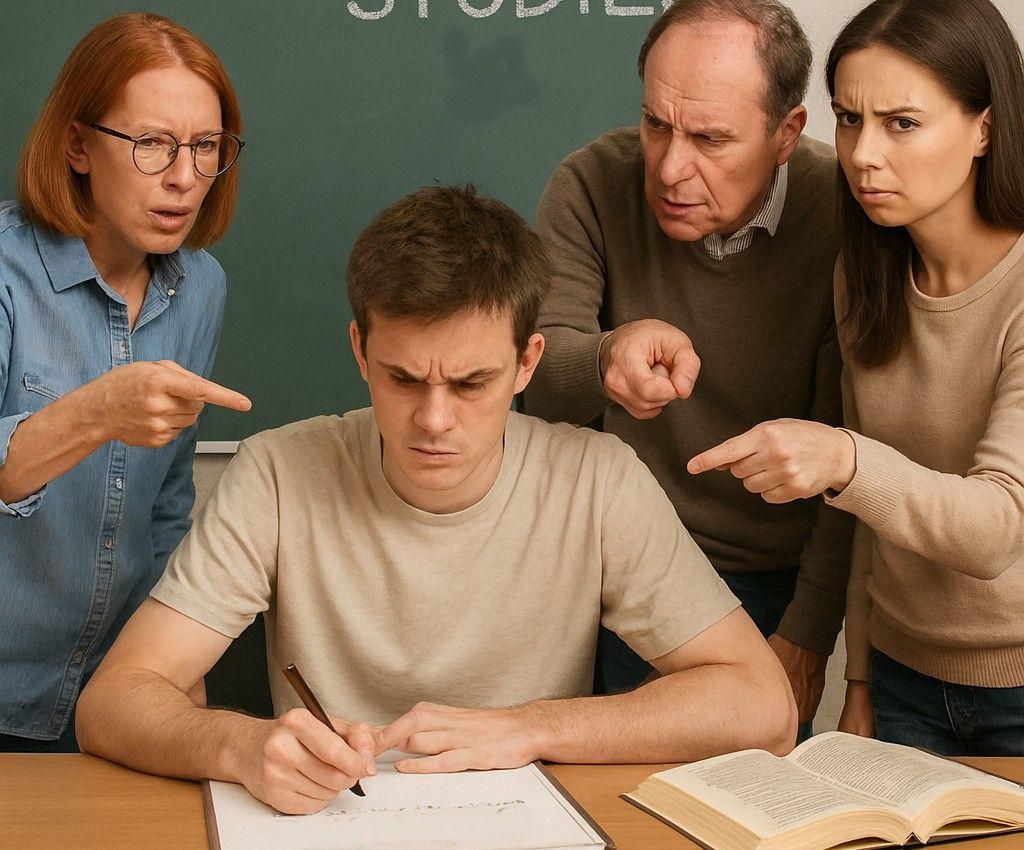
Learners' failure is often blamed on the school. There may be other reasons for students' lack of guidance and empowerment. In this respect, the imposition of a set path by the parent is often a source of internal conflict and demotivation for the learner. Hence the need to build a framework conducive to student empowerment, through listening and dialogue.
The new science of social manipulation
There's no need to worry about accuracy, truth or even verisimilitude: only the reaction really counts.
Exploring the effect and implications of generative AI in web content creation
Highlighting potential challenges related to the diversity and quality of datasets used to train AIs, highlighting the need to balance human and automated contributions to preserve innovation and diversity of ideas.