Music and productivity at work
What is the impact of music in the workplace? Can it boost positive attitude and performance? Does it distract or stimulate concentration? What kinds of music are more beneficial? A complete overview of the phenomenon.
Publish at May 13 2019 Updated November 19 2025


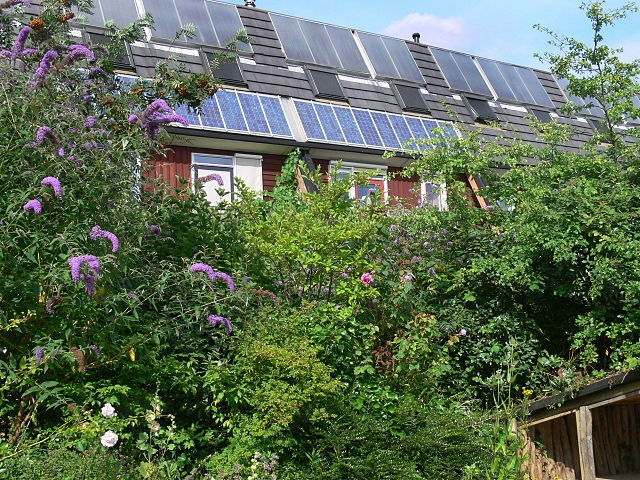
Has Detroit, MotorTown, become Agri Town? That's the feeling you get when you think of America's automotive capital of the 20th century. Declared bankrupt in 2011, the city of over 1,400 urban farms seems to have become a model of transition and resilience for cities large and small.
In Chronique d'architecture, Christophe Leray, in a July 3, 2018 post, puts the importance and efficiency of this production model into perspective. He links the city's renaissance to other factors and concludes: "greening efforts can and must be pursued but, to achieve this, we must not promise the moon." Between enthusiasm and skepticism, what are the challenges of urban agriculture and what does it say about tomorrow's world?
The FAO (Food and Agriculture Organization of the United Nations) offers an initial definition of urban and peri-urban agriculture. It "consists of growing plants and raising animals in and around cities." This is by no means a new phenomenon in urban history. Market gardening was very present around cities. It provided fresh produce for city dwellers. With urban sprawl, successive innovations in transport such as railways, and the globalization of trade, these areas have gradually disappeared from our urban horizons.
Taking the example of Detroit and extending it to Grande-Synthe in France offers part of the answer. Urban and peri-urban agriculture is a response to the social difficulties of the population. In Detroit, from 2011 onwards, it is primarily a subsistence crop: food crops for self-consumption. In Grande-Synthe, the aim is to increase the purchasing power of local residents, according to Jessica Gourdon's article for Le Monde: Grande-Synthe, a victim of the industrial crisis, wants to become an urban farm, and is adopting a long-term strategy.
The geoconfluence article entitled "Agriculture urbaine" (urban agriculture) helps us to define the term. This mode of production contributes "to household food security, provides fresh food, creates jobs, recycles urban waste, valorizes empty and abandoned spaces, contributes to the formation of green belts, and strengthens the resilience of cities in the face of climate change". In other words, to put in place a certain number of mechanisms that foster skills for adapting to various possible futures, be they climatic or social. Urban resilience encourages the emergence of solutions to better prepare city players for the transition ahead.
By greening cities, urban agriculture helps retain rainwater and capture greenhouse gases. Julien Duffé, journalist at Le Parisien, in an article dated July 22, 2018, sheds a little more light on the matter: Paris wants to "débitumer" its schoolyards. The municipality's aim, as part of its resilience strategy, is to limit urban heat islands. Tar is a highly inert material. It retains heat and diffuses it at night. It's a bit like turning up the heat at night during a heatwave. The Écoles will no longer be simply a school, but a cool garden, becoming a shared space and perhaps, in the future, a third place for the education of all.
We can imagine the benefits of these school gardens for the learning of pupils who will be using more elbow grease than connected sensors. Pushing the envelope a little, I'd say low-tech agriculture... perhaps frugal. At the same time, companies are looking for new business models, such as connected containers for growing strawberries, like the start-up Agricool. In the 15th arrondissement of Paris, a 14,000 m² urban farm project is underway.
Today, we're talking about vertical farms. Imagine a skyscraper devoted exclusively to agriculture. This urban farm exists in Newark, a suburb of New York. It has a surface area of 6,500 square meters over 12 floors. Today, however, it seems that this technological choice is still in search of an economic model. Perhaps not all agricultural professions have been invented.
A kind-hearted friend pointed something out to me when I proposed this article. I'll call it Thot's theorem: "We have between 1,000 and 5,000 inhabitants per km2 in the city (3,700 for Paris); knowing that it takes about 75 m2 to feed one person, I can't see how we can fit in between 200 and 400,000 m2 of vegetable gardens per km2 (1,000,000)" on top of housing and roads. He's right, urban agriculture can't do everything.
However, the FAO sheds some light on the subject: "Vegetable gardens can be up to 15 times more productive than farms in rural areas (...) An area of one square meter can provide 20 kg of food per year", but not all crops are suited to the city, especially when they require a large landholding. It's extremely difficult to grow cereals. The same is true of livestock farming.
The aim, then, would not be to base a strategy on self-sufficiency, but rather on synergies. In what way and for what type of product does urban agriculture represent added value? What should guide our choices: land use, shelf life, maintenance of nutritional qualities? Here again, research and training are needed to refine the model.
During my research on the subject, I came across participatory urban forests. I'm not going to praise serendipity here, but the path of hypertext links led me to discover a project at the intersection of digital culture, open source, well-being, social economy and citizen participation: Mini Big Forest.
Going back to its origins, this project is the meeting of the method of Japanese botanist Akira Miyawaki and the toyotism developed by automotive engineer Shubhendu Sharma. This eco-entrepreneur developed the concept in a TED conference. He applied one of the elements of the Japanese company's working method: the Heijunka.
This device enables several vehicle models to be manufactured on the same production line. Replace the production line, freeing up 6 parking spaces, and replace the cars with different species of tree, and imagine planting 3 to 5 trees per square metre, i.e. 300 trees. The idea is simple: maximize the use of space through high-density planting. This mini-forest will be made up of shrubs, medium-sized trees and large central trees. The species planted will be indigenous, to ensure the forest's autonomy after 3 years. According to Shubhendu Sharma, these areas store 30 times more carbon, grow 10 times faster and contain 100 times more biodiversity than a traditional forest.
The philosophy is open-source, since the methodology is accessible to all. In addition to the preservation and development of biodiversity, the focus is on well-being and the creation of social links. Planting is done with and for others. It's a question of engaging the city's stakeholders in an eco-citizen approach.
In fact, this is one of the main benefits of urban agriculture: it brings people together. It's not just about production and yield. It's a global project to promote resilience, to create links and to participate in the transition of territories to be one of the answers to the climate change that's coming.
Sources :
Paris wants to "débitumer" its schoolyards, Julien Duffé, le Parisien, July 22, 2018
http://www.leparisien.fr/paris-75/paris-veut-debitumer-ses-cours-d-ecole-22-07-2018-7829805.php
Grande-Synthe, victim of the industrial crisis, wants to become an urban farm, Jessica Gourdon, Le Monde, October 4, 2018.
https://www.lemonde.fr/planete/article/2018/10/04/grande-synthe-victime-de-la-crise-industrielle-veut-devenir-une-ferme-urbaine_5364317_3244.html
A 14,000 m2 urban farm to open in Paris, Lauréna Valette, Maison & Travaux, March 26, 2019.
https://monjardinmamaison.maison-travaux.fr/mon-jardin-ma-maison/actualites-jardin/ferme-urbaine-de-14-000-m2-va-ouvrir-a-paris-238545.html
What is urban agriculture, Futura editorial board,
https://www.futura-sciences.com/planete/questions-reponses/eco-consommation-quest-ce-agriculture-urbaine-4797/
Urban agriculture could feed 10% of city populations, Julien Fosse, Reporterre, October 20, 2018,
https://reporterre.net/L-agriculture-urbaine-pourrait-nourrir-10-des-populations-des-villes
Urban agriculture, Food and Agriculture Organization of the United Nations.
http://www.fao.org/urban-agriculture/fr/
Urban agriculture: what it can do (and what it can never do), Stanislas Kraland, Huffpost, February 22, 2014
https://www.huffingtonpost.fr/2014/02/22/agriculture-urbaine_n_4831579
Detroit: ruined, the techno city revives thanks to urban agriculture, Paul Brinio, Trax, July 7, 2017
http://fr.traxmag.com/article/39865-detroit-ruinee-la-ville-de-la-techno-revit-grace-a-l-agriculture-urbaine
Pour en finir avec l'agriculture urbaine à Paris (et ailleurs), Christophe Leray, Chronique d'architecture, July 3, 2018
https://chroniques-architecture.com/agriculture-urbaine-exemple-detroit/
Mini Big Forest
https://www.minibigforest.com/
Deforestation: 40 million trees replanted with the "Miyawaki method", Raphaëlle Dormieu, Positivr, June 28, 2018
https://positivr.fr/methode-akira-miyawaki-reforestation-arbres/
Urban Agriculture, glossary, Geoconfluences
http://geoconfluences.ens-lyon.fr/glossaire/agriculture-urbaine
You might also like:
Music and productivity at work
What is the impact of music in the workplace? Can it boost positive attitude and performance? Does it distract or stimulate concentration? What kinds of music are more beneficial? A complete overview of the phenomenon.
The politician's educational argument
The public sphere and sometimes the private scene evoke the pedagogical argument when they struggle to get their ideas across. But in what way is pedagogy an argumentation? "The foundation of pedagogy is the education of freedom".
Sol France an inspiring association towards the learning organization
Sol International and Sol France, a focus for reflection and practice on the learning organization
What are the conditions for the emergence of embodied emotion and its potential for learning?
Trust, the basis for living well in society, yes, but which society are we talking about?
With COVID, trust in one's co-citizen has fallen to an all-time low. It can be contaminated and therefore it can be dangerous. A devious phenomenon because it is intangible, it affects our lives. A phenomenon known from armed conflicts, it has arrived through this biological war. What are the social effects? Can we regain lost confidence? Can we move forward in a society of presumption?