Teaching is great when the elements align for learners to achieve their goals. We can increase the odds of that happening....
Publish at September 22 2008 Updated November 26 2025


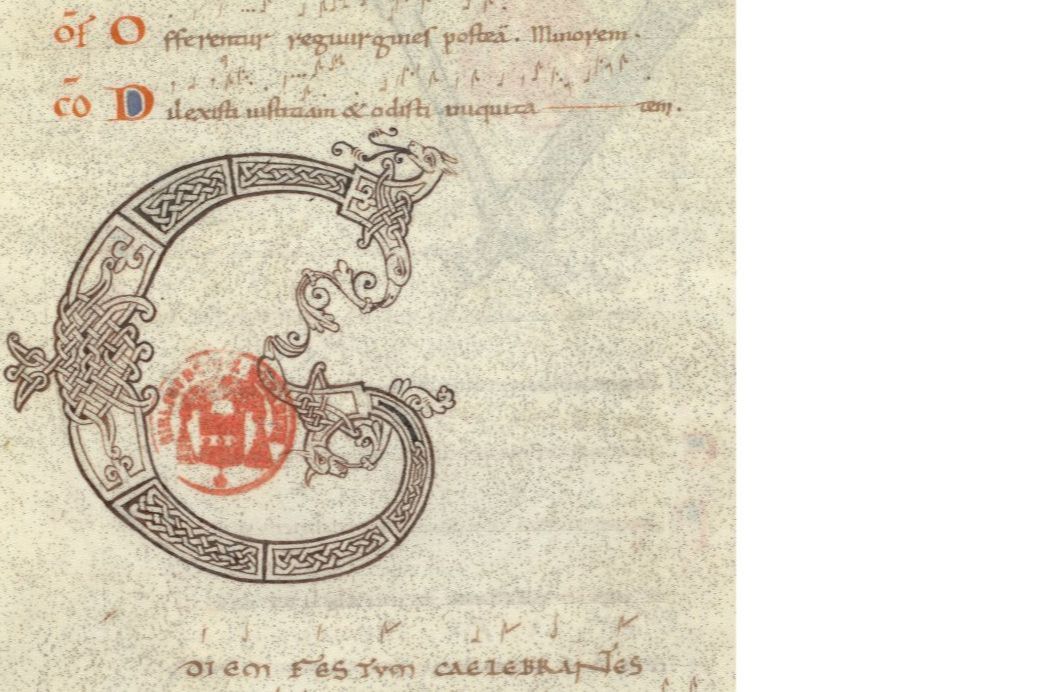
Theleme is an exceptional initiative combining ancient history and modernity. You might even call it augmented reality.
Indeed, the historical documents digitized in the Theleme project, which range from the year 450 to 1488, feature decoded transcriptions superimposed as you move your mouse over the text.
So you see both the original object and its first interpretation. This is complemented by translations where necessary.
All that's missing is a few collaborative work tools to bring out the full potential of the initiative.
With such an archive highlighted in this way, which will gradually be expanded, the École des Chartes can eventually attract historical documents from all over, bring together the best skills and enthusiasts, and thus become a major hub for documentary history. A concrete example of the use of ICT in the humanities and social sciences.
Here's the official site presentation:
The École des Chartes de la Sorbonne presents here the first stage of an online teaching venture, destined to expand in the future: an introduction to the various sciences and methods of history, comprising three sections:Folders
- general introductory pages by speciality ;
- transcribed and annotated document files, based on concrete examples from the various disciplines;
- tools for study and research: bibliographies, databases, directories of abbreviations and formulas to help read and understand texts.
The files are based on the École's facsimile collection. The documents currently on display already offer a succinct overview of its variety. Represented between the 5th and 15th centuries are books and documents, classical and medieval texts, religious and secular, in Latin, French and Occitan. This selection will soon be extended to include documents in cursive script from the 16th and 17th centuries.
Each folder is composed as follows:
The documents can thus be used, for various fields and periods, as an introduction to the art of reading ancient scripts, as well as to methods of document analysis and interpretation.
- Brief description of the document ;
- Large-format interactive facsimile ;
- Full text and (where applicable) translation;
- Commentary, which varies according to the file: paleographic, diplomatic and linguistic aspects.
Contents
Books
Documents
You might also like:
Teaching is great when the elements align for learners to achieve their goals. We can increase the odds of that happening....
Doing science with almost nothing
Experiments are an integral part of science classes; they effectively demonstrate scientific theories. Yet, you don't need a state-of-the-art laboratory in order to start experimenting with different facets of science. Some inexpensive products found even in the home can yield fascinating experiments for young learners.
Influential algorithms or control over our brains?
What is an algorithm? How does it work? What are the associated issues? These are some of the questions we are facing, including in education.
Putting screens back into learning for a while
Screens are a part of everyday life for students and teachers alike. This has even increased since 2020. As a result, both groups can experience technology fatigue with negative effects on both sides. What if the school and the home sphere left some learning time without digital and screens?
A "robustness pedagogy" is currently being invented. It observes the lessons of the living world, which knows how to dispense with centralization and outrageous performance in favor of the circulation of energies and emotions, and adaptation to what comes next.