The woman who discovered the composition of the sun
An unfortunately despoiled discovery
The sun has long been a subject of mystery. What is that big yellow ball in the sky made of? If we now know, it's thanks in part to the groundbreaking work of one woman: Cecilia Payne. This Englishwoman had to leave her native country for the United States in order to study this gigantic star and practice the physical sciences.
At the time, scientists had already mastered the art of classifying stars by means of a light spectrum with absorption lines on which chemical elements could be perceived. So much so, they believed that stars were similar in composition to the Earth. However, Cecilia Payne revolutionized the whole process by discovering that the spectra she worked on showed more of the stars' temperature. By relying on heat, the intensity of the lines reveals the abundance of elements and specifies the structure. Our Sun, for example, is made up of far more hydrogen and helium than the rest. Alas, his theory was rejected... and taken up again 4 years later by a male colleague.
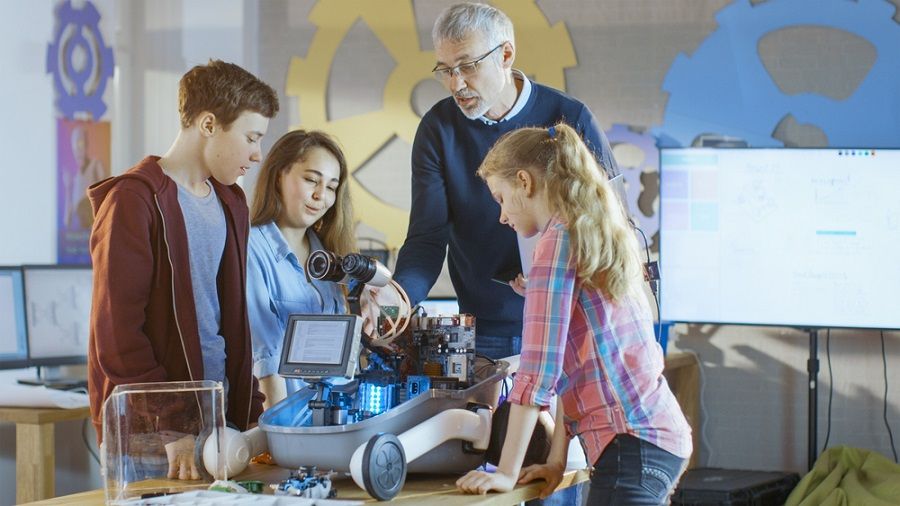
Many economic experts say that we are entering the fourth industrial revolution. The one where artificial intelligence will be part of the daily life of companies and employees will be creators and facilitators. Consequently, this will require a transformation of the school system to meet the new needs of this emerging future.
Computer science likes to use metaphors in its interfaces. As a result, using analogies to teach and understand code is not at all far-fetched - quite the contrary.
Lasting performance depends not so much on the quantity of effort as on the intelligent management of energy, sleep, breaks and recovery. Those who make the most progress are those who alternate work and rest, respect their biological rhythm and transform recovery into a genuine performance lever.
The school and the teaching staff put a lot of effort into the students in difficulty. This is a normal reflex since they must be led to success. Meanwhile, gifted learners are bored. They have the impression of being left behind and of learning almost nothing. This can lead some to disrupt the class. Hence the importance of dealing with high achievers as well.