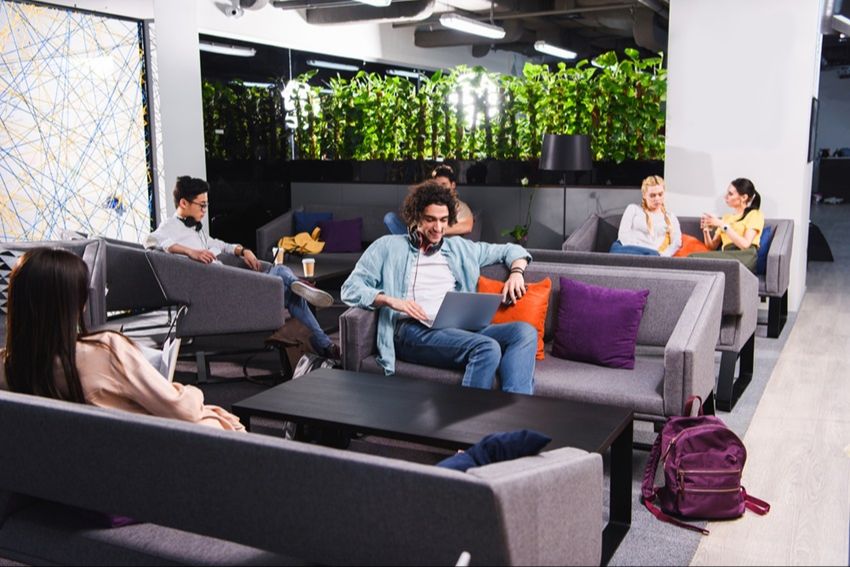
A new profession: "developer of third places".
Third-Party Centers are being developed to build the future, develop territories and create social links. New professionals are emerging to run them, bring them to life and make them profitable.
Publish at March 08 2020 Updated March 20 2025


We continue to over-consume, while global warming is now perceptible in many parts of the world. In France, you'd have to be deaf and blind not to see for yourself, without even needing to read an IPCC report or the warnings of a Jeremy Rifkin or a Greta Thumberg, that streams are drying up, glaciers have disappeared, canals are being closed, extreme temperatures are being reached, trees and forests are suffering, and so on.
Some leaders make speeches and do what they can, when they're not engaging in green-washing contests. This is also true of educational leaders, who only receive what they can count: tuition fees, students, expenses, accumulated training days, budgets, IT investments.
They pretend to be part of the action, but they're just doing more of the same: getting together, talking about climate transition in lecture halls, but without any willing, concrete action. It's one of the characteristics of systems to maintain existing equilibria. Leaders are trained by their schools to manage known equilibria. In the event of imbalance, they find themselves in difficulty.
Yet pedagogy is not a matter of measurement. It is above all a singular mediation with oneself, others and the world. In systemics, Bateson (Palo Alto School) describes three types of change, corresponding to different evolutions of systems. A level 1 involving slight adaptation, a level 2 involving changes in behavior and a level 3 involving in-depth transformation of our beliefs.
How does pedagogy enable the "level 3 changes" that are essential to accompany the expected mutations?
This is the highest level of homeostasis. It's about maintaining and growing the system as it is. It's a change that consists in feeding the situation with more of the same. This change is marked by the idea of adaptation within a logic of minor adjustments.
In our business models, it's a question of industrializing even more, by using economies of scale and modifying content. In education, for example, we recycle content in interactive media, barely touching it up, at most individualizing it. The teacher's lecture in the amphitheatre is simply filmed and broadcast online.
The same input on the environment and climate, but with learners who are just as passive to listen to, but more numerous. It may be possible to teach them to plant a different species of tree, better suited to a warming climate, or to reduce water consumption, but there's nothing frontal about a substitution effect in place.
Level change requires substantial changes in behavior. It requires a greater commitment to action. It aims for resilience because learners themselves are involved in the production of knowledge and services that concern them. They learn not by listening and duplicating the known, but by activating.
A pedagogy of commitment and action is promoted here:
This involves a transformation of beliefs about the very orientation of the system and the coherence that links its component parts together. Here, we can talk about innovation or even disruptive innovation. Three shifts in beliefs are currently taking place:
If these three trends leave us a little disappointed, we're going to have to come up with something else.
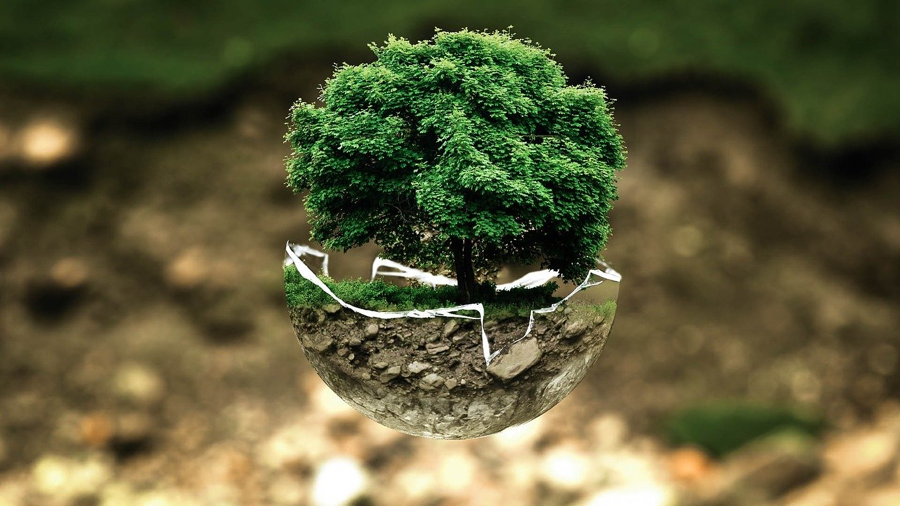
It's not clear that Type 3 changes can be achieved quickly, or even efficiently. Just as a tree is limited in its growth to a certain height, a certain depth for its roots and a certain circumference, our planet is also limited in its capacity for human growth.
The currentAnthropocene era confronts man with his responsibilities towards nature, and demands that he learn from his human nature to remain connected to the world. Citizens are waiting for new educational leaders who consider our relationship with nature, but also for control systems that avoid career politicians focused on their short-term re-election.
If they do nothing, they are condemned to Level 1 change. They also have the opportunity to learn by seizing the formidable digital potential to bring together committed but dispersed players, showcase initiatives that work and form tight-knit communities to influence fragmented societies.
Source
Gregory Bateson http://gserpry.free.fr/index.php/qui-suis-je/pratiques/6-systemique
Accelerationist Manifesto https://www.multitudes.net/manifeste-accelerationniste/
Le monde Jeremy Rifkin - The survival of our species depends on transforming our modes of production https://www.lemonde.fr/economie/article/2019/10/16/jeremy-rifkin-la-survie-de-notre-espece-depend-de-la-transformation-de-nos-modes-de-production_6015648_3234.html
Greenwashing http://www.greenwashing.fr/definition.html
IPCC report https://www.gouvernement.fr/rapport-du-giec-agir-des-maintenant-pour-lutter-contre-la-degradation-des-terres-et-du-climat
France Info Greta Thumberg - https://www.francetvinfo.fr/monde/environnement/greta-thunberg/
Transhumanism - https://www.aquaportail.com/definition-13008-transhumanisme.html
Wikipedia - Antrhopocene - https://fr.wikipedia.org/wiki/Anthropocène
Wikipedia - Shamanism - https://fr.wikipedia.org/wiki/Chamanisme
You might also like:
A new profession: "developer of third places".
Third-Party Centers are being developed to build the future, develop territories and create social links. New professionals are emerging to run them, bring them to life and make them profitable.
Should you strive to be the ideal teacher?
Many teachers feel the magnitude of the task at hand. They have to juggle different roles: transmitters of knowledge, defenders of national values, child psychologists, and so on. It's no wonder that some of them break down and leave the profession. What if, in the end, teachers were to accept that they are not "ideal" and do their best to teach what interests them?
The classroom and the reverse conference
Mobilize the desire to learn like never before. Three examples of inversion that bring a void to the pedagogical situation that learners are invited to fill by themselves.
Symbiosis: a gift of the living to really learn together?
What symbiosis teaches us about generative learning from the encounter between humans and their environment.
Sugar is everywhere in our diet, especially in sweetened beverages. This over-consumption is not harmless. It has deleterious effects on our general health.