
Top 2022 - Thot Cursus' most popular publications
1.4 million visitors came to the Thot Cursus site in 2022. Among the several million pages they viewed, some articles stand out. Which ones did you notice?
Publish at April 07 2020 Updated January 07 2026


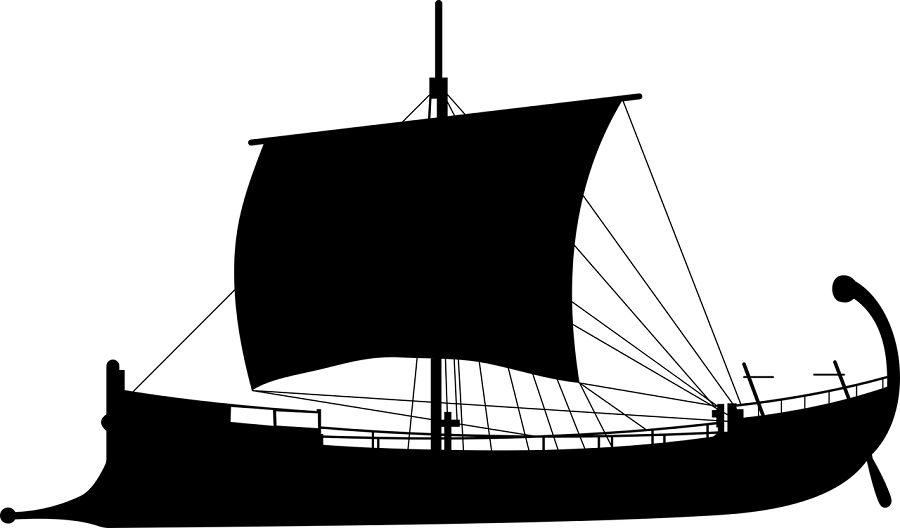
When we speak of great explorers, we usually think of guys like Magellan, Marco Polo or Christopher Columbus, who showed European peoples the realities of the world, believing they were the center of everything. And yet, as far back as antiquity, a Greek scientist named Pytheas had succeeded in reaching moors that would not be seen until years later. Setting out from Massalia (now Marseille), he crossed the Columns of Hercules (the Straits of Gibraltar) and explored many places and peoples.
Indeed, he would have skirted Armorica and Great Britain. He even made contact with the British peoples and went further afield, reaching what he described as the island of Thule (possibly Iceland or Norway). There, he would have seen a night lasting only two hours and an impassable area of sea resembling a sea lung (pack ice forming). A journey that was not believed by his contemporaries, for whom the things he depicted had never been observed.
Running time: 8:26
Illustration : Gordon Johnson from Pixabay
Learn more about this resource
You might also like:
Top 2022 - Thot Cursus' most popular publications
1.4 million visitors came to the Thot Cursus site in 2022. Among the several million pages they viewed, some articles stand out. Which ones did you notice?
Deciding on the future: a challenge for new generations
Those who take their values into account make more effective and calmer decisions. What are the right questions to ask yourself?
Measured effects of Lab-Écoles
This preliminary report, with comments from participants, sheds a positive and human light on the possibilities and results of a redesigned school.
What is the ideal school for the 21st century?
Listening to the students is the first step in building a pedagogical strategy that will correspond to them, towards the school of tomorrow
A good way to avoid worrying too much about the future is to take it day by day; that way our probability of seeing the next day always remains high. But the media love to show us something to worry about, even tomorrow. The best way not to worry about tomorrow, or even about the future, is to take care of it, and that starts at school.