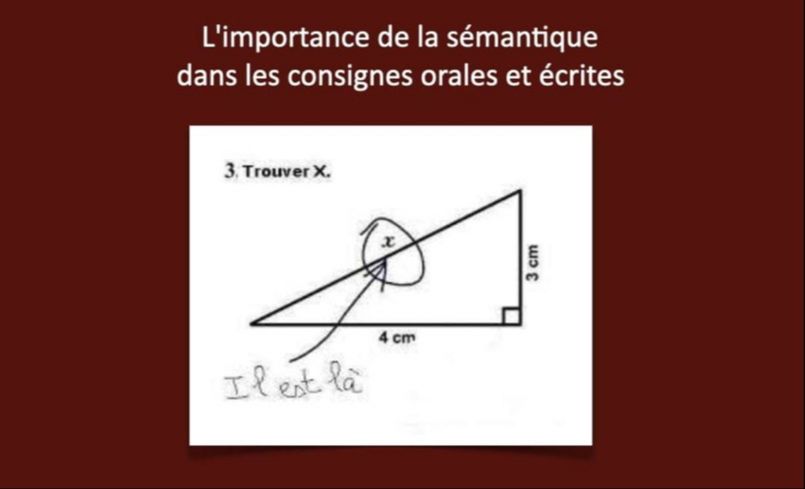
When I grow up, I'll be...
"Guidance in the twenty-first century therefore wants to focus on the individual, enabling him or her to make an autonomous and considered choice of training and profession. It also wants to give everyone the possibility of reorienting themselves, within a vision of lifelong development." (Canzittu & Demeuse)
Maël, a young high school student in 1ère has a dream: to become a pilot. It's a passion he's had since his early childhood, when he first set foot in an airport. Since then, miniature planes, plane tickets and merchandise have become part of his collection, not forgetting digital artifacts such as apps, flight schedules and identification as planes pass by. A passion leading this young man to informal self-training on his future project, since it has also led him to appropriate the history of aviation, of major airports around the world.
However, when asked about the support provided in high school, he retorts that these questions of orientation are not really addressed in class, apart from a few links made from time to time in certain subjects. Is guidance still relegated to the role of the guidance counselor, now an educational psychologist? Despite this, Maël benefits from having an early vocation, a very positive sign of a linear career path characterizing the student who easily finds his way (Unaf).
Émeline, on the other hand, is a student in her final year of literary studies, and is rather indecisive. When questioned, it's rather the fact that she's interested in many pursuit streams such as languages, philosophy or even history that she believes justifies this difficulty in making a choice. A characteristic of multipotentiality and level that is also found in the eclectic orientation pathway (Unaf). As for the meetings with the guidance counselor, she says they didn't really help. What's more, despite the careers forum she attended and the few vague hints from her head teacher about the interest of some of the concepts covered in philosophy class, she claims that there were very few interventions linking school and the world of work. As for the sessions with the counselor, she replies, they didn't really help her.
Orientation is a complex process that encompasses both exogenous factors (societal transformation, employment, professions), endogenous factors (stereotypes, influence of social background, initial orientation) as well as the proliferation of choices, information, actors according to C. Catoir.
Orientation begins in early childhood (C. Loiseau). However, not everyone is like Maël or Emeline. Indeed, what can we say about all those students who have absolutely no idea what they want to do later on, and who for many of them will turn to a path that suits them little or not at all? For Pelletier, Beaudoin and Gingras the absence of vocation refers for a large number of young people to a feeling of personal efficacy that is underdeveloped or not at all, but it can also have other explanations.
Paradigm shift
Will the current health crisis have given rise to a new desire to move towards certain professions in health care, self-help, home services or entrepreneurship?
The student of 1970 wondered about the profession, the student of the 2000s thinks "employability" (Carré, 2005), and soon he'll be thinking "orientability" (Quiesse-Ferré-Rufino quoted by D. Canzittu).
The orienting approach positions the student as an actor in the process of building his or her pathway, equipping him or her with the skills needed to make the choices that will have to be made. The aim is to move from the status of "oriented" to that of "orienter".
In addition to knowledge, know-how and interpersonal skills, knowing how to become is becoming a key skill in a world in perpetual flux, an uncertain world in which the guidance counsellor trained in yesterday's world is guiding the student for tomorrow's world, with new professions, professions that don't yet exist. Projecting oneself is essential, of course, but we need to think more about knowing how to act here and now, because the student is an individual in the process of building his or her identity.
Orientability or orientational competence is becoming the keystone of learning (Ferré, Quiesse)) in a world of perpetual change.
As a result, knowing how to become is learned, and students must learn to develop competencies throughout their journey from initial training to secondary school and beyond. The orienting approach is inseparable from that of apprenance ( Ferre, Quisece), which positions knowing how to learn as a "stable set of affective, cognitive and conative dispositions, favorable to the act of learning, in all formal or informal situations, experientially or didactically, self-directed or not, intentionally or incidentally."(P. Carré)
The orienting approach lies at the crossroads of theories of individual development, theories of motivation as well as career development theory.
It's not a question of "leading learners towards occupations that are suited to them, but rather of enabling them to develop in full knowledge of the facts" (Canzittu, Demeuse). Thus, the guidance approach aims to develop skills relating to:
- self-knowledge,
- exploring the world of school and the world of work,
- seeking and using sources of school and career information and guidance,
- decision-making and transition.
Definition and principles of the guidance approach
A guidance approach is a concerted effort by a school team and its partners to set objectives and implement services (individual and group), tools and educational activities designed to support students in developing their identity and their vocational path. These activities and services are therefore integrated into a school's success plan and educational project, rather than simply a series of isolated actions with little involvement on the part of the school team. (Quebec Ministry of Education).
The orienting approach is based on the principles of infusion, collaboration and mobilization, with all three operating simultaneously and in a non-linear fashion. In other words, the principle of mobilization can give way to that of infusion depending on the situation, the context as well as the path taken by the student as well as readjustments during his or her journey.

- The principle of infusion
According to D. Pelletier, infusion aims to contextualize what is taught in the classroom. Infusion has two main aims: to contextualize lessons and to help motivate learners. Indeed, the link forged between the professional world and the teaching received helps to give meaning to the student's learning. In this way, the learner is better able to perceive the links between what is taught and its application in the world of work. This school-work link also has the effect of increasing his motivation and drive to learn.
- The principle of collaboration
This principle cannot be applied without the subjects themselves being infused and imbued with the professional world.Teachers are therefore the "first and essential collaborators". In addition, the principle of collaboration requires the concerted efforts of all those involved in education (guidance counsellors, pedagogical advisors, school heads, etc.), as well as parents, around the key player, i.e. the teacher. In this sense, "the orienting school is also concerting".
- The principle of mobilization
"One of the most important priorities of the orienting approach is to increase young people's academic motivation and develop their self-esteem." (T. Karsenti)
A student who is neither motivated nor interested would render the guidance approach ineffective. Consequently, the principle of mobilization presupposes that the learner is motivated and personally invested in his or her own professional project. To achieve this, the motivated activity must integrate components linked to personal power, the need to succeed and the time perspective. This means developing the skills needed to build a project throughout the course of one's career, from the initial phase through to high school and beyond. By projecting themselves over the long term, students learn more to construct their orientation and less to undergo it.
To stimulate and increase young people's motivation to go to school, T. Karsenti has identified a set of 32 strategies based on motivation theory(Deci & Ryan): activities with choices made by the students, which enable them to experience success, feel part of a group, develop their critical thinking skills, or activities presented in an attractive way, linking school to their professional dreams, with challenges, etc. Digital technology is not off the leash either, as it also helps to foster their motivation through the use of the Internet in the classroom, as well as the use of mobile technologies such as tablets or smartphones.
Determinants of career choices
Gender stereotypes, school results, the environment, the social milieu in which the individual evolves, in particular the socio-economic level, the school culture, the reputation of the establishment and the image it conveys, the media are all criteria for choosing a career of the student enrolled in the first cycle of education.
Studies carried out by D. Canzittu on a panel of primary school pupils in the province of Hainaut (Belgium) highlight a certain knowledge in relation to one or two choices of career ideas among primary school pupils. The results show, for example, a rate of
- 80.2% of respondents already having an idea for a career
- 19% having no idea for a career
- 2% no answer
We also note a preponderance for so-called "feminine" job categories among girls, notably social, assistance, aid and literary occupations, whereas so-called "masculine" occupations are preponderant among boys (mechanic, doctor, engineer, firefighter, etc.).). Another finding of the survey is that there is a tendency towards so-called "intellectual" professions, intermediate professions in industry and artistic professions.
These gendered orientations remain in the same vein in lower secondary school. Indeed, the report S'orienter aujourd'hui du Lab'Ho ( 2019) highlights gender-oriented wishes:
- 50% of girls' responses ("health", "childhood" and "fashion-aesthetics professions")
- 30% of boys' responses ("IT or video games" "automotive, aviation and space" and "health")
Understanding the biases that block orientation
Many studies point to a considerable gap between alumni's life expectations and aspirations and the position they occupy. Similarly, parental injunction to bias their offspring's orientation also acts against what stimulates and excites the student and later the adult in their convictions and life choices.
Moreover, the number of professional reconversions among adults corroborates the non-alignment between desires and work done . Indeed, the impetus for the quest for happiness at work and more meaningful occupations demonstrates the sometimes disoriented path of guidance as it is still undertaken as a whole. Studies into the quest for happiness at work also point to a growing sense of malaise among a large number of workers, leading to burn-out (professional exhaustion) or even bore-out (boredom at work).
The orienting approach enables students to gain a better understanding of themselves, the skills they can mobilize, and the life choices they can make in line with their personality. As a result, the identity-building student in the orienting approach is better able to make more relevant, less biased choices , which correspond to him or her and contribute to the development of his or her well-being.
Avoiding the pitfalls of orientation by being aware of the biases that dictate the orienter's choices makes it possible to achieve this objective and counter disoriented orientation. For example, both teachers and parents need to be aware of their own biases and the influence they have on their pupils' or children's orientation choices.These biases are numerous; here are three major ones:
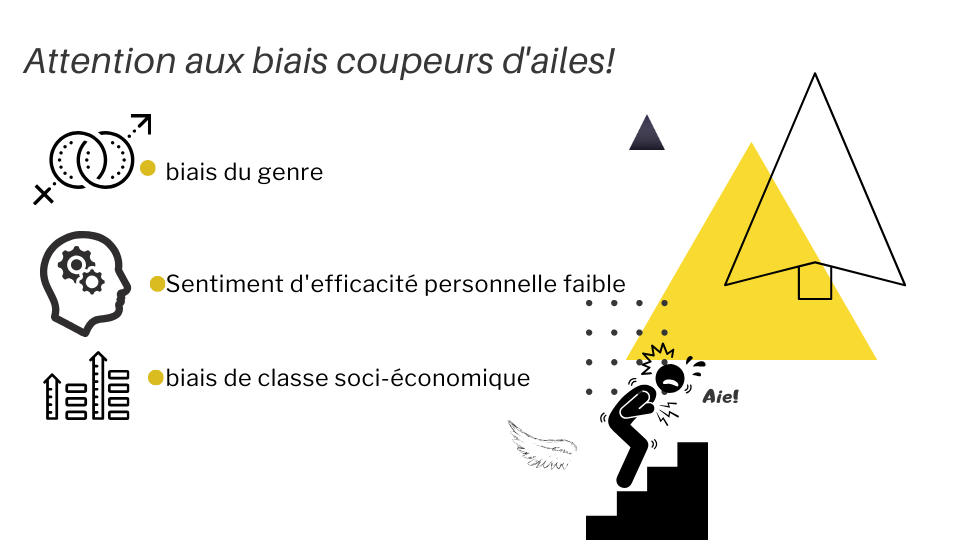 Low sense of self-efficacy
At the heart of the guidance process, the development of the sense of self-efficacybecomes crucial in the student. The sense of efficacy is defined as the belief in being able to achieve the goal of a targeted action (A. Banduras) . It develops on the basis of four sources of information: active experiences of mastery, social learning, persuasion by others and physiological and emotional state.
In other words, a low or undeveloped sense of efficacy can violate a student's project even if he or she has the aptitude to succeed at the given task, as he or she will quickly become discouraged and find it much harder to overcome failures. Conversely, an individual with a strong sense of efficacy will be inclined to persevere despite failure. What's more, difficulties will be perceived more as challenges to be overcome.
The feeling of self-efficacy plays a crucial role in students' academic success through its impact on the development of students' cognitive skills.
Despite the fight against gender stereotypes, strong inequalities persist and the feminization of professions and fields, although having progressed, still needs to be improved. Gender identity is still too deeply rooted in career choices, which explains why a girl shows far less interest than a boy in scientific disciplines and has a low sense of self-efficacy concerning these disciplines (Duru-Bellat) .
Taking these stereotypes into account from an early age, preferably from kindergarten onwards, is the key to overcoming them. Examples of bringing in women computer scientists, engineers, bricklayers, can to some extent help girls project themselves into gendered male professions. For young girls, the physical image conveyed by the media is also important, because a girl who projects herself into a profession is also projecting herself into a life as a woman. For example, the stereotypical image of female engineers on a building site in overalls and hard hats is detrimental, according to Mr. S. Pawlak. This point of view contradicts that of F. Vouillot, for whom it's more a question of "subverting the question of the feminine and the feminine", since, in her opinion, this is why certain fields of study are still too rarely taken up by girls. The schools involved in the gender equality project are developing pedagogies based on equality by including the issue of equality within their subjects, making it much easier for girls to go into certain streams.
- Social background: beware of stereotypes!
Guidance is socially and unequally distributed. Students from disadvantaged backgrounds have less ambitious wishes despite their very good academic results. Parents as well as teachers are sometimes biased by social class in supporting the student's orientation project, which consequently reduces their room for maneuver and aspirations.
Students who have to make choices about where to go next in their school career are given guidance throughout their career. This orientation begins with initial training. Numerous studies have highlighted the predominant role of parents in the choice of orientation, which is not very surprising, but which nonetheless leaves one wondering how little teachers are asked to play a part in student orientation, even though they should be playing a predominant role. For example, in a survey carried out by D. Canzittu among primary and secondary school pupils, the results highlighted the low level of teacher involvement.
Implementing the guiding approach: conditions and roles of the players
Implementing a guiding approach is not the business of a hyper-motivated teacher working alone in his or her corner. It requires a network of partners (local authorities, businesses, associations), parents, teachers and schools working together to build students' guidance projects. Favorable conditions for its implementation are therefore necessary.

In his thesis Vers une école réellement orientante, Penser l'orientation scolaire à l'aube du 21ème siècle, Damien Canzittu, proposes a number of avenues for implementing a guidance approach within a school, depending on the role and status of each of the players in the educational ecosystem. We'll break these down into three levels: macro, meso and micro.
Macro level - Collaboration
This level refers to the principle of collaboration between different players working together on the orienting school project. It also incorporates the concept of the concerted school, characteristic of the orienting approach. To achieve this, the collective work of several members of the educational ecosystem is required.
This level includes the public bodies that ensure the inclusion of guidance policies and reforms, and the training of all players must also be integrated into the guidance-oriented school project.
Measo level - Collaboration
The headteacher acts as the real driving force behind the project. His support, influence and leadership skills are decisive in getting the whole team to adhere to the orienting school project. He or she also inspires and motivates the school team.
A project coordinator acts as a resource person for teachers. He or she is the link between management and teachers. For example, he/she may be responsible for gathering information on teachers' needs.
The pedagogical advisor trains teachers, supports the guidance process and ensures that the project is properly implemented. He/she works with the project's other collaborators: teachers, guidance counselors, head of school, parents.
The guidance counselor is the expert in guidance. He/she has a role as a disseminator of information, as a trainer for teachers and as a resource person, for example with regard to guidance and the job market.
Meso level - Infusion
This level concerns the principle of infusion. It mainly involves teachers focusing their actions around projects for students to work on. They can also collaborate with other teaching colleagues and thus bring interdisciplinarity to the infused subjects.
Level Micro - Mobilization
The aim here is to implement the principle of mobilization which, let's not forget, implies an investment by the student in the construction of his or her orientation project.The aim is for them to become autonomous subjects.
How to teach in an orienting way?
Orienting pedagogy has been in place in certain Quebec schools for over a quarter of a century. Its infusion in Europe under various names, such as active orientation in France with the Parcours Avenir, still remains in the realm of political discourse and therefore highly theoretical for many.
The integration of the orienting approach for teachers aims to offer students vocational exploration activities. The aim of these activities is to develop students' knowledge of the job market, its realities, professions and the training they need to enter them. For the approach to be truly effective and constructive, the infusion must be integrated very early in the student's school career, if possible as early as kindergarten.
Being an orienting teacher implies preparation as well as an appropriate methodology.
For examples, here are some activities to integrate into the disciplines. It goes without saying that they are to be adjusted according to the subject taught, the level of the student.
- Self-awareness activities related to the desired career: identity, interests, personality
- activities around the interest of the targeted field
- activities exploring documentation (paper or digital support)
- activities putting the student in a situation that aims to project the student into the task
- activities on the qualities required, already acquired
- which aim to confirm the student's expectations, perceptions of the job, the realities of the job
Catherine Loisy recommends the use of digital portfolio in the student's orientation project because, in her view, "digital tools can facilitate the collection, formatting and organization of tangible traces on the orientation project and their sharing". It's also a tool they can use to support their reflexivity activities. For example, the activity enabled them to work on identity through the use of a digital application, or on the concept of the self in classical literature around three questions: "who I am; what I'd like to become; what I know how to do". The experimental project was also used to work on digital identity, involving both an art teacher and a photographer. The activities were all conducted according to a reflexive process.
Another example of orienting activities:
Vocational exploration in primary school A tool for success has the strong interest of proposing a model for the integration of vocational exploration at primary school level. As well, a set of exploration strategies and activities are proposed.
Illustrations : Photo: Mael B.Thémyr and Sabrina Budel via Canva
References:
Vers une école réellement orientante Penser l'orientation scolaire à l'aube du 21e siècle (Damien Canzittu )
https://tel.archives-ouvertes.en/tel-02280760/document
Approche orientante et apprenance : nouveau paradigme de l'orientation scolaire et professionnelle (Ferre, Quiesse)
https://www.apprendreetsorienter.org/2017/10/29/le-nouveau-paradigme-de-lorientation-approche-orientante-et-apprenance/
École et orientation- L'approche orientante( D. Pelletier, L. Houde)
http://www.cef.cfwb.be/index.php?eID=tx_nawsecuredl&u=0&g=0&hash=5e0c05f6a82537f1bd5c13530348f33388601ba0&file=fileadmin/sites/cef/upload/cef_super_editor/cef_editor/Publications/Actes/CEF_Actes_2006_03_07.pdf
S'orienter aujourd'hui : Décryptage, Dynamiques et Enjeux
https://www.groupe-adecco.fr/wp-content/uploads/2019/09/etude-sorienter-aujourdhui.pdf
Orientation scolaire, peut-on sortir des biais de genre? (France Culture)
https://www.franceculture.fr/emissions/etre-et-savoir/orientation-scolaire-peut-sortir-des-biais-de-ge
Social justice and school guidance: insights from Amartya Sen's "capabilities" approach (F. Picard, N. Olympio, J. Masdonati ,M. Bangali)
https://journals.openedition.org/osp/4515
Supporting the student's guidance project and digital. New learning situations for students (Catherine Loisy)
https://www.cairn.info/revue-hermes-la-revue-2017-2-page-121.htm
Conference How teachers can take hold of guidance in their teaching (C. Loisy)
https://www.youtube.com/watch?v=yJliGrqMiB4
Conference by C. Loisy https://www.youtube.com/watch?v=qc5c1p_oPiQ
Vocational exploration in primary school -A tool for success
http://gpsao.recherche.usherbrooke.ca/documents/meq/Franco.pdf
See more articles by this author