Maëlezig Bigi's research deals first with the emergence of the issue of recognition at work, then with organizational determinants and related expectations, and finally with the role of recognition at work in the construction of employees' health.
Publish at December 16 2020 Updated April 06 2023


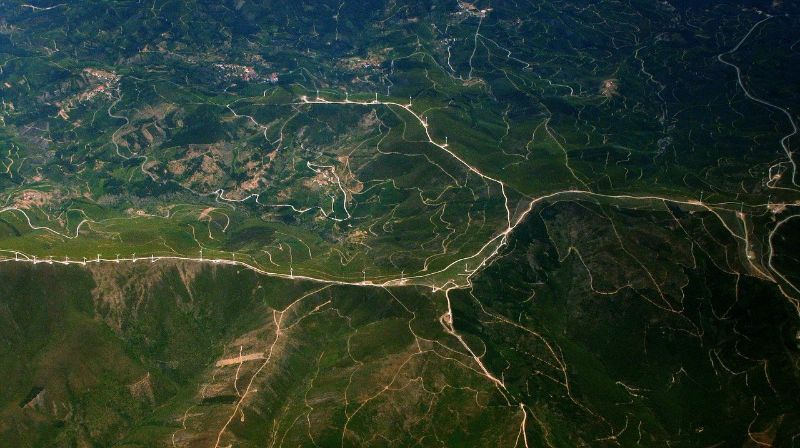
Starting from the observation of the intersecting transformations of the rural world and energy supply modalities, Felix Authier investigated endogenous renewable energy (RE) electricity production projects in two European countries, Germany and France.
If public policies increasingly favor local initiatives, the question then arises of the capacity of actors in a territory to create resilient spaces via the development of RE. The six projects studied and compared focus on wind and solar energy; hydro, biomass, geothermal and marine energy are not represented in the projects studied.
The starting point for the notion of multifunctionality of a rural territory is the assurance that agriculture has much more than a productive and nourishing function. It fulfills various functions: economic, social and environmental, in line with the challenges of sustainable development. These functions do not all respond to the laws of the market and require the implementation of support mechanisms. While the energy policies of Germany and France are historically and significantly different, the two countries have a similar conception of multifunctionality:
"The resulting financial aid is not only intended for farmers, but for all actors in the territories concerned. This evolution marks the shift from a sectoral policy to a territorial development policy."
In addition, a high degree of multifunctionality opens up the possibility of a territory being resilient, i.e., it will be able to "subsist in the face of disturbances [...], absorb change and return to a state of equilibrium".
Energy transition policies differ between the two countries because of the strategic choices made in the 1970s-1980s. Thus, Germany has coal-fired power plants and France has a large nuclear fleet, while hydraulic renewable energies are already well developed in France. The first RE development policies followed the Chernobyl accident (1986) and the increase in the price of fossil fuels.
Then, implementation logics "from above" were encouraged and large consortia dominated the landscape. In the 1990s, financial support policies (feed-in tariff and research support) emerged, to be effective in the 2000s. Current energy programs are positioned for the 2020 and 2050 horizons, with green energy production targets and modalities that aim to foster the participation of local stakeholders.
The networks of actors involved in a wind or solar project are diverse, they are public, economic, associative actors and residents. The links between them can be more or less strong, but the trust they have in each other has been observed in all successful projects.
To represent it in a more concrete way, in the Black Forest for example, the ski associations seem to have had a determining role in the development of local projects. Indeed, these are people who practice a shared activity in a territory whose knowledge is important for their sport. There is a link between the social capital of a territory and the realization of an RE project.
"Network analysis deepens the study of the project trajectory. The goal is to reveal the structures that allow mobilization and valorization of a resource."
All the local projects studied have contributed to energizing the territory on the different sides of multifunctionality:
"The comparative work carried out from the six observatories has identified two main forms of development. The first, described as institutional development, energizes above all the institutionalized actors in the territories. Thus, it favors the acquisition and circulation of information, the extension of the address book, and the economic growth of economic, public and/or associative actors. The other members of the local society do not participate directly in the process. The second is citizen development. The realization of the project by the local initiative involves all the actors of the territory. The population therefore also benefits from the socio-economic spin-offs of the projects."
Image source: Pixabay - Free-Photos
Félix Authier, Territorialization of energy policies and local development in Europe: a comparative study of the contribution of local renewable energy production initiatives to the multifunctionality of rural spaces, University of Perpignan, 2018 (available at HAL).
You might also like:
Maëlezig Bigi's research deals first with the emergence of the issue of recognition at work, then with organizational determinants and related expectations, and finally with the role of recognition at work in the construction of employees' health.
Spectacular Language and Everyday Injunctions
We are inundated daily with written messages on transport vehicles, walls, our devices and sometimes on ourselves. We are swimming in a sea of spectacular verbal injunctions inviting us to behave or consume one way or another. Let's discover the linguistics of the words that surround us with Isabelle Morillon.
The Garden School against everyday crises and disasters [Thesis].
For the first time in living memory, the new generation will have less than the previous one. Ecological, economic, social and health crises are disrupting our societies, our way of living together and the school. In difficulty, the institution no longer inspires dreams and seems inadequate to respond to the crises we are going through. What if it was enough to change the paradigm and to think of the school-garden? Let's find out with Gilles Delesque and his thesis.
Landscape dynamics and social choice [Thesis].
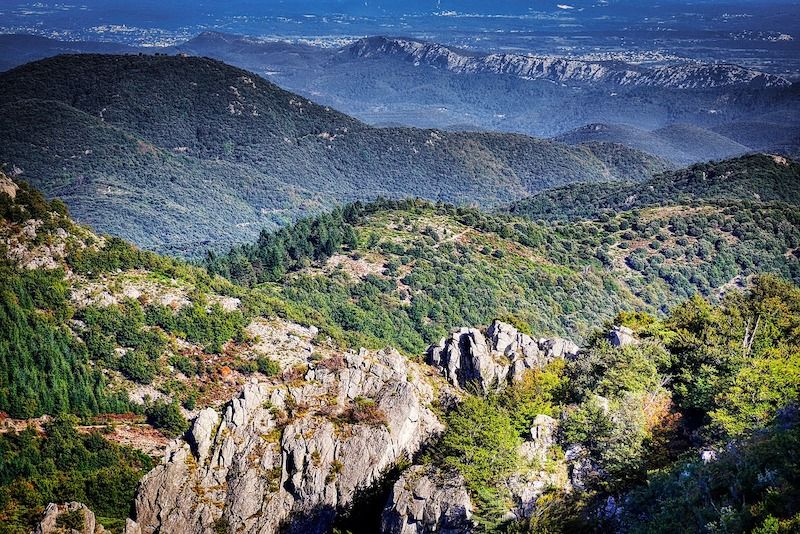
"In Europe's mountain regions, landscapes are evolving under the influence of a dual dynamic: increasing forest cover and the intensification of agricultural landscapes. Using Mont Lozère as a case study, [Clémence Moreau's thesis shows] how these two dynamics can come into tension, by exploring the question of social choices linked to landscape dynamics."