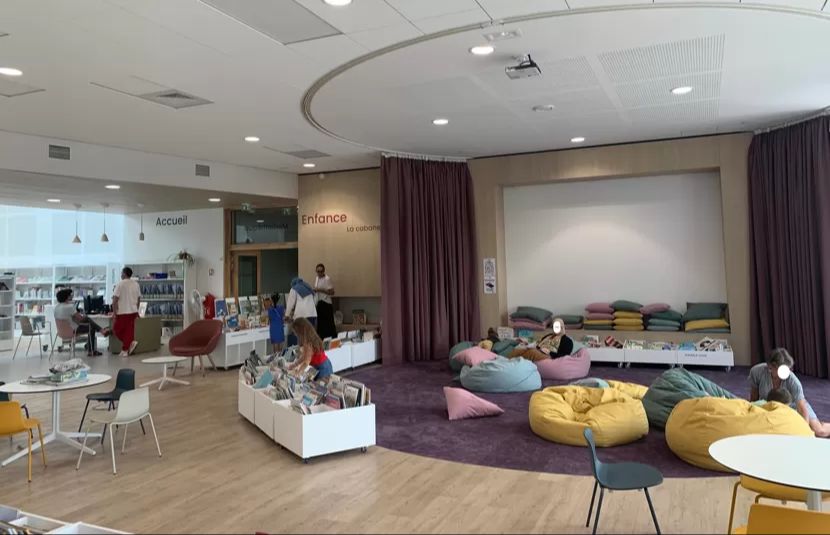
Each library needs to define its own identity, with reference to the area in which it is located and the needs and expectations of local residents.
Publish at March 21 2022 Updated March 30 2022


Can everything always be completed? Does every project started, every learning experience begun, inevitably lead to a clear and definite conclusion? Ideally, the answer would be "yes, of course!" but in practice?
For example, when it comes to the world of languages, literature, and writing, many secrets remain unsolved. Cryptology, that "science of secrecy," is all about hiding information in a message, and while many of them gradually reveal their secrets, such as the Zodiac killer code, others remain forever obscure and unsolved.
Get your neurons firing and, in turn, try to decipher some cryptological mysteries...

If the name Sir Edward Elgar (1857-1934) doesn't necessarily ring a bell, he was a British composer whose Pump and Circumstance military march became world famous (if only to illustrate one of the stories in Disney's Fantasia 2000!).
Or, in 1897, this Lord sent a somewhat original message to his friend Dora Penny, whom he affectionately nicknamed "Dorabella." The great conductor loved mystery, and the appearance of his message reflected this, as it was composed solely of characters with one, two or three loops. No, it was by no means a secret code between the two friends, for when Miss Penny questioned him about the contents of his message, Sir Edgar simply replied that she was "best at guessing. And since then, the guess is so great that it remains incomprehensible. Some experts speculate that, if not a text, it may instead be a score...

Did you find the Voynich manuscript weird? Wait until you see this one! We go even further back in time, to ancient Greece, the 2nd millennium B.C.
During archaeological excavations in 1908 is uncovered a strange clay disc, covered with 45 strange symbols, arranged in spirals, on both sides. Divided into groups, separated by lines, one can recognize drawings of men, tools and animals.
But here again, no expert has been able to explain not only the purpose, but also the origin of this disk, which would be the oldest example of printing ever discovered. It is now preserved in the archaeological museum in Heraklion, Crete.

This one is definitely one of the biggest mysteries of the genre, as one strongly hesitates between the masterpiece of cryptology and... the outright scam!
Discovered in 1912 in a Jesuit library in Rome, Italy, by Wilfried Voynich (hence the name of the document), this anonymous illustrated book is written in an unknown language and script. Although several specialists have studied it, the content of this work remains an enigma: herbarium, alchemical treatise, esoteric work... no one knows.
According to carbon-14 dating, it dates from 1404-1438 and is now kept at the library of Yale University, in Connecticut, northeast of New York.
Let's end this time with a world-famous British writer, author of Oliver Twist, Charles Dickens (1812-1870). But what does this great novelist have to do with our cryptological series?
In fact, during his lifetime he was also known for his very peculiar shorthand (a writing system employing abbreviative signs to transcribe elements of the oral language as quickly as they are spoken), which he himself named "the devil's writing." This mysterious brachygraphy (writing words in an abbreviated form, such as abbreviations, acronyms or initialisms) was until then perfectly impenetrable, so much so that admirers of the author of David Copperfield (not the magician, eh!) set up a contest called Dickens Code, inviting everyone to try to crack the mystery.
And it was some 160 years later that a humble American computer scientist, Shane Baggs, managed to unravel this mystery, at least in part, since about 70% of a letter could be decrypted. But what was in this famous letter that was so fiercely coded? Nothing more than a simple letter addressed to the Times of London to express his dissatisfaction with an advertisement that had been rejected and for which he asked for a new promotion of a literary publication. Why so many secrets then?
To make a list of all the cryptological mysteries would be far too long and today, it is only a brief sample that we can present to you, hoping that it will give you the desire and curiosity to continue the research, and perhaps, if the heart tells you, in turn, to try to finish steps started centuries before for some, or more recently for others.
Whatever the place, the time, the culture, or even the intentions of their authors, it is up to us, to you, to try to contribute to these buildings and finish what has been started. Want some ideas? Then take a look at Agapeyeff's, Beale's, Tamam Shud's, or Kryptos'. Neural heating in sight guaranteed!
Sources and illustrations
You might also like:
Each library needs to define its own identity, with reference to the area in which it is located and the needs and expectations of local residents.
The families of musicians, doctors and artists are just as famous as some pedagogical families. What about the relatives of Carl Rogers, Célestin Freinet or Maria Montessori?
Is distance learning just a crisis solution?
During the Covid 19 pandemic confinements, many students, schoolchildren, and workers were able to experiment with distance learning in an almost unique form: video conferencing. Why are some people tempted to reduce digital training to this?
Data versus discourse: where's the sense?
Discursive authority is threatened both by the vogue for narrative, which manipulates those for whom it is intended, and by access to raw data, which invites everyone to make up their own minds about the facts.
Teaching students a sense of balance in their lives. It's an important social issue, as it affects well-being and happiness by eliminating unhealthy stress.