"Human nature, if it evolves at all, is hardly faster than the geological profile of the earth."
Solzhenitsyn Gulag Archipelago
What is an archipelago?
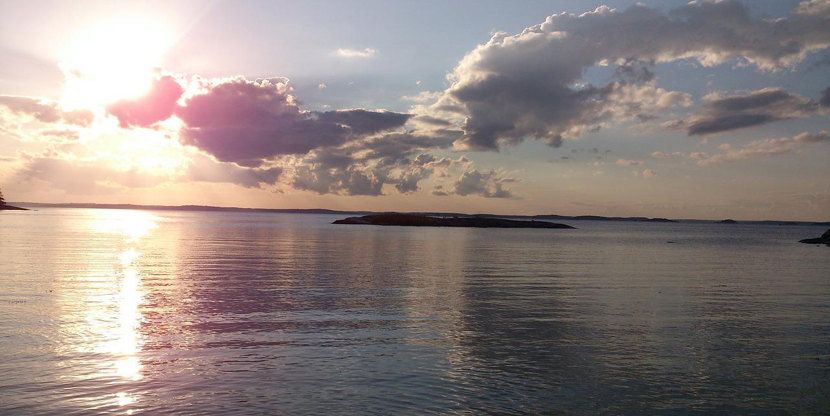
The term "archipelago" is borrowed from the Italian arcipelago, attested since the 14th century, itself a distortion of the Greek Aigaion Pelagos (Αἰγαῖον Πέλαγος).. This word originally referred to the Aegean Sea, characterized by its large number of islands (Wikipedia). An archipelago is therefore a set of islands relatively close to each other. The proximity is usually coupled with a common geological origin, usually volcanic. With 179,584 islands, the Finnish archipelago would be the largest; nothing to do with the Comoros archipelago only made up of 4 islands.
The potential of archipelago thinking
The image of the archipelago is essential against the single thought. In the Caribbean, there is at the same time a variety of endogenous population, African, European and cultural links between populations despite the geographical, institutional and colonial fragmentation. The phenomena of miscegenation and creolization operate with populations living on islands 20 to 30 km apart, which see each other.
Like the volcanoes that have often seen them born, the islands are crucibles from which nuances are invented to feel and vibrate with the world. On one island reggae will be invented, on another salsa, there soca and a little further away zouk... With the same shared materials, the same populations, the same background, a diversity of forms is invented, which comes from a cultural unity and a diversity within the unity. It is probably the main contribution of creolization beyond even the genetic mixture, to borrow from a common fund to propose new nuances to the world.
Edouard Glissant's contribution
For the West Indian Édouard Glissant, the archipelago is more than a geographical reality, it draws a psycho social paradigm. According to him, it offers a new measure of the world based on relationships. Going beyond the traditional opposition between islands and continents, it assumes a recognition of each place, each language, each culture, within a relational globality.
The archipelago thus implies a dynamic conception of identity that exists only through the contact of differences, which never cease to exchange and metamorphose. For Édouard Glissant, it is thus possible to distinguish a nomadic identity and a root identity. The nomadic identity pays attention to the encounter, to the links that become possible, while the root identity is attached to the territory, to the defense of materialities. But Glissant goes further than the opposition of style between nomadism and sedentariness, he places the accent on the otherness of the identity-relationship which is composed by meeting what happens. This identity-relationship is made of curiosity, letting go and welcoming.
In addition, it is interesting to recall the work of Kauffman (2004) who alerts us to the variability of our identities in contemporary societies. Our behaviors are variable depending on the situation. We would have coat rack identities and according to the choices to be made we would adopt the attitudes that suit us. Ecologist to buy our salads, hedonist for a small impromptu vacation at a jet plane. Far from being monolithic we would be malleable and encounters would help us transform ourselves and, why not, find the best of ourselves.
The archipelago helps us think differently
Philippe Maquet of Bioscene, the Agora of the Archipelagos, slips from identity to thought. He takes up this remark from a Queschua schoolteacher in the Cusco region who explained Buen Vivir to his students, saying:
"If you want to talk with the French journalist who is there, you have to understand who she is, where she comes from, what her roots are, and you have to know what yours are, it is the only way to establish a relationship of brotherhood, sincere"
He infers that forms of identity favor forms of thought. He imagines an archipelago thinking "above all the vision of a world from which all competition, including between currents of thought and models of solutions, would tend to be banished, since each disagreement would be considered there as fruitful, as a creative richness, and placing common action as a space of experimentation integrating the plurality of paths."
But is the archipelago a panacea?
What is the risk of archipelago thinking?
The archipelago, like the oasis, participates in the deconstruction of continental thought marked by the symbolism of borders and the domination of what lies behind.
Deleuze and Guattari were thus able to write that "philosophy is a geophilosophy, exactly as history is a geohistory from Braudel's point of view."
Some continental nations are imputed with frontier thinking and a fear of being invaded, resulting in the initiation of preventive wars to prevent their fears from being realized. But the archipelagos are territories that can also wallow in a brilliant solitude. Each one cultivates for himself his certainties and takes from the traveler only what confirms him in his beliefs. The diasporas take with them their beliefs and perpetuate them whatever the context.
The archipelago is other than a set of paradisiacal islands. It also still knows the limit. that of the exiguity of each of the micro territories.
What does thinking in an archipelago bring?
From a practical point of view, thinking in an archipelago inspires schools , for example the Drome Archipelago which wishes to "enable each young person to become a true master of his or her learning." It also inspires the practices of training in collective intelligence.
So a 22-day refresher course before a one-year technical training is organized for people undergoing retraining. A team of change entrepreneurs takes charge of the course, which is built with collective intelligence. The challenge is to support the transformation of the people who join the program. The posture of the speakers encourages encounters, dialogue, trust, empowers the participants and emphasizes the sharing of knowledge.
Sources
Wikipedia archipelago https://fr.m.wikipedia.org/wiki/Archipel
The Archipelago Paradigm - François Noudelmann, Françoise Simasotchi-Bronès, Yann Toma In Archipels Glissant (2020), pages 7 to 11 https://www.cairn.info/archipels-glissant--9782379240850-page-7.htm
Bioscene- L'agora des archipels https://www.bio-scene.org/article/lagora-des-archipels
Antonioli, M. (2009). Geophilosophy of Deleuze and Guattari.
https://www.decitre.fr/livres/geophilosophie-de-deleuze-et-guattari-9782747558310.html
Happy Days. Poetics and Glissant http://osonslesjoursheureux.net/la-poetique-et-glissant
Archipel Drome https://archipel-drome.com/college/apprendre/
Kaufmann, J. C. (2004). The invention of self: a theory of identity. Armand Colin Festival of Learning 2021
https://www.decitre.fr/ebooks/l-invention-de-soi-une-theorie-de-l-identite-9782200256265_9782200256265_9.html
Archipel Kyosei: Pedagogical Innovation and Collective Intelligence
https://www.youtube.com/watch?v=Rzi0kDe1YUU
See more articles by this author