Virtual tours, learning and the desire to learn [Thesis]
Can virtual tours help art history teachers?
Publish at February 14 2023 Updated February 14 2023


The proven practices of reading aloud in ancient Greece consisted of reading the names engraved on grave markers. To echo the name of an absent person, thus asserting his or her re-naming inscribed in stone. The task is often entrusted to a slave, who takes an ego that is not his own into his mouth. In this culture and time, this cannot be the work of a free man.
Always in antiquity, orality is linked to the very nature of democracy. The sharing of speeches, said or read, prefigures debates and democracy. And for Socrates, "all speech must be composed like a living".
In the ancient Romans of the time of Pline the Younger, nobles and writers of the wealthy classes shared moments of reading aloud almost every day: the recitatio. They corrected and perfected themselves through this exercise and thus developed a work.
In ancient poetry, the high voice is already in the text. It is the voice of myth and Homeric song, then the voice of revealed religions. It is also that of all the texts that circulate by word of mouth. Like those poems that are hidden under several languages in times of persecution.
So entire works have been preserved because they were learned by dozens of people: a small group of relatives learns to a second circle. These texts spoken in the most appalling circumstances bring back the strength of humanity and light into the shadows.
Silent, faster reading, during which "the eye sees the sound" was known and rarely practiced until the developments associated with printing and literacy. We measure the strangeness of silent reading by this remark of Augustine's when he discovers silent reading by observing Ambrose:
"His eyes roamed the pages and his intellect scanned their meaning, but his voice and tongue rested."
In the second half of the twentieth century, silent reading was acquired in the West: "to know how to read is to know how to read in silence". And when we hold the book and the text in its entirety (not the redacted texts, especially for women), we are in a position of power.
Colette Danieau-Kleman moreover recounts a situation where the "Reader" had, in his or her experience of the public reading, returned a partial image of the text, The False Word, and of the author, Armand Robin.
The latter had forged a legend in which it did not appear that he had written foreign language listening bulletins for the Vichy regime. Which the researcher later found in the appendices of the book. Public reading also comes at the risk of placing oneself under the authority of the reader.
The author recounts Dickens's readings, who went on reading tours of his books. It was a way to make them more accessible and to make money quickly. His gestures and manner of speaking were noted in the margins of his "reading books".
In his work Great Expectations, he highlights a reading scene. Wopsle, reading with dramatic effect, is initially well received, before the audience turns on him following a plea that mobilizes the duty to enlighten the villagers, exposing what Wopsle had omitted from his reading.
In an age of omissions and fragmented information, these two examples are useful to keep in mind.
Public reading is also about shared silence:
"In our world speed and sound reign supreme. Sound pops up and chases us everywhere. [...]Now, and this is apparently a paradox as well as a promise, part of the current offering of public readings (a sound object) seems to be built in reaction to this invasion of sound."
"In a public reading, silence is the foundation of the voice."
The author recounts an experience in which "the presence of others spontaneously integrated with [her] perception" in the quality of a truly shared "silence.
Thus, the thesis is constructed using the method of "reporting" and "case-based thinking" (reasoning from singularities). Drawing on narratives of reading receptions in classical and contemporary literature, the publications of humanities and social science scholars, and her own post-reading narratives, the researcher illuminated the relationships "with what, in what, and for what what arises makes the reception of a public reading" exist.
In the relationships of the "I"to the "we", with silence, there is also the eye and the gaze that allow for a "being-together". "Eyes turned toward the source", "waiting for its word". Thought has a face, which may be a hand, a circle of light on a person reading, a particular gesture of an author discreetly chanting her reading.
Readings happen in all sorts of places. Le Liseron, a circle of reading aloud (created in Lyon in 1984) used to meet in unusual places: gardens, theaters, barges. We also find in the thesis all forms of readings aloud: in private committee, reading circles, in meetings of poets and poetesses, in theatrical sessions, in entertainment.
Echoing this, a reading organized for the safeguard of a natural site in Liège, the Chartreuse Park, threatened by real estate developers. At the initiative of the poet Karel Logist, nearly 50 confirmed and unconfirmed readers read the entirety of La chartreuse de Parme every evening for a week, amidst trees and fireflies...
"I think of Stendhal's La chartreuse de Parme, which was dictated."
Illustration: Stux from Pixabay (found on Pexels).
Colette Danieau-Kleman, Listening to and Watching Readings: the Reception of Public Readings aloud. Sorbonne Paris Cité, 2018.
Thesis available at: https://www.theses.fr/2018USPCC159
You might also like:
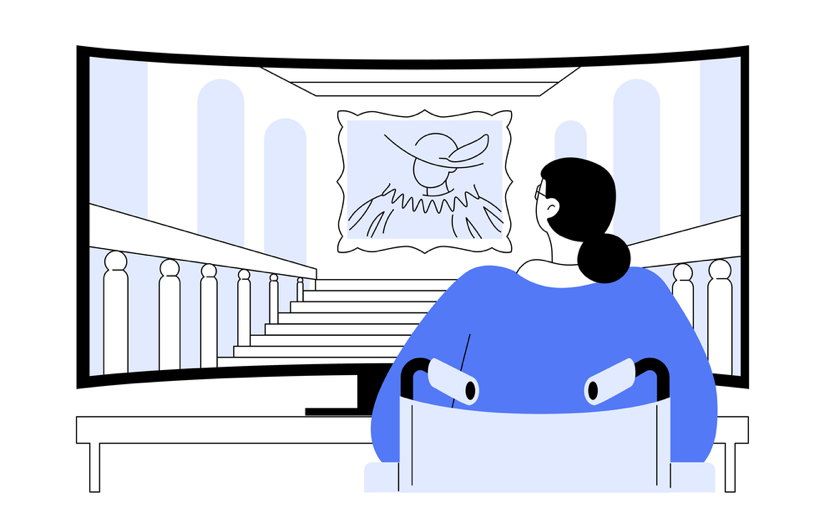
Virtual tours, learning and the desire to learn [Thesis]
Can virtual tours help art history teachers?
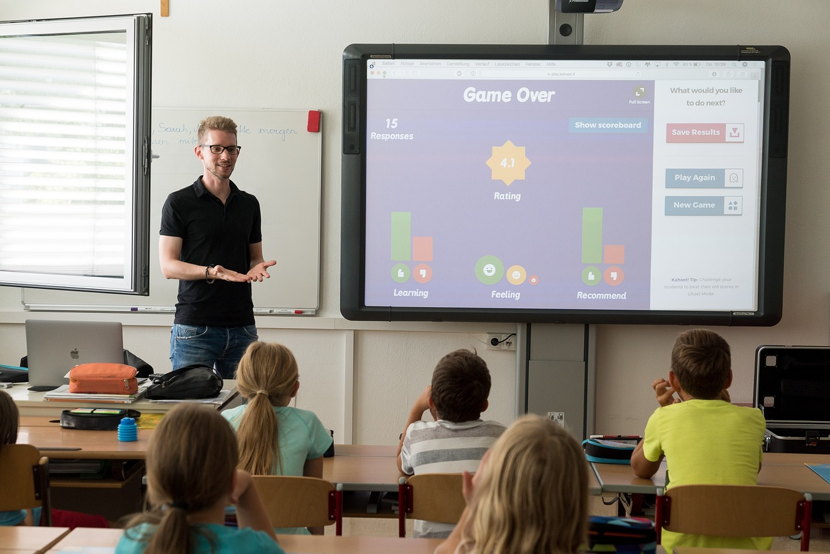
Building a climate conducive to learning through classroom management
The teacher must demonstrate the know-how and interpersonal skills needed to manage his or her class.
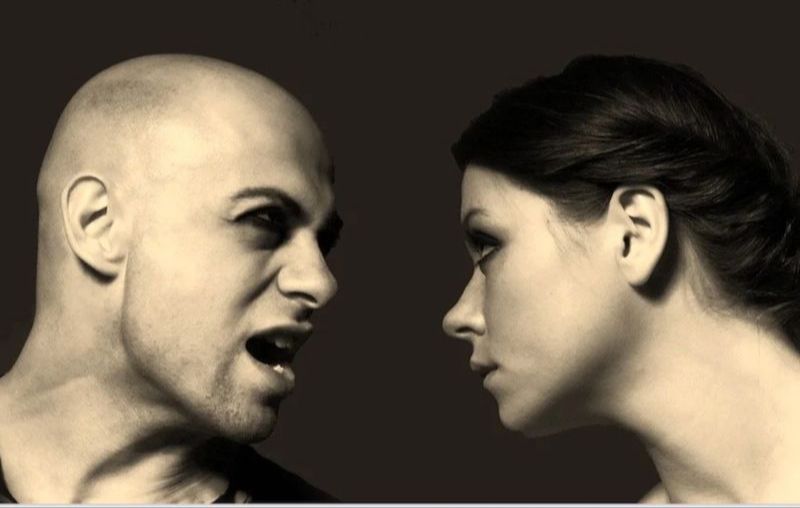
The Mechanics of Conflict in French Cinema [Thesis]
As a counterpoint to the recommendations of positive and non-violent communication strategies, a thesis on family disputes in the cinema, which brings to light a sublimated drama. We will play it if we need to get out of our daily conflicts together and with our heads held high.
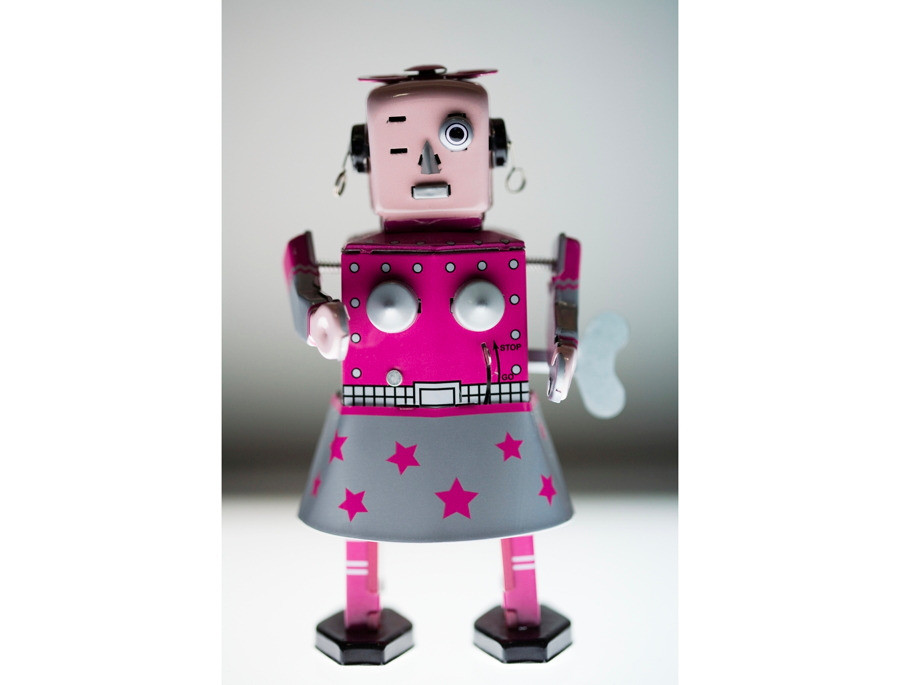
Philosophy and science of robotics
Should we be afraid of robotization? What if we only needed to study the philosophers of yesterday to understand our future tomorrow? Innovation doesn't come out of nowhere, it always has its roots in the decades that precede it.
World data on education - Unesco
While data is generally reliable in different education systems, it is more difficult to compare. The challenge for the Unesco Institute for Statistics is to produce useful, comparable data. The data is available in detail for all countries in the form of summary tables.