If the trainer steps aside, the group learns
What if the trainer gave more room to a group on functions that were previously devolved to him?
Publish at April 11 2023 Updated April 11 2023


Remember that at the time of your birth everyone was in joy and you were in tears. Live in such a way that at the time of your death everyone will be in tears and you in joy
Arabic proverb
This image is a gift in humanity to learn how to deal with this reality for which we sometimes prepare ourselves rather poorly. Depending on the tradition, the death of a loved one is announced to us by a phone call, a message or a visit and even with a form of gravity in Europe. Yet the way death is experienced varies considerably between cultures and religions.
For Native Americans, it is a dream that will announce death. In many Asian cultures, death will be apprehended as the continuation of a cycle. In African cultures, death is seen as part of a transitional process rather than an end in itself...
People may also learn of the death of a loved one by having a relative or close friend visit and inform them of the news. It is also common for funerals to be held immediately after the death, often accompanied by traditional rituals. Collective warmth is immediately sought to avoid a feeling of abandonment and loneliness. For Muslims, death is considered the passage to eternal life. And it is customary for funerals to take place within 24 hours of death.
Mortuary inscriptions, tomb decorations, macabre representations or dancing with the Breton Ankou give usbnt to see a mortuary setting. Except, borderline experience and light tunnel, from which some claim to return, experiential learning is, all in all, rare. Maybe taking drugs modifies our states of consciousness or shamanic trances make us feel some strange sensations. Several practices are used to deal with what is, for some, a burden, for others an discomfort, for others still an outcome to be absolutely silent, to avoid any anguish here below.
For those who wish to prepare for the deadline, several practices are given. Similarly, prayers are often used in religions to help people cope with death. Prayers can be recited by the dying person, by family members, or by clergy.
Palliative care is a holistic approach that aims to relieve pain and improve the quality of life for people with serious illnesses. Palliative care can also help patients prepare for death by providing emotional and spiritual support.
Funeral ceremonies are an important ritual in many cultures to help people accept death as part of the life cycle. In the form of "rites of passage," they mark on the one hand the tightening of the community (family or tribal meal, even unbridled celebration) and, on the other hand, to anchor a deep meaning to the passing of the deceased.
Meditation is used to help people accept death and find inner peace. There is a Buddhist tradition called "maranasati", which involves meditation to learn about death and to prepare for the end of one's own life. Maranasati meditation is a contemplative practice that involves visualizing one's own death and preparing for it. The practice may begin by imagining death as an inevitable and necessary event for all living beings. Then the practitioner can continue to focus on the various stages of death, such as the cessation of breathing, loss of consciousness, and decomposition of the body.
The practice aims to help people overcome their fear of death and develop a deeper understanding of the nature of life and death. In some Buddhist centers, coffins are used as an artifact to help visualize death in a more concrete way. Practitioners may sit in the coffin, close the lid and meditate on their own mortality. This practice can help people become aware of the impermanence of life and prepare mentally and emotionally for their own death.
There are obviously funeral professions that need to learn how to accompany the families and loved ones of the deceased, or how to make an announcement, or how to prepare a body according to the tradition of reference, how to note the inevitability of the situation, and finally how to process and bury it; however, aside from religious and philosophical traditions, contemporary individuals prepare less and less for the passing away. There are still family practices where the last moments are ritualized, but except in TV stereotypes or video games, death is often obscured.
As part of a convention of the Association progrès du management (APM), "Next Worlds Workshop", death was approached through a powerful experience offered to participants who wished to explore it differently. The next worlds are also the unseen worlds where one does not venture so easily. The exploration was far more modest than the oldest tale in the world, that of Gilgamesh going to find his friend in the realm of the dead.
The group of about 10 volunteers was accompanied by 3 accompanying practitioners over a period of 30 to 40 minutes, in a dark, preserved room. Standing in a coffin for a moment, lying down and putting on noise-cancelling headphones to cut oneself off from the world, then meditating on ideas, projects, sad passions to let die in order to be better reborn to what is dear to us that carries life. Seeing the light again once the lid of the coffin is removed, feeling one's ribs and legs free to move, the fresh air circulating again, sharing one's sensations in a circle with the companions of the journey, accompanied under the benevolent gaze of the companions was an out of the ordinary experience, which authorizes each person to find in him or herself true resources, to take back to him or herself the desire to live with intensity.
The 3D visit carried out will only give a tiny glimpse of the physical device mobilized and will say nothing of the singular emotions experienced by each person, nor of the courage it takes to dare to participate in such a learning experience, and even less of the nature of it.
As Jaurès affirmed "Courage is to understand one's own life... Courage is to love life and to look at death with a calm eye.... Courage is going for the ideal and understanding the real."
In societies where sometimes the living seems neglected, or the religious no longer plays this role of initiation into the mysteries of life, one has to wonder if teaching death in school or to adults would not bring a little more awareness to our choices and actions.
Sources
Dying For Revelation (matterport.com) https://my.matterport.com/show/?m=sVhBe7b12Ly
Maranassati Sutta (AN VI.19) -- Mindfulness of Death (1) Mindfulness of Death (1)
https://www.accesstoinsight.org/tipitaka/an/an06/an06.019.than.html
Maranassati Sutta (AN VI.20) -- Mindfulness of Death (2)
https://www.accesstoinsight.org/tipitaka/an/an06/an06.020.than.html
The Telegram. The moving dance of the husband of Agnés Lassalle, the teacher killed by a student.
https://www.letelegramme.fr/france/la-danse-emouvante-du-mari-d-agnes-lassalle-cette-enseignante-tuee-par-un-eleve-video-08-03-2023-13292458.php
The Epic of Gilgamesh the world's oldest story - https://www.youtube.com/watch?v=DW2IvsZg7X0
Ouest France. 5800 entrepreneurs will floor for 2 days in Nantes
https://www.ouest-france.fr/pays-de-la-loire/loire-atlantique/management-5-800-entrepreneurs-vont-plancher-pendant-deux-jours-a-nantes-46a2d876-c17b-11ed-aad2-778331a86007
You might also like:
If the trainer steps aside, the group learns
What if the trainer gave more room to a group on functions that were previously devolved to him?
Whether they take the form of pixels, period costumes or fantastical tales, these playful uses of history have one thing in common: they shake up our relationship with the past. By inviting us to literally enter into history, to live it and replay it rather than contemplate it from a distance, they open up new ways of transmitting and appropriating it.
What is an explanatory interview? 1/2
An article that presents the roots of explanatory interviewing, an alternative to behaviorist approaches to knowledge.
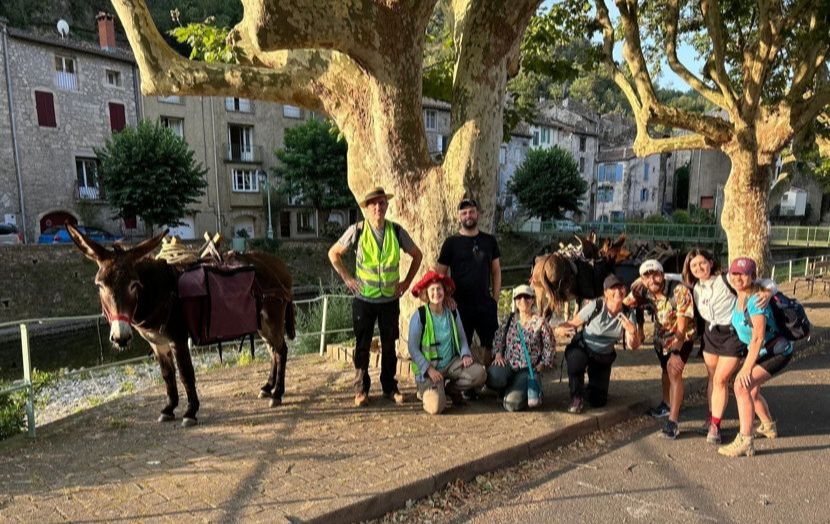
Dan'A's dream is conceived as an educational lab that explores new ways of learning. Like an itinerant master class with donkeys, the idea is to revisit facilitative practices and give shape to a "societal intelligence". This lab is part of the Inex movement, which projects experiential learning as a means of developing human potential.
Changing Your Perspective to Learn in a Different Way
The teacher shifts from a hierarchical role to that of a guide, supervisor, mentor, and coach. The student, in turn, gains new skills. From being a passive subject of evaluation, the student becomes an active, independent learner, then a co-evaluator, eventually becoming a teacher in their own right and ultimately a co-creator of content. Five approaches and responsibilities regarding learning.