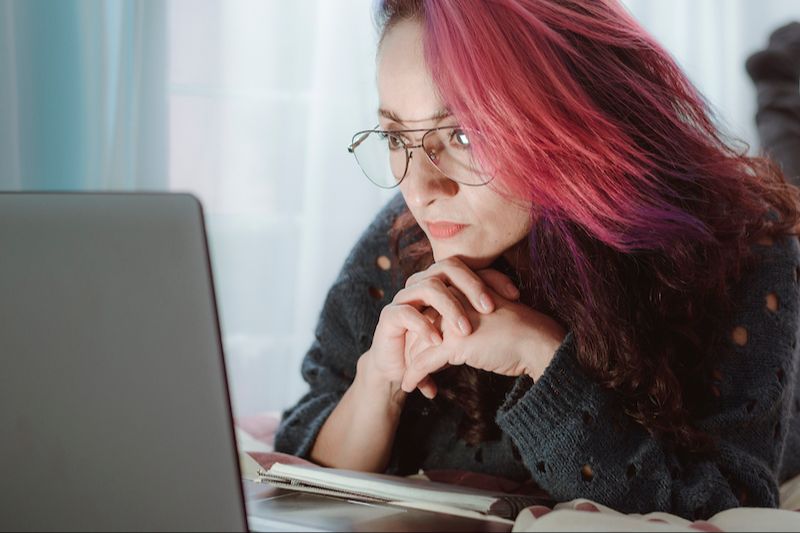
Who remembers that, to film an event, we had to stick our eye to one lens, closing the other to frame what was in front of us? Whereas today, we have become accustomed to appointments on screens - for work, for training, for moments of sharing, or for care - it is these same screens that film us.
Mirrors-transmitters-recorders
In portable or fixed mode, our "screens" are as much "mirrors-transmitters" as "mirrors-recorders". With this technical mediation, our faces are seen and seeing, whereas without this mediation, we do not see the face we offer to the world.
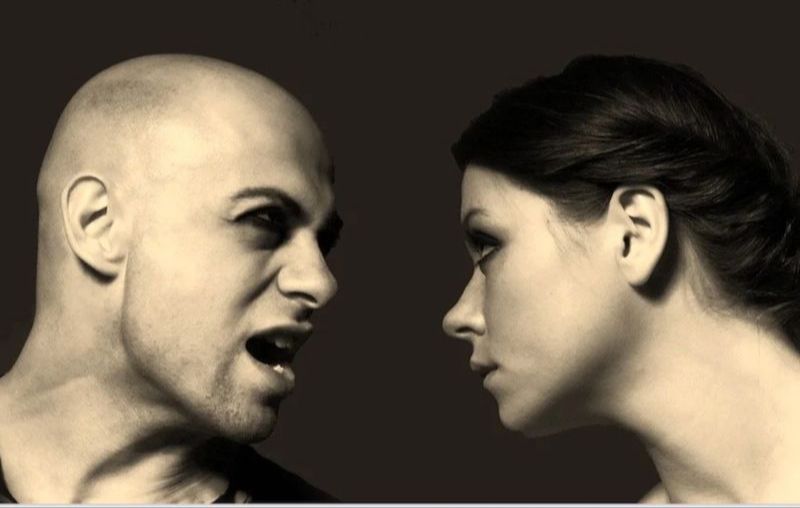
"In face-to-face face-to-face, [...] I see [the face] of the other who, by looking at me, points to that blind part of my body."
"Face-to-face is to open up a distance that allows for encounter."
This question of the faces of encounter in our media environments is at the heart of Alice Lenay's research-creation.
This thesis can be read with different points of entry. Obviously, it will be of interest to art lovers, for the questioning from proposals of visual and performative artists from the 1990s to 2020, and the interweaving of the author's own creations.
But each of us will be able to put into perspective our own practice of cameos through this particular light of art and what this practice means for our societies.
In effect, "our technical tools change our habitation of the environment".
The network of screens
According to media philosopher Vivian Sobchack, "we humans, too, [are] part of the system, "we have become participating (living) components", "caught up in this network. This one is " both the center and the environment" and can be read from the inside through links and relationships.
"As intermediaries for relationships with others, the mediated social interactions that phones enable [...] thus give them a form of autonomy of existence."
"Your face appears in the palm of my hand"
Caught up in this link within which our GSM (Global System for Mobile Communications) can take on the importance of an actant, we better understand how our relationship to this tool can sometimes go beyond us. There is a relationship of vital dependence with these exosomatic devices that does not always depend on us. For people dealing with refugees, having a smartphone is a demand that comes very quickly and is not a luxury:
"Without a smartphone, without the Internet, without an email box, access to public services [...] becomes very complicated."
The encounters
The main content of the thesis is built on explorations of asynchronous encounters and then synchronous encounters. The final chapter of each part is devoted to a conflict that functions as the flip side of the coin. This one allows us to see another aspect of the encounter: when it is asymmetrical and reveals a cultural appropriation, a face "manged" by the other (black feminist theorist Bell hooks speaks of "eating the Other").
For our bodies are as much physical as they are geopolitical:
"Our encounters depend on our embodiment (our situation, describing a point of view)."
"Images remain situated at the heart of the collectives that define them, inscribed in distances of encounters."
So, images retrieved from vlogs (video blogs) of dissident communities, censored on YouTube will not be problematic for the people involved, unlike images taken and interpreted out of context, sometimes violently for the people involved:
"[...] The faces on the screen reclaim their rights to the appropriation that has been made of their image. They then impose a gap, renewing the possibility of another encounter [...]."
"I love you, subscribe"
Asynchronous images report on images from the past, addressed, in a desire for communication, to other faces.
"The gaze is cast, without knowing the eyes into which it will fall.
Vlogs can have the fixed form of a face facing the camera or reinvent the face-to-face with a moving frame (the face in the palm of the hand, the GoPro as a "double partner of myself").
They can also function as companion videos and activate through the means of "recurring social transactions" phenomena of closeness and co-dependency.
"Voice rather than words"
The videos ASMR (autonomous sensory meridian response-automatic somatic effect, like a chill) are also asynchronous, but they sensorially stimulate a live encounter. The screen frame is manipulated as a face to which the person offering an ASMR session gives an experience of "autonomous sensory meridian response".
Here, "the relationship is established with the mediations themselves."
A thrill of relaxation is sought, to take care of a stressful or distressing situation, from sound and vibration triggers such as whispers, tapping, clear and crisp sounds, slow movements and personal attention.
For the researcher, this is a "self-help mechanism within late capitalism".
"Are you there? Can you see me? I lost you, I think..."
In synchronous encounters, it is "tuning our appearances to communicate", there is a "desire to reach out to the other [...] inhabiting the screen together".
Artist Annie Abrahams' protocols "highlight the mediations that constitute [the] encounters" in a context of communication that is never smooth or transparent.
She works a "participatory ethology in artificial environments", with the Constallations and Constallationss groups in particular. The relationship is the object of the work: it is in the distance of the encounter, in the in-between that translations can be played out, from a state of mind of trust.
Annie Abrahams' more recent performances of digital mindfulness set up real collective portraits in a network. They invite sensory experiences and a more carnal dimension of the relationship to the camcorder (which can approach ASMR) and to others:
"Do you feel Annie's cheek? If you touch your cheek Annie, do we feel your cheek Daniel and I? Daniel, if you put your hand on your forehead, can Annie and I feel your forehead?"Muriel Piqué in Distant movements.
The intra-face-to-face or virtual reality headset
The last chapter is the logical continuation of these experiments pushed into an entrenchment, with the experiments that seek to create empathy through the technical means of the virtual reality headset. There are UN programs that seek to engage privileged people in understanding people in precarious or crisis situations.
But "our bodies are situated, we are not interchangeable".
"Where the distance seems to be shortest [by the technical device], the gaps are most dizzying."
Formally
The form of the work is also inspiring. We learn early on that the author wrote her introduction while streaming:
"I observe what this situation produces on me. The opening of the video stream defines a given space-time of work. By summoning the work of the servers, I consume a concrete energy that forces me to stay focused on the task. The public dimension of my image also transforms my posture [...]."
Having this information from the introduction also invited me to this concentration, as if mentioning this stream always left it open to readers. We can then join the time when this information was issued.
The thesis has a site, also a blog named Sighting in which she has "progressively seen [her] research take on the face it currently has, using this public screen as a mirror in which to observe, analyze, and readjust the features and lines of force of [her] study".
Through the tags, she has seen the emergence of issues and been able to envision unforeseen connections between works.
To conclude
"As we move forward, what becomes clearer is the complex entanglement of a series of distances, not just between us, through the difference in our points of view, but around us, in the socio-political milieu we inhabit."
"These different artistic proposals converge on the same observation: we need to stay in the in-between, to find how to occupy the distance in order to improvise each other. Technical mediations allow us to make this distance appear."
"To meet the other, I cannot possess it; otherwise, it disappears."
Illustration: Alfred Hernandez, Desposit Photos.
To be read:
Alice Lenay, Interface-to-Face. The faces of encounter through screens. Art and Art History. Université Grenoble Alpes, 2020.
Thesis available for viewing at: https://www.theses.fr/2020GRALL024
References:
Bob Ross's TV shows, an inspiration for ASMR:https://www.youtube.com/watch?v=lLWEXRAnQd0
Roxane's explanation of ASMR: https://www.youtube.com/watch?v=IYWlj4T2QLo
The Louvre in ASMR mode: https://cursus.edu/fr/21719/le-louvre-en-mode-asmr
Studying by watching others do it: https://cursus.edu/fr/22933/le-phenomene-du-gongbang-a-depasse-les-frontieres-de-la-coree
Watching others do it - https://vuvoyant.wordpress.com/
Intraface - https://www.intraface.net/
See more articles by this author