Follow the evolution of the algorithms
"The tremendous computational power that quantum computing offers requires a rethinking of high performance computing (HPC) algorithms."
Publish at May 30 2023 Updated May 31 2023



January 1, 1983 was a very important date. It was the birth of the Internet; the fruit of several decades of hard work. It all began in the context of the Cold War. The Soviet Union's launch of the Sputnik satellite was a slap in the face for American scientists: their adversaries had a head start in telecommunications discoveries. In 1958, the Arpa (Advanced Research Projects Agency) was created, and its first project was to design a network interconnecting computers.
Between 1960 and 1964, engineer Paul Baran developed the idea of breaking messages into packets so that they could be reassembled in the receiving device. A concept that would form part of the foundations of our modern Internet. In 1967, the then director of Arpa decided to build the ARPANET, a network that would make it possible to communicate easily from one computer to another throughout the USA. On the European side, Gérard Le Lann, now Director of Research Emeritus at Inria, was interested in error and flow control in such a system.
His work caught the eye of an American colleague, Vint Cerf, who invited him to work with him for a year at Stanford in the mid-1970s. This collaboration on data exchange led to protocols still in use today. In 1983, Darpa (the new name for Arpa) decided to split the project in two: MilNet for US defense and the Internet for civilians. The network has since been greatly transformed, while retaining the ideas of these pioneers.
For the full article: Internet celebrates its 40th anniversary!

Domaine de Voluceau
Rocquencourt - B.P. 105
78153 Le Chesnay
France
Tél.: 33 (0)1 39 63 55 11
You might also like:
Follow the evolution of the algorithms
"The tremendous computational power that quantum computing offers requires a rethinking of high performance computing (HPC) algorithms."
How Wordle helped develop a plant identification tool
Do you remember stamens, sepals, teguments and achenes from your botany lessons? There are dozens of other terms, often unknown to most people. How can they use them if they don't know them?
Ensuring the transparency of automated administrative decisions
How can we ensure that administrative algorithms apply the law as interpreted by administrative legal departments, without distortion or approximation?
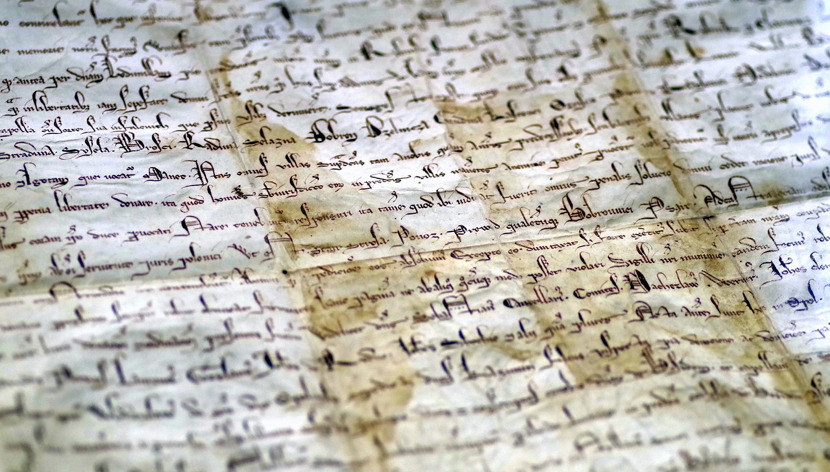
Cryptography, history and AI to decipher manuscripts
The ultimate aim is to produce a tool that can use the right reading grid, whether for character recognition or decoding.
Present security compromised by the future: at the dawn of quantum computers
A race is on between the developers of quantum computers and cryptographers who seek to ensure data confidentiality because the most advanced current protocols in cryptography are challenged by the capabilities of quantum computers.