Pseudo consultants abound and their recommendations can be summarized in a few complementary principles
Publish at September 05 2023 Updated September 05 2023


In addition to the classic beliefs known to all, such as Christianity, Islam and Buddhism, there are other beliefs, notably those held by certain African peoples. These beliefs were described by early missionaries as "ancestor worship".
Ancestor worship among Africans refers to sanctified ancestors who have respected divine precepts; these are honored with prayers and offerings of homage in order to benefit from their benevolence. They are regarded as beings who can intercede between God and man. This belief is central to the culture of African peoples. Ancestor worship, an element of psychic stability, establishes the link between social relationships and life on earth. These links highlight the continuity of earthly life through the various descendants.
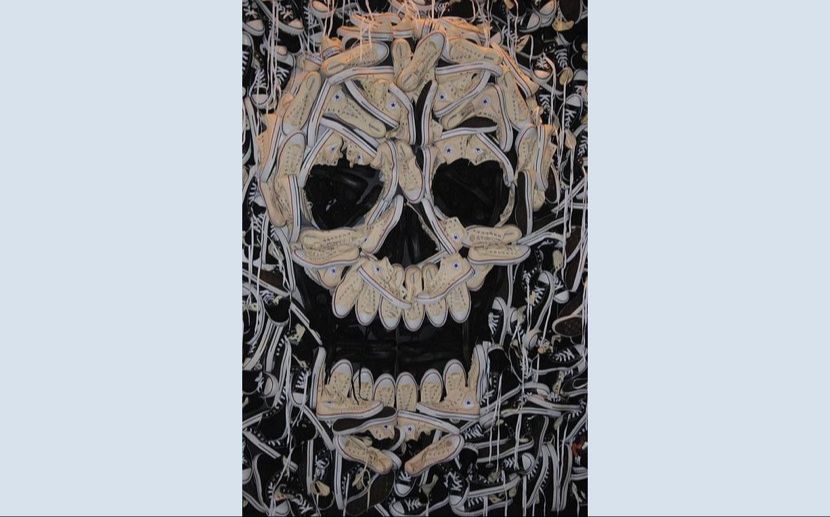
In Africa, particularly among the Bamiléké people in West Cameroon, the ancestor is considered to be the one who has really followed his path to the world where the deceased generations live, all the way to God. The cult of skulls bears witness to this. Ancestors are involved right from birth, as they are the guarantors of all things and of the social life of every African.
To avoid having a bad time on earth, marred by repeated failures in social life, incurable illnesses for which there is no solution in modern hospitals, or sudden deaths that raise repeated questions, we simply have to respect a few principles of life: solidarity with the group, respect for ancestors who are still alive, veneration of ancestors, transmission of moral values, to name but a few.
Rituals
To continue to live a peaceful, stable life and avoid failure after failure, there are rituals that must be performed to safeguard the lineage or descendants. In Bamiléké tradition, these rituals are of a purely sacred and inescapable nature. Their purpose is to protect the skull of the deceased from bad weather and evil practices. The rituals are based on several aspects.
Mourning
The dead should be mourned. There's no denying it, and it's vital for calming hearts. It is the first step after the individual's departure. The individual can only begin this journey when his or her family has organized the mourning, and this is the opportunity for everyone to wish the deceased a final journey. All his acquaintances must be present to pay their last respects, so that he can depart freely on his new mission, that of looking after his family and descendants.
The skull
Many years can separate mourning and the skull ritual. It would take at least four years to venture into this process. When this period arrives, the deceased signals his return to the family home to his heir. If the latter does not clearly perceive the message, he can go to a clairvoyant, commonly known as a "nzẅè ssé", for clear information. Communication between him and his heir can take place through dreams, messages from unknown people to name but a few.
Once this has been established, the skull of the deceased is exhumed. This is when he really begins to watch over his descendants, protecting them, showing them the right path and interceding with God. For it is the transmission belt between the earthly being and God. In this way, he enables all the offspring of the plot to live a stable life, motivated by the desire to grow and have the strength to fight and succeed in social life.
Funerals
This is the cult of the dead organized to glorify the memory of a loved one who has died. It is the moment of celebration and definitive inscription of the deceased in the order of ancestors. Although he performed this function before the skull ritual was performed, he was not yet officially recognized. Kaffo et al. (2023) state strictly: "These are 'quasi-obligatory' celebrations for members of the family of the deceased, symbolizing the solemn lifting of mourning and the entry of the deceased into the world of the ancestors".
During this event, the skulls are fed with salt and palm nut oil, commonly known as red oil as opposed to refined oils. In addition, friends of the deceased are invited and, together with his family, he celebrates his entry into the very closed circles of people who have returned to earth to ensure the protection of the living beings they left behind before their departure by providing them with a fairly stable life.
Without claiming to be exhaustive of the meanings attached to funeral celebrations, these authors have identified five:
Illustration: Michael_Luenen - Pixabay
Bibliography
Bamilékés - https://fr.wikipedia.org/wiki/Bamil%C3%A9k%C3%A9s
Bamikélé - Bibliography - https://web.facebook.com/societebamileke/photos/les-voyants-africains-le-cas-des-bamileke-les-nkam-si-joseph-foalengeditions-de-/610484346465306/?_rdc=1&_rdr
Kuipou Roger, 2015, "Le culte des crânes chez les Bamiléké de l'ouest du Cameroun", in Communication n°97, pp 93-105
https:// www.persee.fr/doc/comm_0588-8018_2015_num_97_1_2775
La Croix Africa, Cultes des morts et culte des ancêtres https://africa.la-croix.com/culte-des-morts-et-culte-des-ancetres-tribune/
Kaffo Célestin et al, " Les cérémonies funéraires à l'Ouest-Cameroun : entre mutations des pratiques sociétales, reconstruction des économies locales et aménagement de l'espace " in Géographie et Cultures, n°110. https://journals. openedition.org/gc/12127
Kaze Beaudelaire Noel, 2023, "Célébrations funèbres chez les Bamiléké de l'ouest Cameroun: défis d'une néo-colonisation culturelle" in International Journal of Humanities and Social Sciences. Vol 8, n° 2, http://eijhss.com/index.php/hss/article/view/134
Marie Kakeu-Makougang & Beaudelaire Kaze Noel, 2023, "Analyse sémiologique de l'arsenal funéraire chez les Bamiléké à l'Ouest-Cameroun" in Akofena n°5, special issue.
You might also like:
Pseudo consultants abound and their recommendations can be summarized in a few complementary principles
Sharing for better preservation: a strategy for learning!
When we share a material good, we divide it, whereas when we share an immaterial good, we multiply it. It is therefore in one's best interest to share one's knowledge and learning in order to multiply it... A pragmatic approach can be to document one's work and then share these documents.
When I'm making olive oil, I'm also making many other things, because between the tree and the machine, all the human genius is mobilized.
Oulipo: The game of constrained literature
For over 60 years, Oulipo has been offering a variety of ways of stimulating or challenging the imagination of writers, editors, poets, students and anyone else who can write, as well as those who can read. We're sure you'll find something to inspire you.
Reading a comic book aloud to toddlers - A rewarding activity for all
The solicitation of its senses allows the child to develop, to integrate the fictional universe and especially, to learn to control its environment. All the senses are called upon when one is in contact with a comic book. Awakening the senses through the story is a primary stage of development, but stimulating the imagination is an even higher level.