In pre-colonial Africa, long before the arrival of the first missionaries, socio-educational practices in this part of the world were intergenerational, i.e. passed down from generation to generation. This education was mainly based on man's life in society.
There was no question of teaching the latter how to exercise a profession, but rather of dictating to him values of acceptance of the other; much more, how to build living together in a society where there are cultural, identity and linguistic divergences. Beyond all this, what is the basis for a model education in classrooms with learners from all over the globe?
The African way of life
Life south of the Sahara is based on community action. For Kaboré (2013)
"When we go through the literature on the subject, we note a certain convergence of researchers' views on the fact that the way of life of Africans (south of the Sahara in particular) is much more communitarian than in the West, for example".
It's all about understanding the idea of social relations within a given geographical space. Traditional African societies have based their relationships on the initiation of the human being into the encounter with the other. The latter must help each other to enable all social strata to identify with the other.
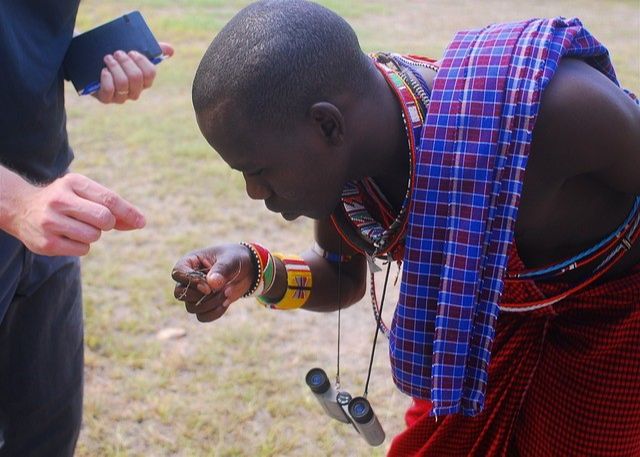
Man is introduced to the understanding of the world around him by gaining access to the light of knowledge through philosophy and cosmogony. He is introduced to the group of his age; he works, plays, walks and strolls with his friends. He learns to integrate into another environment where confrontations can occur. However, the aim of his parents in giving him this opportunity is to enable him to share these moments, so as to understand the difference between himself and others.
Badiane (2022) illustrates it very well in these terms
"These groups play a major role in the child's development. To mention only the play function, it's in the street that the child learns most of the games, that he integrates the rules managing relationships in the play group, that he learns about culture, boy-girl relationships, etc. These games form an extremely precious private space for children, in which parents only intervene on very rare occasions".
It should also be pointed out that orature is a driving force in facilitating the integration of people into a diverse society. It's quite important to enable people to listen to tales and proverbs that prescribe life lessons to be applied in society. This education is pragmatic and concrete, because it is based on the child's active participation in the various activities of the group. It's a pedagogy of experience, where adults serve as examples and frames of reference for young people's actions.
New pedagogical practices
For Kamara (2007)
"the ideal of all education is the transmission by a people of its civilization from one generation to another. This activity emphasizes both formal and informal aspects. It places the holistic quality of education in the foreground, highlighting its conscious and unconscious, material and spiritual, moral and intellectual values."
This pedagogical practice is a far cry from the usual pedagogy of formal education.
Mungala (1982) shares some of the traditional educational techniques that have been used, namely tales, proverbs, legends, riddles and games, which should form part of the new pedagogies with pupils in the classroom. In addition to formal education in mathematics, geography, history and other subjects, learners need to be taught about life in society through the elements of oral literature.
To this end, Fomekong and Fala (2023) prescribe teaching through debate. Here, they highlight the oral nature of debate, which determines public speaking. It enables learners to immerse themselves in a group game, whatever our differences and affiliations. The aim here is to live together and share knowledge in one or more fields.
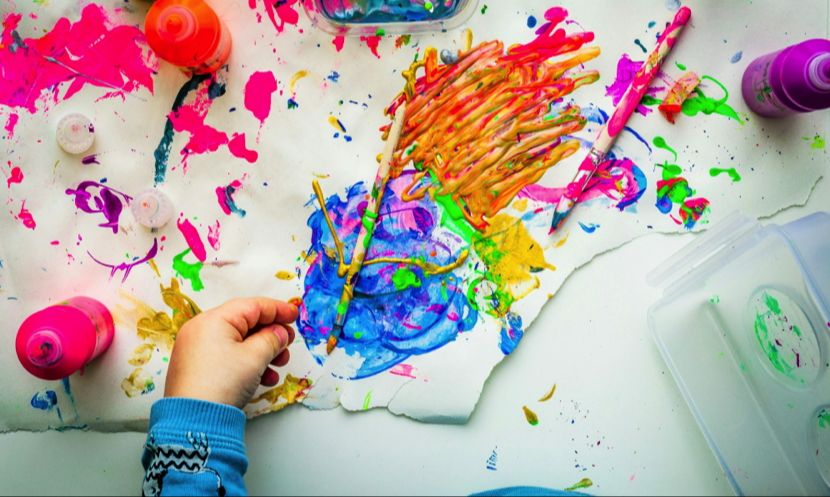
Illustration: Alex Strachan from Pixabay
References
Afsata Paré-Kaboré (2013) "L'Éducation traditionnelle et la vie communautaire en Afrique: repères et leçons d'expériences pour l'éducation au vivre-ensemble aujourd'hui " https://www.erudit.org/en/journals/mje/1900-v1-n1-mje0830/1018399ar.pdf
Bamby Diane (2022) L'éducation traditionnelle en Afrique : Ses apports possibles bénéfiques à l'école moderne https://www.meer.com/fr/authors/1049-bamby-diagne
Kamara M. (2007). Education et conquête coloniale en Afrique francophone subsaharienne. Retrieved from: http: //journal.afroeuropa.eu/index.php/afroeuropa/article/viewFile/33/57
Mungala A.S. (1982) : " L'éducation traditionnelle en Afrique et ses valeurs fondamentales " revue socialiste de culture négro-africaine n°29 https://traditionsafripedia.fandom.com/wiki/L%E2%80%99EDUCATION_TRADITIONNELLE_EN_AFRIQUE_ET_SES_VALEURS_FONDAMENTALES é
See more articles by this author