The Esalen Institute's contribution to collective intelligence facilitation
The Institut d'Esalen, promoter of the most avant-garde personal development practices... as well as traditional ones.
Publish at September 20 2023 Updated September 20 2023


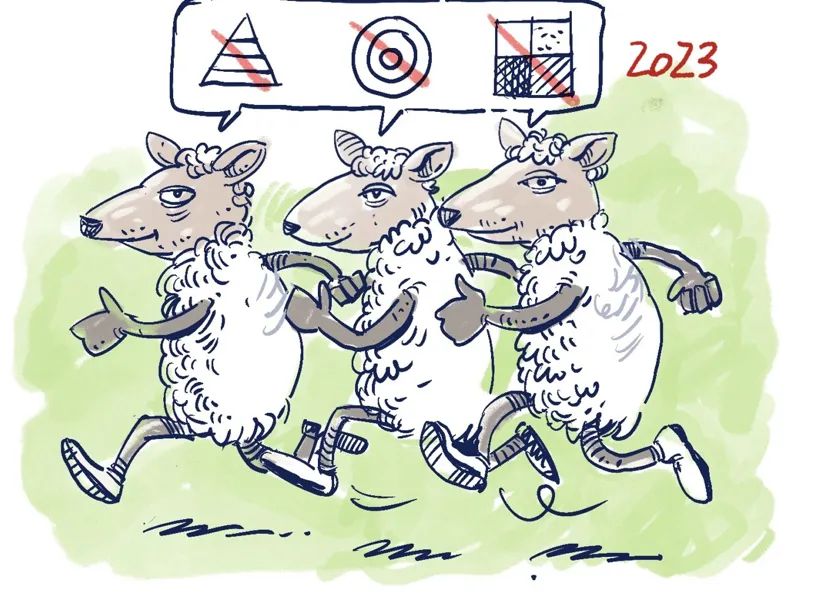
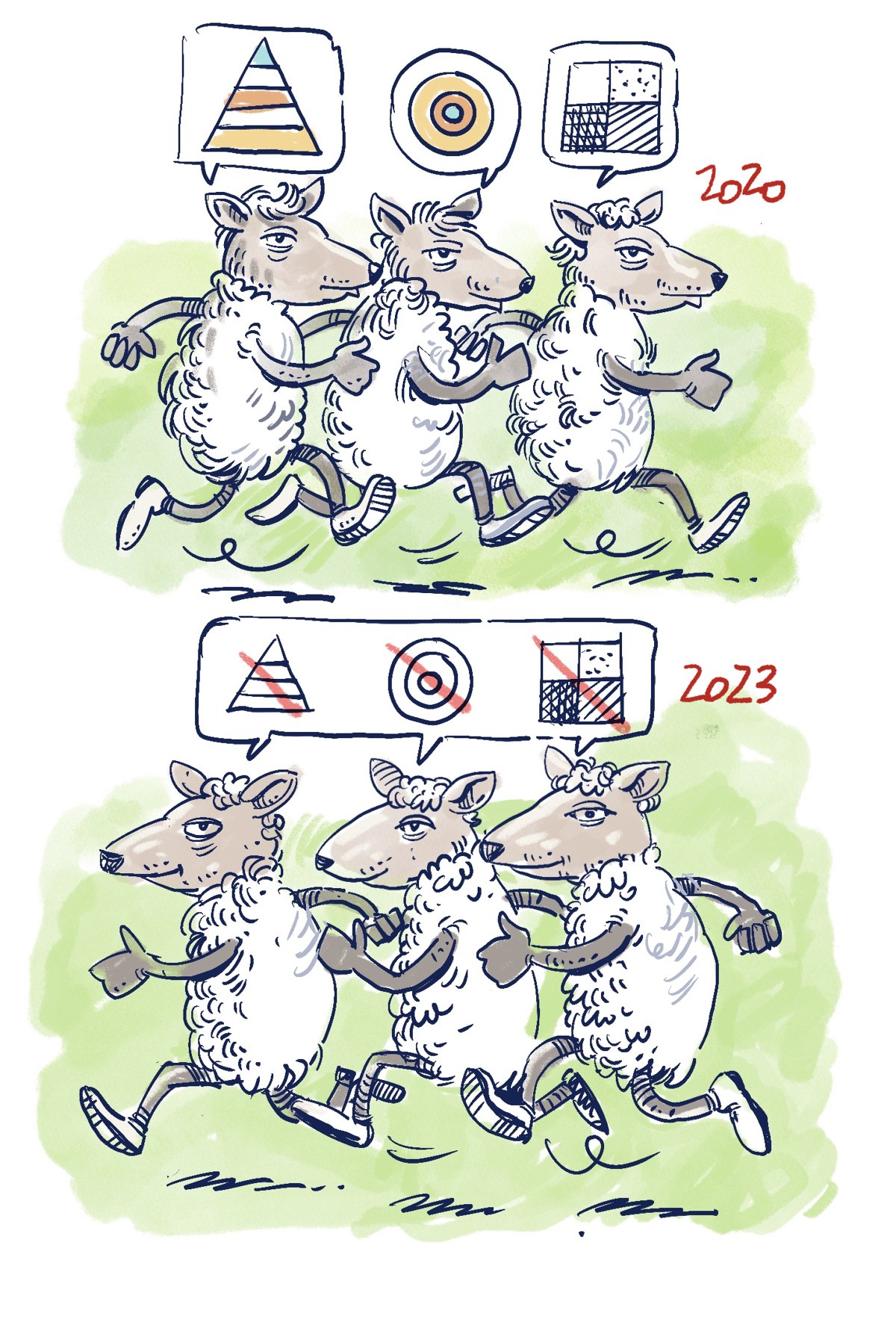
Pedagogical "recipes" falsely supported by vague or even non-existent studies have undergone impressive growth. Driven by a graphic rhetoric built on pyramids, concentric circles and round-figure statistics, educational or managerial publications relayed all manner of models. Social networks such as LinkedIn were also springboards for this type of belief. But now, after the fashion for pedagogical myths, the trend is to denounce them.
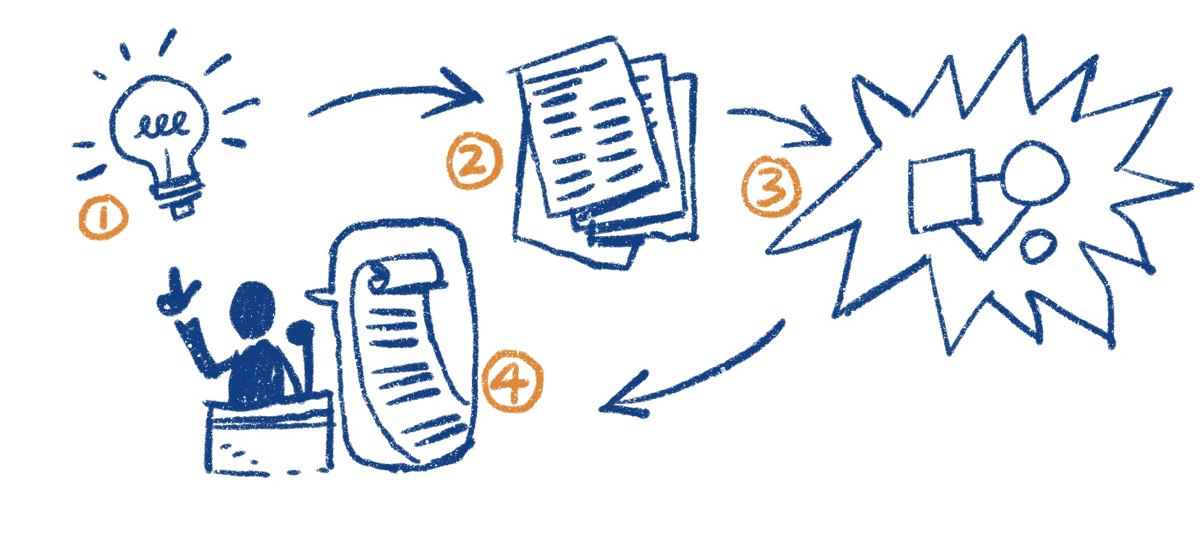
The recipe for myth-making is pretty simple. There's often a personal story. Many posts on LinkedIn begin with "People often ask me how I managed to ...". Myths are often built around a success story that is as dazzling as it is unexpected.
The myth of the diagram that explains everything undoubtedly has several origins. One of these is a financier who draws a curve on a paper napkin and convinces Reagan that too much tax paradoxically leads to less tax revenue.
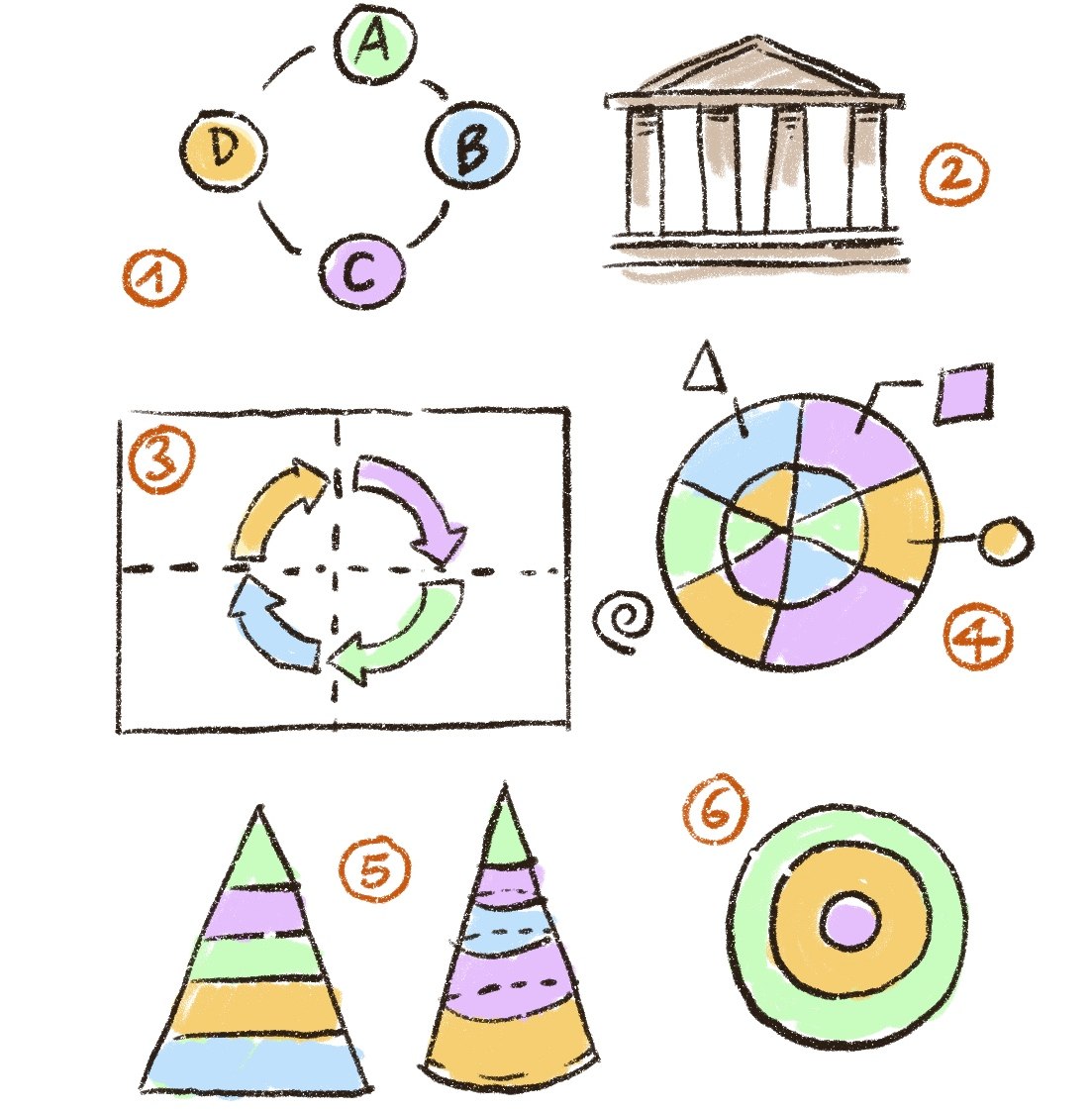
The second ingredient is simple form and expression. Five pillars, three strata, four stages, five levels, nine typefaces and one shape. It could be a pyramid, a circle, squares, the beginning of a spiral... At this stage, the myth is also based on scientific publications. There are so many of them that it's never too difficult to find extracts that confirm what you want to demonstrate.
If you too would like to create a myth and give it a chance, you can help yourself to the simple shapes below. Pyramids, concentric circles, typologies with 5, 7 or 9 entries and pillars are a good place to start. So are feedback loops. Percentages with nice roundings can also be convincing!
The old infatuation with simplistic diagrams and baseless typologies is replaced by a discourse that is sometimes just as automatic. It's hard to scroll down your Linkedin feed when you're a trainer without coming across an ironic message about myths.
Some editors even seem very committed, as if the issue were to save the future of education, training or skills development. If we go back to the most virulent publications, we'll no doubt discover that some of these authors have themselves relayed these discourses in their time.
The point has been made. It's not serious to be an educator and spread unfounded truths and simplistic opinions about how we learn. It's essential to be scientific. Yet few of the trainers involved in these debates have a clear vision of what scientific discourse is... Few psychological or sociological assertions would emerge unscathed from an analysis of their scientific underpinnings.
In 2020, the book The Mind is Flat drew on scientific studies to denounce the idea of a deep self and, more generally, of what constructs our image of a personal identity. The book is a veritable mincer, and virtually no twentieth-century psychological theory emerges unscathed.
Is it really that bad? Above all, who really believed these myths? The very essence of myths is that they provide an imaginary and often simplified vision. If I say that we only retain 10% of what we read, nobody will believe me about the precise percentage, but my interlocutors will think about differentiating, putting students and trainees to work, using visual presentations, encouraging exchanges around knowledge deemed essential. The assertion is impossible to verify, and makes little sense, but it may provoke a positive reaction, in this case an attempt to differentiate approaches.
Maslow's pyramid can be dangerous if you really believe in it. It could lead us to neglect the need for belonging or self-esteem when people are in great distress. But if we forget the progressive nature of Maslow's approach, it can, on the contrary, encourage us to question the needs of the people we work with. It can also be extended in other works or reflections on needs, within specific frameworks. As early as 1947, Virginia Henderson defined 14 needs. Less easy to represent in geometric form, but very useful from a nursing perspective.
Let's leave pedagogical myths at myths. The danger lies not in their message, but in the idea that they provide us with recipes. Because many of them are adorned with quantitative arguments, and because they quote articles that hardly anyone has read, they could be mistaken for something other than what they are... All in all, the messages they convey are fairly banal.
In Je crois, donc je suis , published in September 2023, Thierry Jobard reports that more and more booksellers are tempted to merge their esoteric and personal development departments. The boundary between the two worlds is becoming blurred, and the two sometimes overlap. There is sometimes little space between the fun we share in taking a magazine's psychological test and the yearning for simple models, whether educational or relational.
Beyond that, the organizations that combat sectarian aberrations are very attentive to models that classify behaviors, characters and modes of communication. The antidote to taking oneself too seriously is to construct typologies that we immediately understand are intended to shed light on a subject: the houses in Harry Potter, the dwarfs in Snow White, the kingdoms in Game of Thrones...
You might also like:
The Esalen Institute's contribution to collective intelligence facilitation
The Institut d'Esalen, promoter of the most avant-garde personal development practices... as well as traditional ones.
Obscurantism has always existed, but more often on the margins. Today, this is no longer the case. Even governments like Trump's and Milei's have literally declared war on universities and knowledge. How can we counter this wave of ignorance?
The challenge of integrating students from disadvantaged neighborhoods
Integrating a new society is not easy. When the host society makes access to citizenship and socio-economic integration more difficult, the whole process becomes even more complicated. Teachers also find themselves juggling different realities and values. Fortunately, there are a number of initiatives aimed at integrating the children of immigrants into society, and particularly into the job market. Digital integration also counts.
Senegal has a population of nearly 17 million, but a shortage of qualified teachers. Informal initiatives have been set up to professionalize various sectors.
Can versatility guarantee employability?
What exactly does "making a difference" refer to? The added value that versatility offers.