
Purchasing power or power to act?
Respond in action to the question of respect for living things and remuneration for those who try to care for them without over-exploiting them.
Publish at September 27 2023 Updated September 27 2023


Power has many facets. The easiest to understand is military power. A country with a large pool of soldiers and plenty of war equipment is a powerful nation. However, as we all know, force is not the only way to stand out from the crowd; a more discreet form of power ("soft power") exists, referring to influence achieved without coercion.
The United States dominated the second half of the twentieth century in both spheres: a powerful army and a massive production of cultural products that have taken their place in the world heritage. George Washington's country has never really been threatened when it comes to cultural power. Nevertheless, recent years have forced it to share the throne. In recent years, South Korea seems to be attracting more and more interest worldwide.
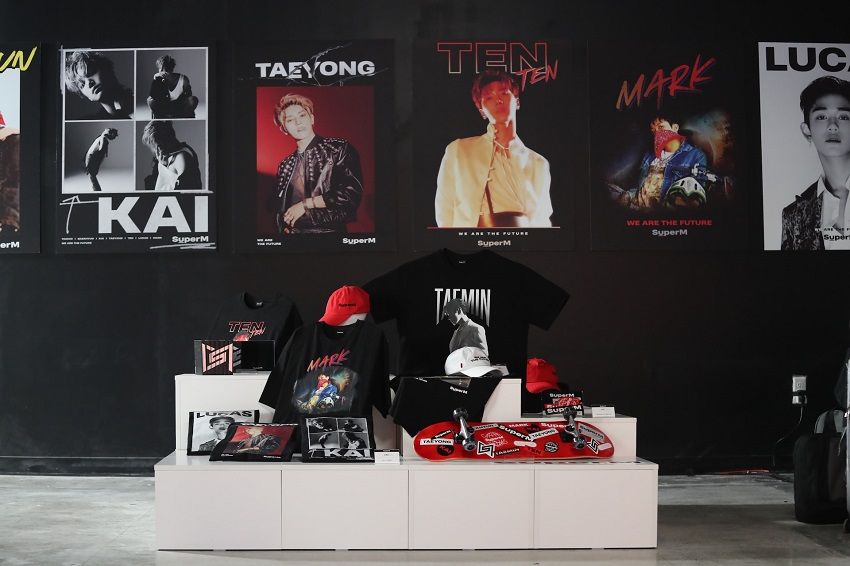
This Korean wave is known as "Hallyu". Begun in the 1990s, its global influence will really come out of Asia in the 2010s and 2020s. In recent years, we can cite the phenomenal success of Gangnam Style (2012, 4.9 billion views), Parasite (winner of the Oscar for Best Film in 2020), the Squid Game series, which will become a must-see in 2021, and even the popular group BTS singing at the opening of the World Cup in Qatar in 2022.
While adults are increasingly embracing this South Korean culture, teenagers have been interested for some time. The prestigious Stanford University has created a free mini-course explaining the phenomenon.
When we look at the interests of young French people, we see that the question of K-Pop is very strong among them. Online, numerous groups form and share their latest finds, make-up tips to look like the stars or South Korean recipes. Sometimes, these groups even work together politically. For example, they disrupted a rally by former President Donald Trump online in the summer of 2020, launching thousands of messages supporting "Black Lives Matter". A spontaneous movement that surprised many.
This generation has even easier access to this culture. All the groups broadcast their clips on YouTube, and on the same site there are dozens of tutorials on how to dance like the big bands, whether BTS, Blackpink or iKON. Curiosity is also making itself felt among new university students, who are not averse to listening to this type of music to relax between assignments, and South Korea is seeing more interest from foreign tourists than at any time in recent years. As for universities, some are opening Korean studies specialties to meet a certain demand. For the moment, however, initiatives are cautious, as this wave may go back the way it came.
So, while we seem to be in the midst of this phenomenon, some serious media, including CNN, are daring to ask: should there be more Korean language courses in the West? Countries closer to Asia, such as Australia, are seeing a dramatic increase in university enrolments to learn the Korean language. Even in the trilingual territory of Hong Kong, demand for Korean is growing alongside Cantonese, Mandarin and English. Korean is eclipsing French, Spanish, Japanese and German as a foreign language.
Meanwhile, in South Korea, the export of their culture is also having an effect on learning. More and more parents want their children to follow bilingual courses in Korean and English. In their view, this is a way of ensuring that the next generation will be able to take advantage of the international opportunities opened up by their country's cinema and music.
Korean music was even a driving force in getting a student who hated maths interested in it. At least, that's the story of the Sri Lankan teacher who realized that the young girl wanted nothing to do with math, frustrated at not understanding. She then took examples linked to K-Pop and adjusted the exercises by quoting this universe. Does this mean that Gangnam Style or BTS will have to be inserted into school curricula to attract students? That seems excessive, and the school has a duty to showcase a variety of cultures.
Focusing solely on the South Korean wave would be a myopic view of the world. On the other hand, using popular culture is usually an interesting way of introducing concepts, whatever the subject. With "la hallyu", teachers could address the Korean language, its rich history, use Korean landscapes as a canvas for an art class or simply use K-Pop pieces from time to time to get students moving in physical education.
Photo: Joel Muniz / Unsplash
References
Baillargeon, Stéphane. "The era of cultural eclecticism." Le Devoir. Last updated: August 19, 2023. https://www.ledevoir.com/culture/796526/perspectives-l-ere-de-l-eclectisme-culturel?.
Francis, Greg. "SPICE releases free lesson, "Korea gone global: K-Pop and technologies of soft power"." SPICE - Stanford Lesson Plans, Teacher PD & Online Courses. last updated March 20, 2023. https://spice.fsi.stanford.edu/news/spice-releases-free-lesson-korea-gone-global-k-pop-and-technologies-soft-power.
Fraschini, Nicola. "The Korean language is booming at Australian universities. What needs to be done to keep the momentum going?" Asialink. last updated March 24, 2023. https://asialink.unimelb.edu.au/insights/the-korean-language-is-booming-at-australian-universities.-what-needs-to-be-done-to-keep-the-momentum-going.
Frechin-Pollard, Zoe, and Rhyannon Bartlett-Imadegawa. "K-wave hits european classrooms." Nikkei Asia. last updated May 14, 2023. https://asia.nikkei.com/Business/Business-trends/K-wave-hits-European-classrooms.
Hilton, Norma. "K-pop brought foreigners to South Korea. Now they've joined the 'Korean wave' of culture." The Star. last updated July 19, 2023. https://www.thestar.com/news/world/k-pop-brought-foreigners-to-south-korea-now-they-ve-joined-the-korean-wave-of/article_ce8fcb63-44ad-50dc-8566-d4e23749af26.html.
"How K-pop Fans find true connection online and you can too." The Jed Foundation. last updated August 24, 2023. https://jedfoundation.org/resource/how-k-pop-fans-find-true-connection-online-and-you-can-too/.
"In trilingual Hong Kong, Korean language is the new kid on the block." The Straits Times. last updated May 2, 2023. https://www.straitstimes.com/asia/east-asia/in-trilingual-hong-kong-korean-language-is-the-new-kid-on-the-block.
Jaurès, Cécile. "La K-pop fait danser les ados." La Croix. Last updated: October 12, 2022. https://www.la-croix.com/Famille/K-pop-fait-danser-ados-2022-10-12-1201237286.
"K-Pop and the influence of music on student life." Magneticmag.com. Last updated March 22, 2023. https://www.magneticmag.com/2023/03/k-pop-and-the-influence-of-music-on/.
Lynch, Matthew. "Incorporating Chaeyoung from Twice into K-12 classroom lessons." The Edvocate. last updated September 4, 2023. https://www.theedadvocate.org/incorporating-chaeyoung-from-twice-into-k-12-classroom-lessons/.
Ponsard, Frédéric. "Hallyu, Or 'Korean Wave' Invades the World." Euronews. last updated January 4, 2023. https://fr.euronews.com/culture/2023/01/04/hallyu-ou-vague-coreenne-envahit-le-monde.
"Pop pedagogy: the benefits of embracing popular culture in the classroom." Mr Jones' Whiteboard. Last updated May 21, 2023. https://mrjoneswhiteboard.blog/2023/05/21/pop-pedagogy-the-benefits-of-embracing-popular-culture-in-the-classroom/.
"She infused maths with K-Pop to turn an angry student around." SchoolBag. last updated July 7, 2023. https://www.schoolbag.edu.sg/story/she-infused-maths-with-k-pop-to-turn-an-angry-student-around.
Sung-Eun, Lee. "[WHY] Why are English kindergartens on the rise as the birthrate declines?" Korea JoongAng Daily. last updated March 26, 2023. https://koreajoongangdaily.joins.com/2023/03/25/why/korea-english-kindergarten-english-hagwon/20230325070019240.html.
Yeung, Jessie. "South Korea brought K-pop and K-dramas to the world. The Korean language could be next." CNN. Last updated: January 18, 2023. https://www.cnn.com/2023/01/17/asia/korean-language-learning-rise-hallyu-intl-hnk-dst/index.html.
You might also like:
Purchasing power or power to act?
Respond in action to the question of respect for living things and remuneration for those who try to care for them without over-exploiting them.
Offbeat pedagogies and innovative concepts
A description of the effects and challenges of offbeat pedagogies
Augmented brains, grown humans?
Software and AI increase our cognitive capacities tenfold, do these tools that increase us grow us? Inserting an AI in a learning curriculum is probably an extraordinary thing, provided that it does not only reproduce the known that already clutters the databases.
Wise use of myopic and monomaniacal A.I.s
In the world of artificial intelligence, anthropomorphisms aren't very popular: we prefer "narrow-minded" to "mono-maniacal" and "focused" to "myopic". Where do we place ethics in the practical use of artificial intelligence? Where else but at school could we learn to do so?
More than a technical adjustment, peer assessment requires a different posture, for students and teachers alike.