Ndop: an endangered international heritage element
Against a backdrop of globalization and urban exodus, the traditional art of Ndop in Cameroon seems destined to disappear. Fortunately, some are trying to preserve this symbolic fabric.
Publish at October 24 2023 Updated October 24 2023


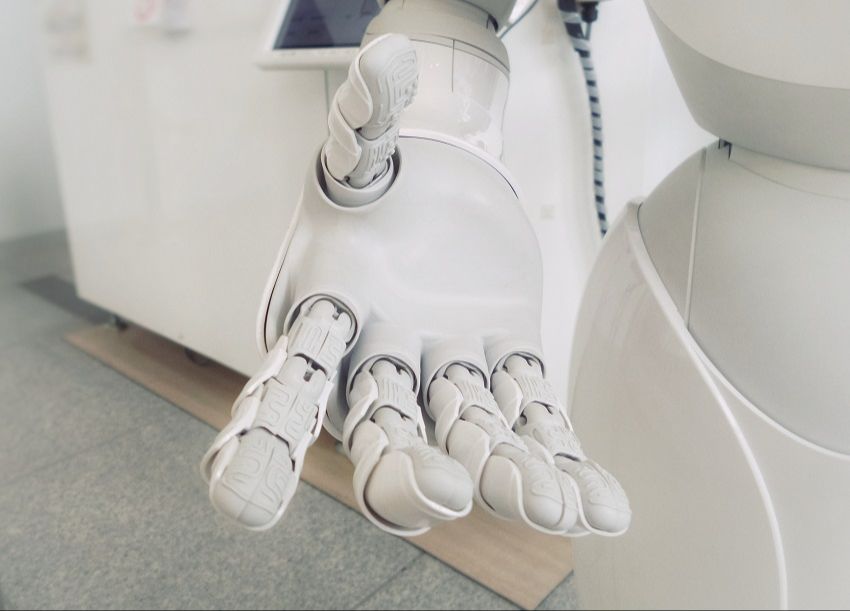
An important part of education is verbal and gestural communication. Through speech and gestures, the teacher can reinforce with the class the elements to be remembered, the essential notions, and so on. But for some students, this doesn't work. In general, these are children with autism spectrum disorders (ASD).
For these young people, communication is probably one of the most difficult aspects. They don't understand all the subtleties of what is expressed by face, body and tone of voice. They will focus their attention on details that seem fascinating to them, to the detriment of the rest, and to the teacher's dismay. This is not their fault; their brains work differently, with different complexities for each.
In 2018, we published an article on the potential of technology to help these students with special needs. Robotics was one of the solutions that was beginning to emerge. Quietly, classrooms in North America and France were using little robots like Nao to help with child interactions. The question was whether, after half a decade, the robotic approach was still relevant.
It would seem so. All the more so as advances in artificial intelligence and robotics have been significant in recent years. In the English-language press, these robots are now called SARs (socially assistive robots). They assist autistic children in therapeutic activities both at school and at home. To help children with autism acquire certain social skills, many therapies rely on exercises and repetition to improve comprehension.
Robotic assistants are now able to use audio and video data and analyze the student's face to determine his or her emotion. The machine can therefore quickly note the child's engagement and suggest other activities to re-engage them if it senses that they are losing focus or becoming discouraged. This technology is all the more practical with non-verbal autistic children. Tests carried out since 2020 show an effectiveness level of almost 90%.
Robots are used to develop social skills, as they can adapt to different learner profiles. Some are able to reduce their speech rate to make themselves more understandable to some, while the majority display faces expressing emotion in response to actions. They smile when the child achieves something, and show fear or sadness if the child handles them without delicacy. Some will even ask students about the feelings to be displayed in different life contexts.
Why does it work? After all, there are special educators who should be able to make it work. Already, the robot has the strength to capture the attention of autistic children as soon as it is presented to them. Robots become reassuring interfaces that can act as intermediaries between them and the therapist. How are robots soothing for them? Although they can display emotions, these remain more basic. No incomprehensible frowns, no signs of impatience and no use of language inappropriate for the level.
Their ability to adapt and change plans quickly to help students is essential. In this respect, they become important allies who will never be demotivated and will always manage to encourage the youngsters despite their mistakes. The therapist can achieve this, but it may be more difficult, depending on the type of day he or she has. The even-tempered machine reassures the learner about the autism spectrum.
In a context where, fortunately, autism diagnosis is improving and gaining in speed compared to previous decades, robotic solutions will not be out of place. In the United States alone, the Center for Disease Control and Prevention reported in 2022 that one child in 54 is identified as having ASD. From the United Arab Emirates to Belgium, the democratization of robotics for young people with special needs is of interest to all countries. Who knows, in a few years' time, to what extent robotic assistants will facilitate learning, and even daily life, for people with autism.
Photo: Possessed Photography / Unsplash
References:
"Atlab robot helps train autism students in UAE." Centena Group. Last updated: March 1, 2023. https://centena.com/index.php?id=Atlab-robot-helps-train-autism-students-in-UAE.
"How robots can help students with disabilities." Lexidys. Last updated May 25, 2022. https://blog.lexidys.com/2022/05/25/comment-les-robots-peuvent-aider-les-etudiants-handicapes/.
"Autistic students work with Nao robot." Le Journal du Centre. Last updated November 9, 2017. https://www.lejdc.fr/nevers-58000/actualites/des-eleves-autistes-travaillent-avec-le-robot-nao_12622786/.
"Faculty research asks: can robots help students with autism?" YSU. Last updated May 4, 2023. https://ysu.edu/news/faculty-research-asks-can-robots-help-students-autism.
Flynn, Shannon. "How robots can be used in autism therapy." RobotLAB Group. Last updated February 6, 2023. https://www.robotlab.com/blog/how-robots-can-be-used-in-autism-therapy.
Hsu, Anna. "Robot tutors read children's emotions as they learn." USC Viterbi. Last updated February 14, 2023. https://viterbischool.usc.edu/news/2023/02/robot-tutors-read-childrens-emotions-as-they-learn/.
Hughes, Madeline. "Robots help pre-K autistic learners with nonverbal skills." GovTech. Last updated November 24, 2021. https://www.govtech.com/education/k-12/robots-help-pre-k-autistic-learners-with-nonverbal-skills.
"Robotics in special education: the case of autism." L'Agence Des Usages. Last updated 2017. https://www.reseau-canope.fr/agence-des-usages/la-robotique-dans-lenseignement-sp%C3%A9cialise-le-cas-de-lautisme.html.
"Robot helps students with learning disabilities stay focused." StepUp to Learn. Last updated February 26, 2023. https://stepuptolearn.com/blogs/research/robot-helps-students-with-learning-disabilities-stay-focused.
"Socially assistive Robots can help children with autism improve social skills." Assistive Technology Blog. Last updated March 2, 2020. https://assistivetechnologyblog.com/2020/03/socially-assistive-robots.html.
You might also like:
Ndop: an endangered international heritage element
Against a backdrop of globalization and urban exodus, the traditional art of Ndop in Cameroon seems destined to disappear. Fortunately, some are trying to preserve this symbolic fabric.
The electric bike, a modern approach to transportation
Transport and health are two subjects at the heart of urban life. We need to find ways of enabling all citizens to move around the urban agglomeration without clogging it up with cars. At the same time, a sedentary lifestyle challenges people to keep fit. What if a device could combine both concerns? The electric-assist bicycle seems to be able to do just that, enabling everyone, young and old alike, to get (back) into shape.
The alternative school: a community school model in vogue in Africa
Africa is looking for development solutions, and this development requires a paradigm shift in education. As a result, alternative schools are emerging as prospects to be followed with interest.
Third places to help students escape isolation
In recent years, more and more third places have opened their doors to students. Some have been created for them, to help them escape from their loneliness, provide access to services and even help them put food on the table.
Among the various types of poetry, slam is probably the most athletic. It’s a strange adjective to use for a form of poetic writing, and yet slam poetry is inextricably linked to the art of public speaking. In fact, what makes it so appealing is its similarity to the musical style of rap—an approach that makes for exciting competitions.