
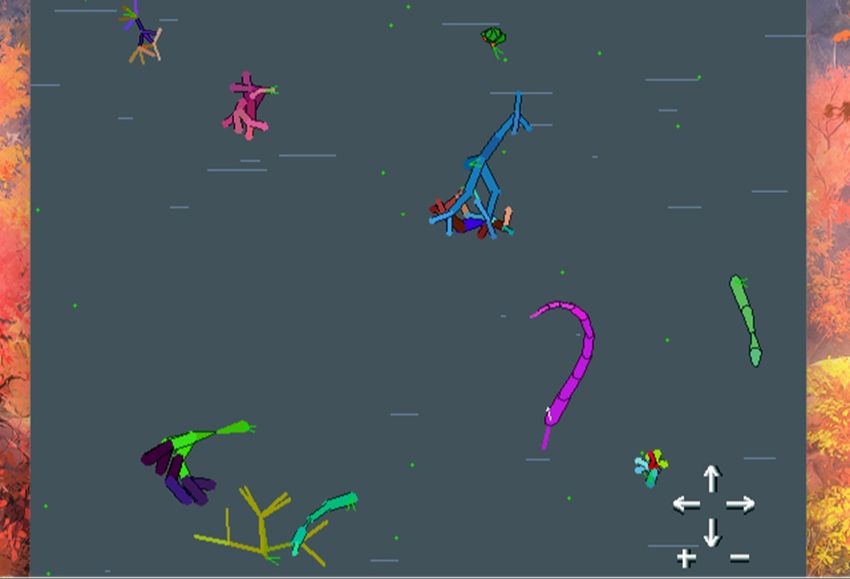
A virtual aquarium to understand Darwinian evolution
Is it possible to understand evolution through simulation? It would seem so. A very interesting resource for high school science classes.
Publish at January 24 2024 Updated January 24 2024


They may be neighbors, but France and Germany have different educational visions. The question of learning to write, for example, is dealt with differently in each country. Arte, which brings the two cultures together, wanted to take a look at both approaches to calligraphy.
In France, children start in kindergarten. They'll learn upper case and lower case cursive before entering primary school. It all starts with graphic activities such as drawing to understand the gestures that will eventually be applied and the linear and round shapes in their environment. French children practice writing and, without knowing how to read, grasp that they are the bearers of meaning.
In Germany, toddlers in kindergarten also engage in a wide range of plastic arts activities, such as collage, drawing and modeling. As in France, the teachers teach the children how to hold a pencil properly. Then they practice writing their first names many times in capital letters. As a result, children in Germany have to get to grips with writing and reading as soon as they start primary school. They learn individual letters and shapes in lower case. In the second year of primary school, they will practice cursive writing according to the guidelines of the "Kulturministerium" of their "Land". Some will use a different simplified version, depending on whether the county was in West or East Germany in the past, or they will adopt a version approaching Latin.
Ultimately, both systems are equivalent. Each has its advantages and shortcomings, but in the end, all pupils end up developing their own handwriting style by the time they leave primary school.
Running time: 5min40
Photo : pressmaster / DepositPhotos
You might also like:
A virtual aquarium to understand Darwinian evolution
Is it possible to understand evolution through simulation? It would seem so. A very interesting resource for high school science classes.
A multiplayer game designed for people with disabilities
Video games designed for people with disabilities are already a rare resource. An experience that allows multiple players is even rarer. Yet this latest creation from "Ludociels for All" challenges players to light up an entire maze by walking balls of light.
A fun game about heredity and genetics - Welcome to Thingdom
How do you talk to children about genetics and heredity? A British museum has come up with the method: design a game in which you create a line of adorable creatures with precise objectives. The game is fun, colorful and easy to learn. Even adults will succumb to the charms of the bugs and their large families.
Learn the mechanisms of misinformation with Bad News
Understand the strategies of online disinformation through an interactive experience that puts you in the shoes of a fake news propagator.
Tests of vigilance and attention
Measuring attention remains a concern in many settings. Some work tasks are not very error tolerant. Here are a series of sample tests to measure attention in children and adults.


