In September 2009, the OECD published its latest edition of the Education at a Glance report. On this occasion, the British magazine Times Higher Education reported on the thoughts of Philip Altbach, Director of the International Center for Higher Education at Boston College (USA), on a particular point in the OECD report, namely the massification of access to higher education worldwide.
P. Altbach points out that access to higher education has increased by an average of 4.5% per year since 1998 in OECD countries, and by as much as 7% per year in countries such as Spain and Turkey.
On average, one in three people in OECD countries now has a higher education diploma, and one in two in Canada, South Korea and Japan.
This massification of higher education raises a crucial question: who pays?
States pay, but not enough
OECD countries have undoubtedly made a considerable financial effort, but P. Altbach notes that the share of public funding for higher education institutions fell from 78% in 1995 to 72% in 2006. Public funding has therefore grown more slowly than the needs generated by the rapid increase in student numbers. Conversely, families have seen their contributions increase. We are therefore faced with a new distribution of public/private funding for access to higher education, with a steady increase in the share of private funding.
This is not to say that tuition fees have fallen - far from it. The OECD report points out that only a few northern European countries are resisting tuition fee increases. France belongs to this group, and is being encouraged by the OECD to raise tuition fees, in order to increase the funding available and thus improve conditions for students, which are deplorable in many public universities.
P. Altbach welcomes the increase in student numbers in all OECD countries, but warns of the need to support students through to graduation. His country, the United States, is experiencing serious difficulties in this respect: while it does an excellent job of encouraging access to higher education, it is unable to ensure an equivalent level of graduation. The high failure and incompletion rates in the USA have seen the country fall from second to fourteenth place in the OECD rankings between 1995 and 2007. At the same time, Finland climbed from tenth to third place.
![Université de Tampere, Finlande]()
Finland is precisely one of those countries where the cost of higher education is low. In the USA, on the other hand, higher education costs a veritable fortune, most of which is borne by students and their families. So it's hardly surprising that many students are unable to complete their studies.
California goes bankrupt, education suffers
And things don't look set to get any better, against a backdrop of persistent economic crisis. The State of California, the most indebted of all American states, has made deep cuts in its subsidies to universities and colleges, resulting, among other things, in a 9% increase in tuition fees at the University of California, in anticipation of a 30% increase next year. This year, the Community Colleges have also had to increase their tuition fees by 30%.
Yet the OECD report stresses that investment in higher education is good business. P. Altbach repeats the figures put forward: a higher education graduate can expect a gross gain of $186,000 over the course of his or her working life, compared to a person who stopped studying at the end of secondary school. Overall, public investment in higher education returns around twice the initial outlay. So it's a profitable investment," says Altbach, "and governments shouldn't pull out.
Could distance learning be part of the solution for accommodating growing numbers of students, without burdening them with excessive costs?
Virtual campuses: anti-crisis solutions?
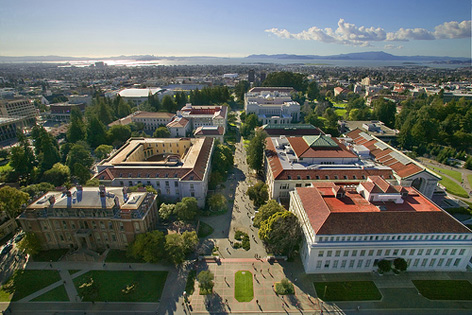
Christopher Edley, dean of the law school at the University of California's Berkeley campus, thinks so. He is campaigning for the creation of an eleventh campus at the University of California, a virtual campus. This, so that less financially advantaged students (mainly minorities) can pursue high-level studies without incurring living expenses that add considerably to the cost of education. C. Edley points out that many students prefer to enroll at the University of Phoenix, which distributes all its courses online, rather than at the University of California, precisely to limit their maintenance costs. C. Edley is well aware of the resistance he will encounter from his teaching colleagues, who are unaccustomed to e-learning, but he believes that this is one of the few solutions that can ensure a minimum of social justice in the Californian university system.
All universities should consider Mr. Edley's proposal, which is a response to Mr. Altbach's concerns and questions. More broadly, no state can reasonably cut off higher education in an environment that demands lifelong learning and rapidly renewing knowledge. If they don't find solutions, millions of graduates will be missing in a few years' time.
Education at a glance, OECD, 2009 edition. pdf.
Big time: welcome to the age of " mass access " worldwide, Times Higher education, Great Britain, September 2009
Budget cuts devastate California higher ed. eSchool news, United States, August 2009
Online Campus could solve many U. of California problems, a Dean says. The Chronicle of Higher education, United States, July 2009
See more articles by this author