It has always been a major challenge for cinema to create a credible sound environment in worlds far removed from our own. Indeed, the notion of sound effects takes on greater importance in a fantasy film than in a drama set in the present day. It's necessary to give sound to creatures, elements and other aspects of the setting that don't exist on our planet.
Since the 1950s, electronic sound has been strongly associated with science fiction. Ever since its use in the film "The Forbidden Planet" (1956), almost every film of this type thereafter has brought out synthesizers, and sound designers have used machines to underline the strangeness of the universe.
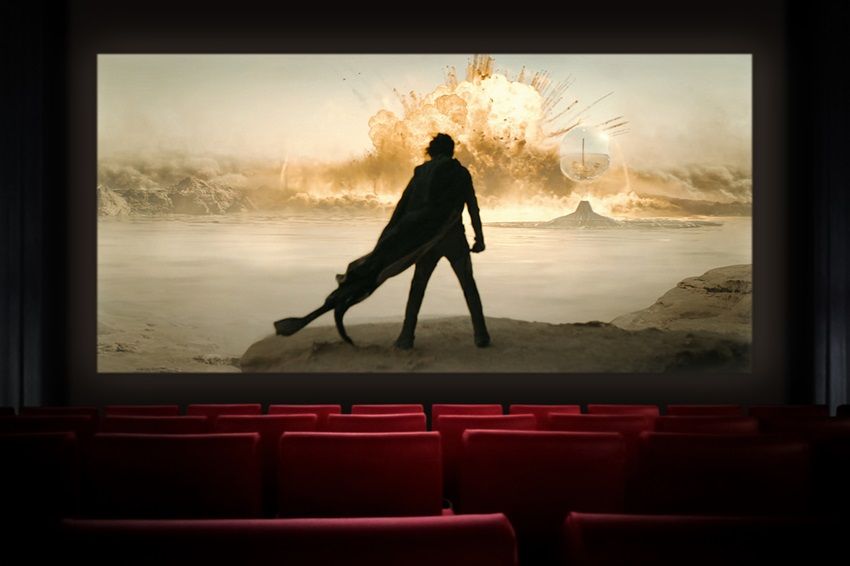
However, Denis Villeneuve's Dune team (2021 and 2024) decided to go in a different direction. They preferred to use mixed natural sounds to create a sense of recognition by viewers, while at the same time being unfamiliar. For example, the sound of the ornithopter flying vehicles was created by mixing a cat purring, strong wind on a tent and the flapping of a beetle's wings. It all adds up to a sense of both novelty and déjà vu, making the universe even more accessible to those who watch the films.
Mark Mangini's team, who won an Oscar for their work on the first installment in 2022, auditioned different types of sand to create a unique feel for the desert planet Arrakis. They also used textured wind sounds to give it a semiotic meaning [sign], linked to what's happening in the story.
Remote collaboration in a school setting had to be developed during the covid-19 lockdown. Teachers have had to master many of the applications. Yet, these rapid experiments could have a beneficial effect on this generation that will have learned, from childhood, to collaborate without physical presence.
Some people take a functional approach to school architecture. As long as the school design does not get in the way of learning, there is no need to add frills. Yet other places have advanced and harmonious approaches to building educational facilities. Denmark is often cited as an example with these schools that are architectural gems, totally in tune with the country's educational approach.
First Nations are just beginning to get some recognition after having suffered a lot of repression. However, this respect is not yet reflected in school materials that either erase them or portray them as "savages". Fortunately, Aboriginal authors are enriching the literary corpus and publishing initiatives are preserving the languages and stories of these peoples.
When organizing educational itineraries, we've noticed a craze for mother-daughter pairs. How does this form of accompanied travel transform learning? In a context marked by the fragmentation of experiences, what are the effects of these shared experiences?