The seeds of a green revolution. Innovations in agricultural education
Mobile learning, virtual reality, agroecology.... New technologies and ecology inspire educational variations in the field of agriculture. Exciting!
Publish at April 24 2024 Updated April 24 2024


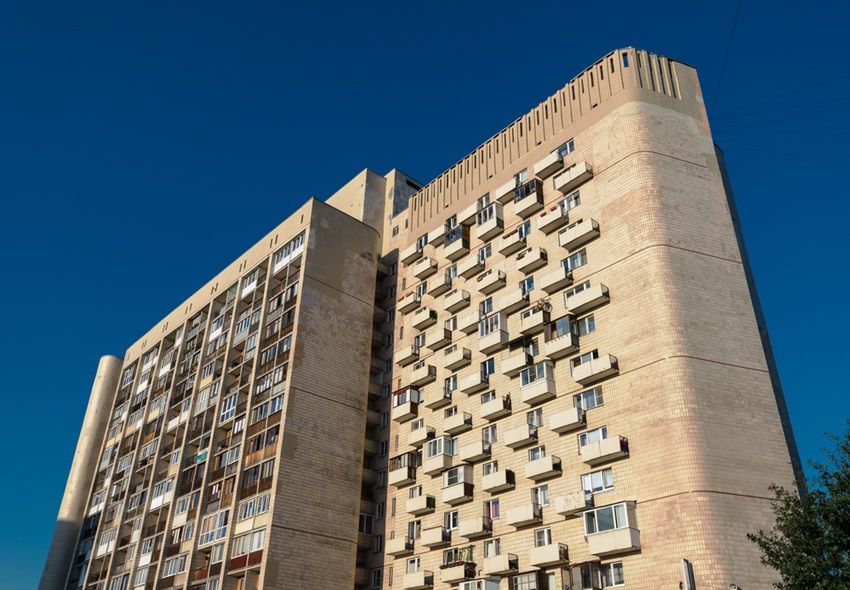
Today, the image of Eastern Europe is largely based on these huge concrete blocks of low-cost housing, which generally seem old-fashioned and depressing. This legacy of the former Soviet Union can be explained, as this report from ARTE's Vortex shows.
Initially, the Communist revolution wanted to get rid of bourgeois architecture. Thinkers therefore envisioned buildings with a modernist bent, intriguing figures capable of bringing many citizens together. Then along came Joseph Stalin, who instead wished to adopt neo-classicism and Baroque buildings, some of which still feature in the Russian landscape in particular. Here, Roman gods are replaced by important Communist figures.
The war of 1939-1945 destroyed many of these buildings, and although Stalin continued to develop the USSR along these lines, when he died, reality caught up with this part of the world. The conflict of recent years had created millions of homeless people, who needed to be housed in comfortable accommodation. This led to the construction of large, brutalist concrete buildings, capable of housing large numbers of Soviets in comfort similar to that of Westerners.
But this solution had to be a temporary way of housing all these people. The plan was to eventually come up with more interesting buildings to offer the people even more. But money was tight, and the buildings became permanent. At the same time, USSR architects were also fascinated by space, designing buildings with shapes reminiscent of stars and space modules.
Today, this brutalist architecture is seen as the end of the Soviet utopia and a decaying symbol of what was achieved during the 20th century. Nevertheless, while some may wish to raze them to the ground, we shouldn't fall into an absolute hatred of this architectural approach. After all, it has led to some magnificent buildings (and not only in the former communist territories) that deserve a little love and renovation. Not everything is worth preserving, of course, but not everything is worth throwing away either.
Running time: 21min43
You might also like:
The seeds of a green revolution. Innovations in agricultural education
Mobile learning, virtual reality, agroecology.... New technologies and ecology inspire educational variations in the field of agriculture. Exciting!
Tutoring and e-mail: there are limits to familiarity and impertinence
Many teachers don't know how to deal with this phenomenon or how to manage it.
The value of investment funds for higher education
More and more investors are looking at private schools, particularly business schools. Indeed, whether as funders or even owners of institutions, funds are preparing their successors in the financial sector. With all the ethical questions that this raises...
Being an active participant in your training in practice
Exploration of the notion of "Being an actor in one's training". Contractualization or the birth of an attitude in the long term
The development of key competencies in the workplace
This thesis attempts to establish a link between key competencies and employability. It combines theoretical research and an empirical survey of a sample of employees who have undergone training to develop key skills.