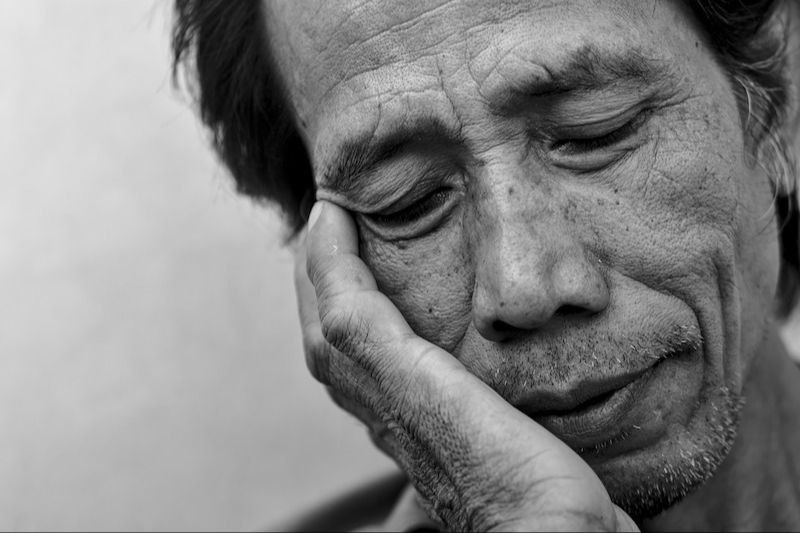
In Belgium: "In 1886, the year of the great miners' strike and the Roux shoot-out, the inhabitants of Zele wrote a pathetic letter to the Commission of Inquiry into Industrial Labor: 'Have pity on us! We suck the blood of the worker in Zele. We are going to the grave through hunger and misery. Go and see the factories. We don't dare sign.'" Pascal Verbeken.
This quote, taken from the book "La terre promise. Flamands en Wallonie", got me thinking about the fate of workers when their labor force is extinguished. Workers and miners were also dying of exhaustion. At the time, we weren't talking about burn-out or psycho-social risks, but about social causes: poverty and exploitation.
Today, we routinely hear talk of fatigue, stress, burnout and burn-out, in a psychological and personal rather than a social dimension. At best, we know that the collective framework of work and solidarity (or lack of it) must be considered.
Without this window into our history, to which we have access through our loved ones, our encounters, our intuitions and/or our readings, we may think that these new words correspond to new situations. This is partly true, as work has evolved, and our constraints are now more mental, but the choice of words reveals many other realities.
Illuminating the epistemological unspoken
For Guillaume Lecœur, the author of his thesis, "De la gestion des maux au 'travail des mots'","many social processes are structured in spaces of unspoken words, which have not always penetrated the consciousness of those involved". He focused his research on the scientific origins of the notion of stress, particularly in the field of physiology and its links with the industrial world, and on the meaning given to it by specialists in occupational health issues.
He notes that the "semantic repertoire [is] cluttered". Its instability remains to be clarified to better serve the realities and current practices of occupational health. Some players have their own epistemological (knowledge) posture to defend, and may in fact be out of step with reality for various reasons, more or less explicit, integrated or voluntary.
The author thus hypothesizes that "the semantic repertoire of work-related ills [...] has ancient origins that can be found in the strategies of actors and epistemological controversies between scientists".
An epic of knowledge
This led him to describe the way in which science is constructed, and the current belief that science is pure and hard because it is rational. The ways in which knowledge is accessed deserve to be studied, in particular to identify the shifts from one field to another, and in particular the underlying morality and stakes involved in promoting one's own posture.
There are several definitions of science. The author proposes a historical and sociological definition:
"Science is both a social practice and a socio-historical construct that can be interpreted [...] as relating to epistemes, i.e. conceptions and perceptions of the world that depend on the times(Foucault)."
"Science can [...] be understood as a human social and historical institution that conveys norms."
This research can also be read as a veritable epic of knowledge about the ills of work. The motivations behind what we believe to be stable knowledge are explored, as are the close relations between physiology and industrial performance, and the control of work optimized by management methods.
Knowledge built to predict phenomena
The development of science is viewed from a functional and systemic perspective. To account for this, the author uses the concept of the "disciplinary matrix" that drives the production of knowledge. Built on the social and moral values of a group of scientists, their "operation is based on the prediction of phenomena". The establishment of a dominant paradigm (representation of the world) is aimed at solving concrete problems, the "common examples".
This "process of development of normal science" plays out until an "anomaly" occurs within the disciplinary matrix, i.e. "when the knowledge [scientists] produce does not correspond to their own perception". This is when a scientific revolution can take place.
"[...] These tensions between scientists' findings and prevailing research principles [...] are the driving forces behind scientific discoveries. "
There are also "paradigmatic tensions" between those involved in science. These are "conflicts between scientists arising from disagreements [...], disagreements often linked to historical causes rooted in ideological perceptions of the world."
Epistemological competition
Adding a detailed study of the actors' backgrounds, interests and interactions with social worlds, the author takes up the epistemological competition with finesse (epic!).
He sheds light on the underpinnings of the development of the theses of physiologists who developed the notions of stress and fatigue as part of the promotion of a new "performance science" and management methods, and the paradigmatic tensions with players in the human labor sciences who developed their vocabulary to support workers' working conditions.
The aim of this thesis is to shed light, in a dynamic and lively manner, on the disciplinary matrices at play in the field of work-related ills.
Since the 17th century, two schools of physiology have been at odds with each other, based on different currents of Christian morality: mechanistic physicists and vitalist physicists. The disciplinary matrix of physiology is organized around these conflicts and "creates paradigmatic tensions, i.e. contradictory relationships between statements".
We follow the geography of paradigms: the mechanists and vitalists are in Germany and France, with more mechanists in Germany and vitalists(Claude Bernard and experimental medicine) in France, the evolutionists(Charles Darwin) in England and the biomechanical paradigm for the United States, whose doctors were first trained in the various European schools.
The promise of eternal productivity
In the 19th century, physiology developed further along mechanistic lines, in step with the development of industry. From the outset, we witnessed "promotional campaigns aimed at applying the laws of energy to the study of performance in industry", with the "promise of eternal productivity". The human being is assimilated to a machine, and work is carried out on the "human motor".
Against this, Max Weber wrote: "Fatigue is a human fact whose limits must be taken into account in the social organization of industrial work." Karl Marx and Max Weber were detractors of the mechanistic paradigm, but their criticism did not then focus on ideological postures and fascination with science.
In the thesis, the backgrounds of the authors of industrial physiology are studied, and, while they break with the beliefs of their primary religious socialization, they continue to make use of the same morality in their work.
For example, for Frederic Schiller Lee(bio in English), "[fatigue] would necessarily be evil and poisonous". Industrial physiologists sought to demonstrate the existence of "fatigue-free states" during effort, with a view to industrial efficiency. Later, with Elton Mayo, "bad fatigue" was associated with a form of "mental disorganization".
The epic continues, in connection with industries, wars (strategies of warlike vitality, or traumas and the link between stress and memory), work organizations based on performance and social control. The latter extends right down to the most intimate of levels, such as the promotion of dietary choices (proteins, or sugar, which "cures fatigue").
"We are seeing [...] the emergence of new forms of control and social management of human labor productivity, in which physiologists play a leading role."
Listening to subjects: the epistemology of human labor sciences
A second major epistemology, that of the sciences of human work, has developed by basing its practices on an analysis of work, rather than on the principles of industry.
Here we find the sociology of work with Georges Friedmann, who takes up the Marxist and Weberian heritage of the critique of the sciences of industry.
"In this work, man is not conceived as a laboratory object, but as the subject of his own work.
Occupational psychodynamics, influenced by psychoanalysis (Christophe Dejours), criticizes the system of management, evaluation and performance measurement.Its expertise is linked to listening to the subject, and focuses more on what is invisible than on measuring work.
For Dejours, "everything todo with measuring work belongs to general irrationalism".
Clinical psychosociology, opposed to the work of industrial physiology, has developed the semantic repertoire of work-related ills and the notion of burn-out as a state of chronic fatigue and "inner emptiness that exists following a heavy period of stress at work". The collective analysis of clinical sociology was developed by Vincent de Gaulejac.
Work psychology, represented by Yves Clot, talks about psychosocial resources (in the face of psychosocial risks). He suggests scenarios for professional disputes (debates that bring conflict dynamics into play in a structured way) around quality at work.
On page 302, a summary table lists and details the two major epistemologies of industrial physiology and human work sciences, their players, methods, strategies and semantic repertoires.
An unpublished report by the International Labour Organization (ILO)
To conclude, let us quote from a 1936 ILO report. This report, critical of the physiological and industrialist expert reports, was not published at the time, as they felt that "medical arguments were weak" and that it was necessary to have recourse to the expertise of "medical specialists"...
In this report, the authors show that: "'modern work causes wear and tear which affects the entire nervous system'(Ibid., p.2). They also insist on showing that fatigue is only a 'symptom' (Ibid., p.4), and that it is necessary, in order to avoid it, to focus more on its social causes, rather than its physiological determinants."
Which doesn't mean we can't take a close look at the latter when they occur.
Image source: LATUPEIRISSA from Pixabay.
Read more:
Guillaume Lecœur. De la gestion des maux au "travail des mots" : contribution à une sociologie historique d'un répertoire sémantique des maux du travail (17e siècle à nos jours). Sociologie. Conservatoire national des arts et metiers - Cnam, 2018.
Thesis available at: https: //theses.hal.science/tel-01871774
References :
Sandra Boré's interview with Marie-Anna Morand, burn-out as seen by a modern physiologist
https://www.youtube.com/watch?v=r-0PRq-SKok
See more articles by this author