Consciousness-based payment: the future of training
Our relationship with money creates expectations and formats that sometimes prevent us from innovating. What if conscious payment offered us the possibility of renewed creative spaces?
Publish at October 02 2024 Updated October 02 2024


Facilitation is an art that draws on the living - that is, on the observation of natural processes - to promote learning and transformation. Whether accompanying a group, creating an eco-place or working with animals, facilitation involves a fluid interaction with the world around us, a kind of "dance" with nature.
This approach has its roots in practices that reconnect us with the living, such as human permaculture, qi gong, learning with donkeys, or ecological design. These examples show how facilitation can not only meet human needs, but also restore harmonious relationships with nature.
Learning with donkeys is a fine example of this symbiosis between humans and living things. By working with donkeys, we learn to cooperate with a being endowed with its own needs and rhythms. One technique used is negative conditioning (Skinner 1953), not in a coercive sense like Pavlov (1927), but as a way of encouraging freedom.
For example, the progressive loosening of the tether teaches the animal to respond to human intentions with gentleness. This loosening of the tether operates until the animal is walking side by side with no physical connection. By walking side by side, in the same direction, gazing towards the horizon, a bond of trust and respect is gradually forged. This type of facilitation is based on attentive listening, patient observation of the donkey's reactions and mutual understanding, a non-verbal dialogue rooted in respect for the animal's natural rhythms. A double bubble is created, from self to self and from self to animal, which increases the power to feel and to bond.
In this context, the relationship with the donkey becomes a powerful metaphor for all forms of human facilitation: rather than coercing or forcing, it's about creating a space of freedom where everyone, facilitator and learner, can progress at their own pace, in harmony with their environment.
Permaculture, as a design system inspired by nature, also offers a framework for facilitation that respects living cycles. In particular, human permaculture focuses on social organization and group dynamics. Inspired by the permaculture principles of David Holmgren (2002), this approach enables us to design learning environments that support diversity, autonomy and resilience, in the image of natural ecosystems.
In group facilitation, this translates into observing dynamics, individual and collective needs, and encouraging the regeneration of internal resources. As in a permaculture garden, where each plant plays a specific role in the health of the whole, each group participant makes a unique contribution. The facilitator, like the gardener, intervenes sometimes by guiding, sometimes by removing an obstacle, always by supporting autonomy and natural cooperation. The aim is to create a human ecosystem that is resilient and sustainable, in which everyone finds their place.
Practising qi gong in nature is another form of facilitation that embodies a deep connection with the living. Qi gong, this ancestral Chinese art, is best practised outdoors, surrounded by natural sensations: the breath of the wind, the warmth of the sun, the sounds of wildlife. Every movement, every breath becomes a way of synchronizing with the natural forces around us.
In facilitation, qi gong can be seen as a practice of listening to oneself and to the group. By cultivating this sensitivity to the elements and surrounding energies, the facilitator becomes able to act flexibly, adapting to the needs and rhythms of others. Nature then becomes not just a framework, but a matrix for learning, aiding concentration and collective harmonization.
Patient observation is at the heart of living-inspired facilitation (Cristol, 2017). Like the gardener who spends time observing before acting, the facilitator learns to perceive the subtle signals of a group or an individual. This ability to slow down in order to better observe allows us to better understand underlying needs and the emotional, intuitive dynamics at work.
Thinking deeply also means calling on living metaphors to stimulate collective reflection. For example, the image of the seed that germinates beneath the surface before hatching, or that of the river that always finds a way through obstacles, offer ways of thinking about the processes of learning and transformation. When it comes to collective intelligence, we need only think of birds flying in a V to save group energy, in a cloud to protect themselves from predators, or free-flying to feel freedom, to understand how living beings know how to adjust their forms. These metaphors are not just aesthetic; they guide action and enable us to reconnect with natural dynamics that are often slower, but more sustainable.
Another tangible example of facilitation rooted in the living world is the process of creating an eco-place (Vialan, 2023). The design and implementation of such a project requires consideration of natural cycles, particularly those of water, soil and biodiversity. By working to regenerate the soil, for example, we're not just restoring an ecosystem; we're also learning to respect longer temporalities - those of the seasons, biological processes and water cycles.
In this context, the facilitator acts as a mediator between humans and the earth, enabling each to rediscover a relationship of mutual care. This process requires patience, listening and a deep understanding of the interactions between natural elements and human actions. Food production, in an eco-location respectful of these principles, becomes a symbol of this harmonious collaboration, where we take as much as we give, where learning takes place in the continuity of living cycles.
Inspired by living beings, facilitation is based on the idea that learning and transformation are profoundly natural processes, unfolding according to the rhythms of each individual, each group and each environment.
Whether through patient observation, the metaphor of natural cycles, or collaboration with animals and ecosystems, this approach invites us to reconnect with a form of organic, fluid and respectful intelligence. In a world that often moves too fast, learning from the living reminds us of the importance of slowing down, observing, and creating spaces of freedom and regeneration.
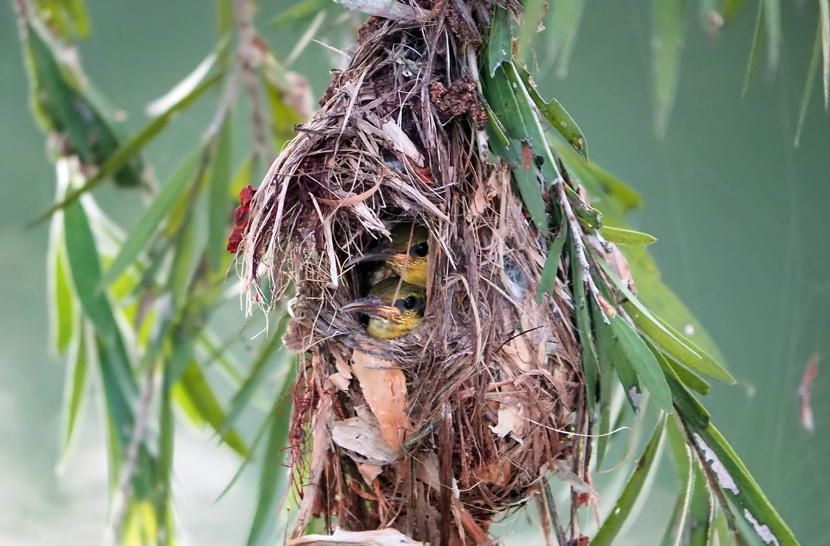
Image by Vinson Tan on Pixabay
Sources
Cristol, D. (2017). When the living inspires pedagogy. EMS.
https://www.decitre.fr/livres/quand-le-vivant-inspire-la-pedagogie-9782376877721.html
Holmgren, D. (2002). Permaculture. Principles and pathways beyond sustainability.
(Permaculture: Principles and pathways beyond sustainability. Holmgren Design Services.)
https://www.decitre.fr/livres/permaculture-9782374250731.html
Pavlov, I. P. (1927). Conditioned reflexes: An investigation of the physiological activity of the cerebral cortex. Oxford University Press (English translation of the original Russian work).
Skinner, B. F. (1953). Science and human behavior. Macmillan.
Vialan, D. (2023). Vivre ensemble en écolieu. Yves Michel.
https://www.decitre.fr/livres/vivre-ensemble-en-ecolieu-9782364292437.html
You might also like:
Consciousness-based payment: the future of training
Our relationship with money creates expectations and formats that sometimes prevent us from innovating. What if conscious payment offered us the possibility of renewed creative spaces?
The use of algorithms in libraries is still in its infancy. Few are actually using them. While not all professionals agree on their place, some have realized that it's better to jump on the bandwagon and take advantage of the possibilities.
The pedagogy of autonomy - a positive pedagogy
The foundations of autonomy teaching and its paradoxes: teaching how to discover!
Managing students with challenging behaviours
Not all children are little angels when they enter school. Some arrive with gaps in emotional management that affect the group. This requires a framework with qualified mental health personnel and knowledge on the part of teachers of techniques to prevent the escalation of crises.
AI and the transformation of human genius
AI is covered in all the evils and would spoil the human genius and if AI was cure and poison in the opportunities and risks that this computing power offers us?