Most of us are concerned about preserving our environment, but also our economy, because growth is a source of well-being. Sometimes, however, decisions that appear to be positive for the future turn out to be counter-productive, with effects totally contrary to the hopes they raised.
Added to this is the difficulty for each and every one of us of knowing whether the information we are given is true or just political communication. Indeed, Western societies are in the process of splitting into two camps that seem to be growing ever further apart. Whether the subject is the environment or the economy, the dividing lines are the first to be promoted. This can be seen both in the exchanges on social networks and in the results of each election. Each "camp" perceives the actions of the other as aggression. Young people, our students, find it hard to know where they stand.
Nuclear power plants: good or evil?
At a time when climate change is presented as the main threat to mankind, it is curious to note that the low-carbon energy provided by nuclear power has been pilloried. Now, many countries are backtracking and considering reopening (or not closing) power plants, or even building new ones.
Belgium has renounced reactor closures, Sweden is considering building a new reactor(https://www.bfmtv.com/economie/entreprises/energie/la-suede-commencera-la-construction-d-un-nouveau-reacteur-nucleaire-d-ici-2026_AD-202409270551.html), the Slovak prime minister is discussing the construction of a new power plant(https://www.zonebourse.com/actualite-bourse/Le-Premier-ministre-slovaque-Fico-discutera-des-projets-de-construction-d-une-centrale-nucleaire-lo-47954648/), etc.
So the question arises: was it right to shut down reactors and divest from nuclear power?
Thermal cars (especially DIESEL or diesel)
A little personal anecdote: I want to sell my 8-year-old diesel car and buy a hybrid. I find a buyer who gives me a fair price. I go to the technical inspection to get the registration certificate. The inspector tells me, "You won't get it because of the emissions". I tell him I don't understand, as it's only been through recently. He explained that if I kept it, it would pass the tests, but that if I sold it, it wouldn't pass.
So I had to sell it at a lower price without the MOT. To this day, it's gone to Poland! It all sounds very hypocritical.
Many people are experiencing financial difficulties as a result of standards that are difficult to follow or understand. I don't think it will be easy to convince people under these conditions.
We're also seeing carmakers who had decided to produce only electric cars in the fairly short term (5 to 6 years) going back on that decision:
One gets the impression that none of this has been properly thought through.
Energy performance certificates for buildings (PEB or DPE, depending on the country)
It's a fact that buildings emit greenhouse gases. It is therefore useful to improve energy performance, i.e. to make a house low-energy or even passive. That's why buildings known as "energy flats" can no longer be rented out.
That's all well and good, but .... many countries already have a shortage of rental property for a variety of reasons: the complexity of obtaining building permits, tourist rentals, etc. Decisions on energy performance certificates are making the market very tight. What's more, if a landlord has to spend money on a property, he's bound to pass it on in the rent (even if the legislator has tried to prevent it).
Other environmental issues
The climate monopolizes almost all environmental discourse. Other issues are just as worthy of attention, given the damage they can do to our environment.
We're even getting to the point of political decisions such as the agreement to set up a battery recycling plant, because when we go all-electric, we need batteries and we need to manage the waste generated. This is the subject of a battle being waged by local residents of a future plant. "One ton of lead in the atmosphere per year": in Ghlin, a battery recycling plant project is worrying local residents". Now that's something I wouldn't want near my home. If nuclear waste is an issue, so are batteries and wind turbines.
When you ask a generative AI what the other environmental problems are:
- Air pollution
- Water pollution
- Deforestation
- Loss of biodiversity
- Soil degradation
- Waste management
- Ocean acidification
- Chemical pollution
- Overfishing
- Depletion of natural resources
These phenomena are just as worrying, but we don't talk about them as much.
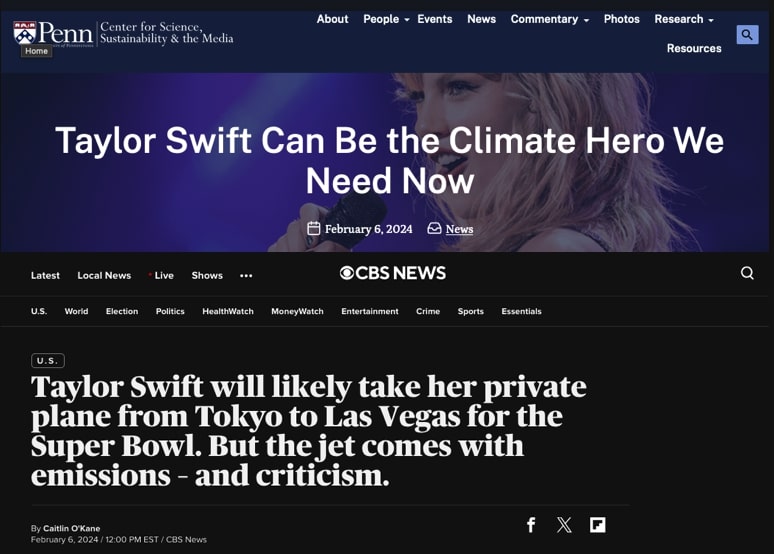
Let's go back to congruence: how many politicians or celebrities who claim to protect the climate don't make an incredible number of airplane trips?
How can you encourage young people to be sensitive to CO2 emissions if your muse spends her time in the sky?
And in economics ... do we see contradictory mechanisms? It seems so:
Job protection
Nobody wants to get laid off, and we all value our jobs. So it's a good idea to advocate measures that prevent employers from laying people off as they see fit. I'm not arguing about whether or not they are justified, but about their effects.
Restricting layoffs will protect one group of people: those who have a job. On the other hand, it will disadvantage people looking for work. A company will look twice rather than once when hiring if it knows that it will be difficult to lay people off. That's why, in our countries, being made redundant is perceived as a catastrophe.
Tenant protection
The same applies to tenant protection. As stated above, the real estate market is very tight, and for every rental offer, there are dozens of prospective tenants. At this time of the academic year, it has proved very problematic for students to find accommodation:
"The obstacle course is about to begin. The announcement of the first Parcoursup admission results on Thursday, May 30, will mark the start of the hunt for student accommodation. A task that promises to be particularly difficult this year, due to the housing crisis that has been affecting the country for several months. The rental market is particularly tight,especially in large cities, and ads for properties to rent are becoming increasingly scarce." Source.
Landlords are therefore going to be increasingly demanding before renting out their property. As we all know, there are also periods for principal residences when tenants who fail to pay cannot be evicted.
The result of all this is simple: when you're a tenant, you're protected; when you try to become one, it's an obstacle course and sometimes even impossible.
Political inconsistency, practical ignorance
The preservation of our environment and economic growth are major concerns for most of us. However, the decisions taken to meet these challenges can sometimes prove counter-productive, with effects contrary to initial expectations.
The complexity of the information available and the growing polarization of Western societies make it difficult to make informed decisions. Inconsistencies in the policies implemented raise important questions.
It would be preferable to think in an integrated and coherent way to tackle these complex challenges and ensure a sustainable future for all.
See more articles by this author