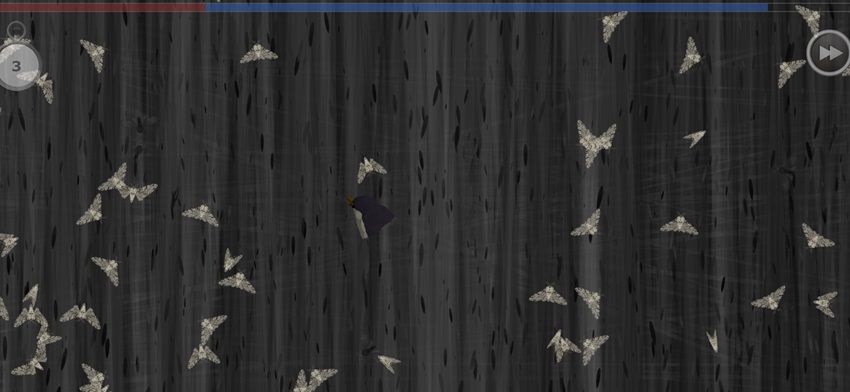
"Phalenes! understanding natural selection through play
A serious game designed to demonstrate natural selection and its effects on a moth population.
Publish at October 09 2024 Updated October 09 2024


Since the latest version of the DSM diagnostic book, "dys" disorders have been called specific learning disorders. Whatever they're called, however, they're still very tiring in the day-to-day lives of those affected. In general, "regular" brains end up automating principles such as reading, arithmetic, writing and so on. However, those suffering from these disorders cannot rely on these mechanisms.
This is the case, in this radio program, of Mélody, a Masters student who has to live with dyslexia, dysorthographia, dyscalculia and attention deficit disorder on a daily basis. It's a pretty potent cocktail, and one that led some in her life to predict that she'd never make it far in school. Fortunately, this prediction turned out to be completely wrong. Nevertheless, as the young woman recounts, these additional difficulties require more time than her colleagues in reading, writing assignments or taking exams.
For a long time, specific learning difficulties were linked to a lack of intelligence. We now know that this could not be further from the truth. They are simply dysfunctions, the cause of which is not yet fully understood, that complicate certain skills.
Moreover, the French- and English-speaking world is more prone to these problems, given the large number of phonemes and specific rules involved, compared with, for example, so-called phonemic languages such as Italian. Support from both family and school seems to be the key to enabling people like Mélody to flourish in spite of everything.
Running time: 32min52
You might also like:
"Phalenes! understanding natural selection through play
A serious game designed to demonstrate natural selection and its effects on a moth population.
Learn the mechanisms of misinformation with Bad News
Understand the strategies of online disinformation through an interactive experience that puts you in the shoes of a fake news propagator.
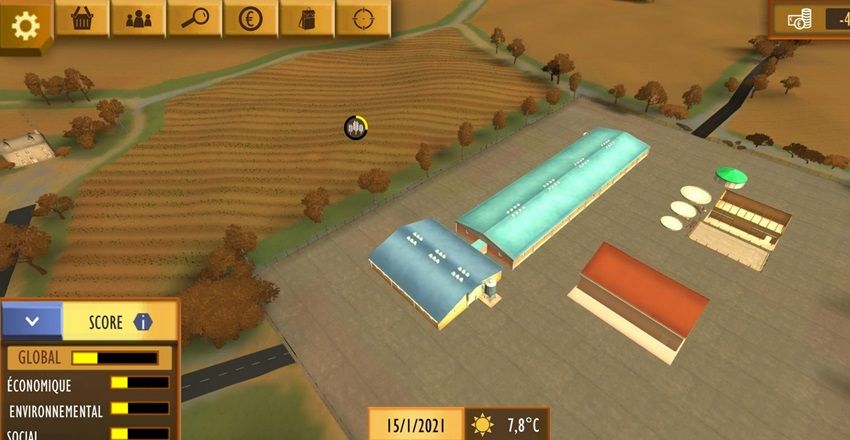
Reflecting on agroecology through play
There's nothing simple about being a farmer. You have to plan your activities throughout the year, make sure you have the right machinery, maintain it and so on. All with a view to ecology. A serious French game seeks to teach agroecology.
The sharing economy has led to small changes in various economic sectors such as transportation, housing, etc. This approach has changed the relationship of citizens for different services, now cheaper and offered by their fellow citizens. However, who actually benefits from this new economy? The people or the companies in question? A U.S. newsgame shows how the life of Uber drivers isn't as lucrative as one might think.
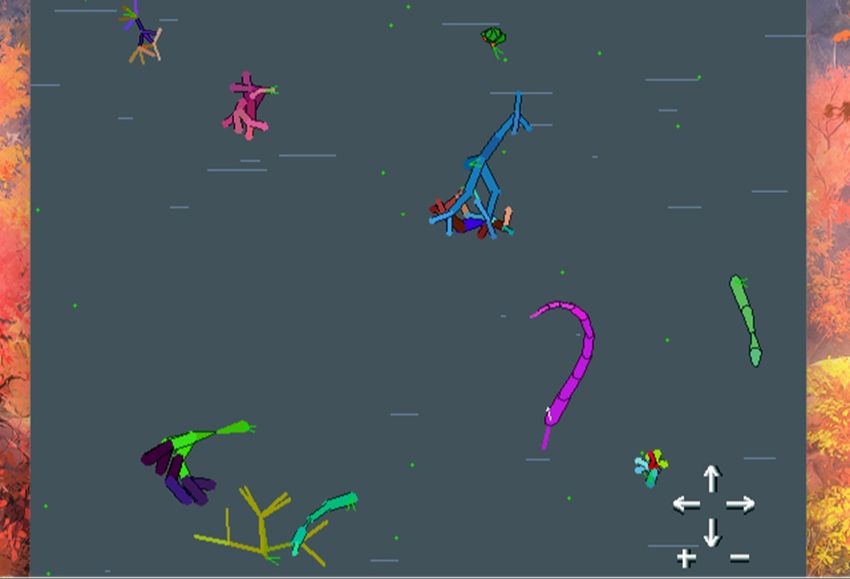
A virtual aquarium to understand Darwinian evolution
Is it possible to understand evolution through simulation? It would seem so. A very interesting resource for high school science classes.