The effect of pet therapy on non-verbal communication in Alzheimer's patients
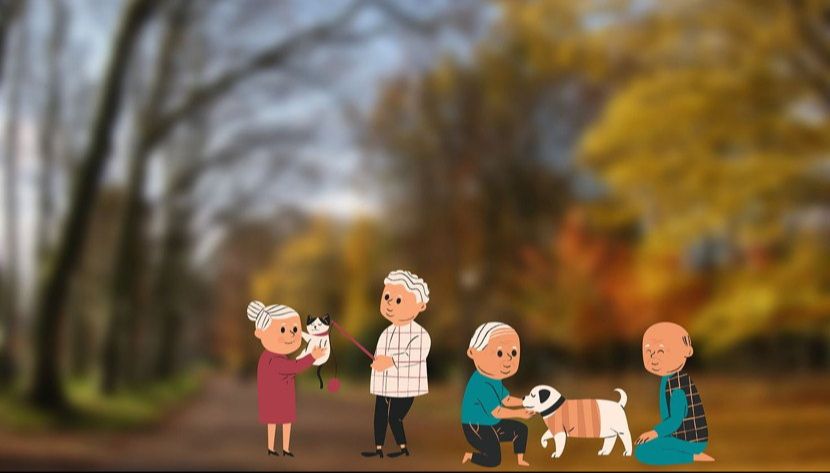
Animal-assisted therapy, a solution for limiting non-verbal language disorders in some patients with Alzheimer's-type dementia.
Publish at October 09 2024 Updated October 09 2024



More and more, we're in the midst of a battle for attention. Mentalist and youtuber Fabien Olicard knows a thing or two about this, having been fascinated by our brains from an early age. In this episode of the "Les Lueurs" podcast, he recounts his observations and findings on the subject of mental availability.
For a start, he's not comfortable with the idea of banishing screens. Screens are neutral tools that can be used with good or bad intentions. Instead, he suggests we reflect on our relationship with devices. Do we need, for example, to have all our notifications on all the time? Probably not, but we're so used to a world of reactance that we can't stand the boredom of activating them. Yet we have the choice to deactivate them. It might even be healthier for us and our relationships.
Nevertheless, he doesn't think we should feel guilty if we get caught up in an application. It happens to him from time to time. We just need to be aware of it, understand what's happened, and take steps to ensure that it doesn't happen very often (or at all, in the best case scenario).
An easy first step is to go for a 1-hour walk on your own or with someone without your camera. Then, to train immediate attention, use the "5-4-3-2-1" exercise: you name in your head five things you can see at the moment, four things you can hear, three things you can touch, two things you can smell and one thing you can taste. This psychological exercise forces the brain to refocus, and is also very good in moments of great stress for getting out of looped thoughts.
Finally, the idea is to choose where to put your attention. What do I consider essential? What would be my most appropriate communication methods? Sharing them with your network will help you avoid frustrations and the need to respond to everyone at once.
Running time: 1:02
Image: Gustavo Wandalen Corrêa from Pixabay
You might also like:
The effect of pet therapy on non-verbal communication in Alzheimer's patients
Animal-assisted therapy, a solution for limiting non-verbal language disorders in some patients with Alzheimer's-type dementia.
Trust at the heart of remote success
There are many elements that lead to a learner's success. Nevertheless, trust is of paramount importance. Even more so in a remote context where the learner cannot count on the physical presence of the teacher. Moreover, the teacher must also believe in his or her abilities when it comes to teaching online.
Integration and toxicity threshold of artificial intelligence
In education, given the effects of A.I. on our reasoning and learning abilities, integrating A.I. clearly calls for even greater caution, since we're dealing with young people who are still developing.
Creativity: order or disorder?
Should we challenge order to unleash creativity, or rely on filing methods and tools to support it? Should we choose?
Is it still possible to teach the classics?
Classical works have shaped our societies and created images that continue to haunt our collective memories. And yet, for younger generations, these creations seem passé. Is there a way to teach the classics without raising a wave of sighs?