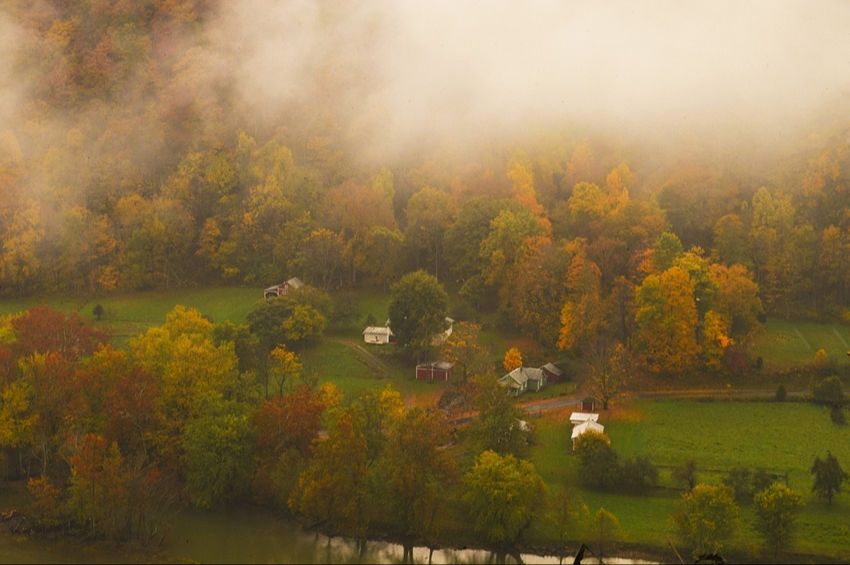
Is a world without waves or networks possible? With the advances of modern technology, it seems impossible. Yet there is a place in the heart of the United States where the airwaves are almost non-existent. Called the White Zone, it's a 33,000-square-kilometer territory in West Virginia where radio waves are virtually non-existent.
Developed in 1957 at the height of the Cold War, the territory was designed to promote astronomical research by offering scientists an environment with as little interference as possible. As a result, the Green Bank base, with its huge telescope, is able to study outer space.
People claiming to be electrosensitive or from the hippie movement have also adopted this region for the possibility of living further away from technology and waves. Nevertheless, the socio-economic context is difficult. Everything is far away, and apart from the beautiful landscapes in the heart of the mountains, jobs require a great deal of mileage, even outside the white zone.
Especially as the latter is under threat. More and more citizens are finding ways to connect to wireless networks to access the Internet. What's more, the zone got a bad press after the revelations of Edward Snowden, who pointed to it as the place where the NSA can spy on most American citizens, and even those around the world. In a hyper-connected world, the White Zone could well disappear if efforts aren't made to keep it as wave-free as possible.
Many serious games address the topic of sustainable development. Yet before such solutions were proposed, innovative people had to go against the social grain and fight to improve their environment. A humorous adventure game, hosted by the National Film Board, teaches children the attitudes they need to adopt to make a difference.
The sharing economy has led to small changes in various economic sectors such as transportation, housing, etc. This approach has changed the relationship of citizens for different services, now cheaper and offered by their fellow citizens. However, who actually benefits from this new economy? The people or the companies in question? A U.S. newsgame shows how the life of Uber drivers isn't as lucrative as one might think.
An original approach to depression. The game's metaphor is well conceived, a little dark and informative about a problem that affects millions of people.